

)
Cervical cancer remains one of India's biggest public health challenges, claiming the lives of thousands of women every year despite being one of the most preventable forms of cancer. Persistent infection with high-risk strains of the human papillomavirus (HPV) is responsible for almost all cervical cancer cases. Although HPV vaccination and regular cervical screening have significantly reduced the disease burden in many countries, access remains uneven in India, and many women are diagnosed only after the disease has progressed.
Now, a promising homegrown innovation could eventually change how cervical precancer is treated. The Indian Council of Medical Research (ICMR) has licensed SHetA2, a first-in-class anti-HPV therapeutic candidate, to Emcure Pharmaceuticals for further development and commercialisation. Unlike existing treatments that often rely on surgical removal of precancerous tissue, SHetA2 is being investigated as a targeted therapy that may selectively eliminate HPV-driven abnormal cells while preserving healthy cervical tissue.
Experts stress, however, that this is not yet an approved medicine. The drug candidate still needs to successfully complete clinical development before it can become part of routine medical care. Even so, the development represents an important milestone in India's efforts to strengthen indigenous cancer research and improve access to innovative therapies.
What Is SHetA2?
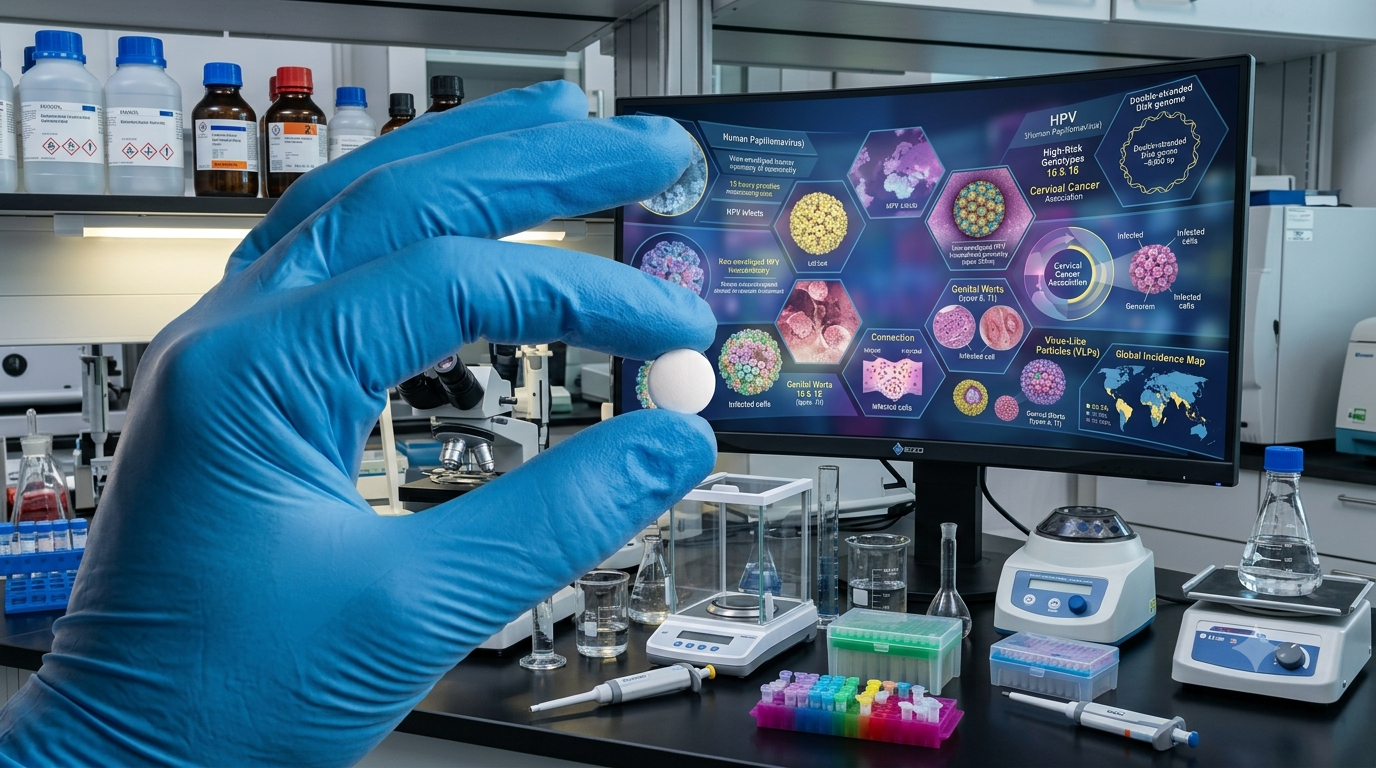
SHetA2 is an investigational drug candidate being developed to treat Cervical Intraepithelial Neoplasia (CIN), precancerous changes in cervical cells caused by persistent high-risk HPV infection.
The candidate was developed through a collaboration between scientists at ICMR's National Institute of Cancer Prevention and Research (NICPR) and the University of Oklahoma Stephenson Cancer Center. It has now been licensed to Emcure Pharmaceuticals for further development, manufacturing and, if approved, eventual commercialisation.
Unlike preventive HPV vaccines, SHetA2 is designed as a therapeutic intervention, aimed at women who already have HPV-related precancerous cervical lesions.
How Could It Work?
According to ICMR's technology brief, SHetA2 targets proteins involved in HPV-driven cancer development.
Laboratory and preclinical studies suggest the drug may:
- Inhibit HPV E6 and E7 oncoproteins that drive abnormal cell growth
- Trigger the death of HPV-infected abnormal cells
- Spare healthy cervical tissue
- Potentially reduce progression from precancer to invasive cervical cancer
Researchers are also exploring both oral and vaginal formulations, which could offer a non-invasive alternative to current procedures.
Why Is This Development Significant?
Current management of moderate-to-severe cervical precancer (CIN2 and CIN3) generally involves procedures such as:
- Loop Electrosurgical Excision Procedure (LEEP)
- Cold knife conisation
- Ablative therapies
These treatments are highly effective but involve removing or destroying abnormal cervical tissue. In some women, they may increase the risk of complications in future pregnancies, including preterm birth.
If SHetA2 proves safe and effective in clinical trials, it could provide a non-surgical treatment option that targets abnormal cells while preserving cervical tissue.
What Stage Is The Drug At?
Despite the excitement, SHetA2 remains an investigational therapy.
According to ICMR, the technology has demonstrated encouraging results in laboratory studies and preclinical testing. A Phase I clinical trial evaluating SHetA2 (also referred to as OK-1 in oncology studies) has been conducted in patients with advanced solid tumours to assess safety, but the drug has not yet been approved for treating cervical precancer.
Now that Emcure has obtained the licence, further clinical development will be required to determine:
- The optimal dose
- Long-term safety
- Effectiveness compared with current standard treatments
- Regulatory approval
Until those studies are completed, SHetA2 should be viewed as a promising research advance rather than a treatment currently available to patients.
Why Cervical Cancer Prevention Still Matters
According to the World Health Organization (WHO), nearly all cervical cancers are caused by persistent infection with high-risk HPV types.
Fortunately, the disease is largely preventable through:
- HPV vaccination
- Regular cervical screening
- Early treatment of precancerous lesions
WHO's global strategy aims to eliminate cervical cancer through its 90-70-90 targets:
- 90% of girls fully vaccinated against HPV by age 15
- 70% of women screened with a high-performance test by ages 35 and 45
- 90% of women with precancer or cervical cancer receiving appropriate treatment
India has also expanded HPV vaccination efforts in recent years, recognising the country's substantial cervical cancer burden.
Could SHetA2 Help Beyond Cervical Cancer?
Researchers believe SHetA2's mechanism may eventually have applications beyond the cervix.
High-risk HPV is also linked to cancers affecting:
- The anus
- The penis
- Parts of the throat and oropharynx
However, these possibilities remain speculative and would require dedicated clinical studies before any conclusions can be drawn.
What Women Should Know Right Now
While SHetA2 represents an exciting scientific development, experts emphasise that women should continue following proven methods of cervical cancer prevention.
These include:
- Receiving the HPV vaccine when eligible
- Participating in cervical screening programmes
- Seeking prompt medical evaluation for abnormal bleeding or persistent symptoms
- Following up appropriately if precancerous cervical changes are detected
No investigational drug can replace the benefits of vaccination and early detection at this stage.
The licensing of SHetA2 by ICMR to Emcure Pharmaceuticals marks an important milestone in India's biomedical innovation journey. If ongoing research confirms its safety and effectiveness, the drug candidate could become one of the first targeted, non-surgical therapies for HPV-related cervical precancer. However, it remains under development, and patients should not view it as an approved treatment. For now, HPV vaccination, regular cervical screening and timely treatment of precancerous lesions remain the most effective strategies for preventing cervical cancer, while SHetA2 offers hope for an additional option in the future.
Disclaimer: This content including advice provides generic information only. It is in no way a substitute for a qualified medical opinion. Always consult a specialist or your own doctor for more information. NDTV does not claim responsibility for this information.