

)
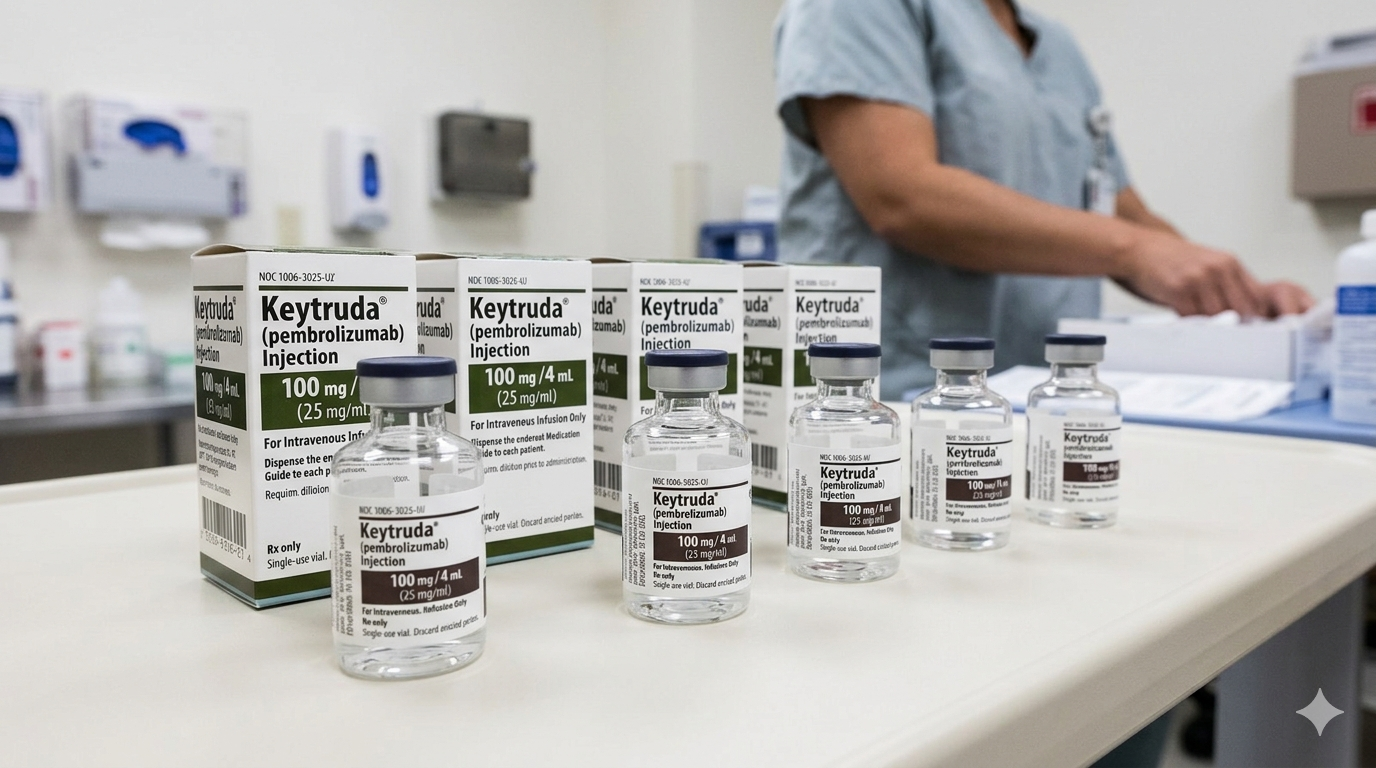
The emergence of counterfeit versions of Keytruda, a widely used cancer immunotherapy drug, has triggered fresh concerns over patient safety, rising treatment costs, and gaps in drug verification systems, even as the therapy itself continues to transform outcomes in advanced cancers.
Keytruda, developed by MSD, belongs to a class of drugs known as immune checkpoint inhibitors, which help the immune system identify and attack cancer cells. The therapy has shown promising results across several cancers, particularly in advanced or metastatic stages, where the disease has spread and is more difficult to treat.
Dr Abhishek Shankar, oncologist at All India Institute of Medical Sciences Delhi, said immunotherapy has significantly improved outcomes in such cases. He noted that Keytruda has demonstrated strong efficacy globally and in Indian patients, especially among those with higher PD-L1 expression, a biomarker used to predict response to treatment.
However, he flagged affordability as a major barrier. "These therapies are often prescribed for long durations and remain largely out-of-pocket expenses, with costs going up to around Rs 1.5 lakh per month. They are not widely covered under government schemes, making access extremely limited," he said.
With treatment costs running into several lakhs annually, and in some cases exceeding Rs 50 lakh per year, doctors say the affordability gap is fuelling a dangerous parallel market.
An Investigation by the International Consortium of Investigative Journalists has found how counterfeit cancer drugs, including fake Keytruda vials, are entering circulation globally, often through informal or unregulated supply chains.
Dr Shankar warned that high prices are pushing some patients towards these grey markets. "Patients often believe they are getting a cheaper alternative, but fail to verify the authenticity of the drug. Batch numbers must always be cross-checked with the manufacturer," he said, adding that he has encountered cases where companies denied producing certain batch numbers altogether.
He also raised concerns about malpractice involving used vials. "In some instances, empty vials are not returned to patients and may be diverted for reuse in counterfeit drug production. There have been cases where incentives are offered to hospital staff to collect and resell such vials. This raises serious questions about what is actually being administered to patients," he said.
Calling counterfeit oncology drugs a serious threat, he added, "Replacing a life-saving therapy with an ineffective or unknown substance can directly impact outcomes and may even lead to premature death. This is not just unethical-it is a criminal act against cancer patients."
Echoing these concerns, Dr Aditya Sarin, Consultant Medical Oncologist at Sir Ganga Ram Hospital, described the issue as one of the gravest risks facing cancer care today. "Anything counterfeit is as serious as it gets. I have never seen something more concerning. Patient safety is the utmost priority," he said.
On reports of fake vials containing no active drug, Dr Sarin said the implications are severe. "Anything fake is already beyond limits. Counterfeit drugs are a shame to the field of medicine," he said, warning that such treatments may offer no therapeutic benefit and allow the disease to progress unchecked.
He stressed that safeguards exist when drugs are sourced through authorised channels. "Our patients either receive the drug directly through the company's patient assistance programmes, where batch numbers and authenticity are verified, or through hospital supply chains. These routes ensure the drug is genuine," he said.
At the same time, he cautioned against patients independently sourcing medicines. "The issue arises when patients go drug shopping outside registered and authorised channels. There are no free lunches," he said.
Oncologists also point to the growing role of biosimilars, which are lower-cost versions of biologic drugs, as a partial solution to the affordability crisis. While these are legally approved, concerns remain when medicines are procured from unregulated markets, where quality and efficacy cannot be assured.
Dr Shankar noted that while emerging strategies like low-dose immunotherapy are being explored to reduce costs, they are not yet a reliable substitute for standard treatment protocols.
Both doctors emphasised the need for stricter oversight within hospitals and supply chains. Measures such as random drug sampling, batch verification, and ensuring transparency in procurement are critical to preventing counterfeit drugs from reaching patients.
As India's cancer burden continues to rise, the Keytruda counterfeit crisis underscores a deeper challenge of balancing cutting-edge treatment with affordability and safety. Doctors warn that without stronger regulation and wider access to verified therapies, the very drugs designed to save lives could end up putting them at greater risk.
Disclaimer: This content including advice provides generic information only. It is in no way a substitute for a qualified medical opinion. Always consult a specialist or your own doctor for more information. NDTV does not claim responsibility for this information.