

)
Whey protein is a popular health supplement that people take to increase their protein intake to help improve their muscle mass. Especially those who exercise intensively on a regular basis and need to improve their daily performance. The research published in the Healthcare journal highlights that the verdict on whey protein is mixed, as the animal-based whey protein powders and plant-based whey protein powders have different effects on the body. The most important aspect to consider when consuming whey protein is the exact milligrams of protein in every scoop that you are consuming. An excess amount of protein can damage the heart over time and needs to be regulated.
When the exact protein quantity that your body needs is to be looked at, a nutritionist or dietician can provide the exact numbers. But most people are influenced by consuming over-the-counter protein powders that claim to boost their protein levels, but they are also inadvertently damaging their hearts. Your body's ability to break down and metabolise the protein consumed is crucial, as if it is not, then it will start backfiring and start causing health issues.
Why Protein Is Important For Your Body
Protein is important for your body as it plays an active role in muscle repair, hormones, and overall metabolic rate. But the form, timing, and how much you eat can influence its effects on your body. When it comes to the heart, multiple dietary approaches affect its functioning, but the key is moderation when it comes to high-protein food sources.
What Happens When You Consume Too Much Protein?
When you don't measure the protein that you are consuming daily and let outside factors influence your choice, then unregulated protein sources can become the source of health issues. Too much protein is deposited as fat when an excess amount of calories is consumed in the form of a whey protein drink or sprinkled on top of a food source.
The research published in the Nutrients journal highlights that when too much protein is consumed, it can cause a strain on kidney and liver function. There can be an imbalance of nutrients, which can cause dysbiosis in the body.
Also Read: Whey To Lentils, Harvard-Trained Doctor Lists Top Protein Sources You Should Eat
Can Too Much Protein Affect Heart Health?
Yes, too much protein can affect heart health, especially when animal-based whey protein is high. The research published in the Frontiers of Nutrition mentions that this is because the heart is affected by what the body metabolises and how it stores it in the body. An overall protein intake of 1.6 kg a day can yield an increase in muscle mass and strength when combined with resistance training. And when animal protein is replaced with plant protein, it is linked to a 4% reduction in bad cholesterol on a short-term basis.
Observational data also suggests that people have a 20% lower risk of type 2 diabetes per 20 g plant protein substitution. But the problem with whey protein is that it is not suitable for Indian guts and is highly processed, which affects its health effects.
While plant-based protein can be beneficial, animal-based whey protein is especially dangerous, as it can
- Increase cholesterol levels
- Inflammation
- Cardiovascular risk (if combined with a poor diet)
Dr T.S. Kler, Padma Bhushan Awardee, Senior Cardiologist, Chairman and Head of department at BLK-Max Heart and Vascular Institute in New Delhi, explains, "Regular consumption of artificial protein powders can be dangerous. These supplements can negatively affect the internal environment of the body and pose a serious risk to heart health, including heart attack."
Also Read: How To Add More Protein To Indian Diet: 6 Tips To Follow
Whey Protein: Benefits vs Risks
Whey protein should be consumed with extreme caution, as it has health benefits, but it can also pose health risks. The health benefits of consuming whey protein from sources that are suitable for your body, based on a clinical nutritionist's or dietician's advice, are as follows:
Benefits:
- Whey protein can help support muscle growth, which is necessary when people are actively trying to gain weight.
- It is a convenient post-workout nutritional source, but the quantity that you consume needs to be regulated.
Risks of overuse:
- If you consume too much whey protein, then the following side effects can occur:
- Excess protein load can have a negative effect on kidney and liver function.
- Hidden additives in whey protein powders, such as sugar and artificial flavours, can reduce the nutritional impact after consumption.
- Overconsumption of whey protein is possible without exercise, as the body doesn't get the movement it needs to break down the protein it is consuming.
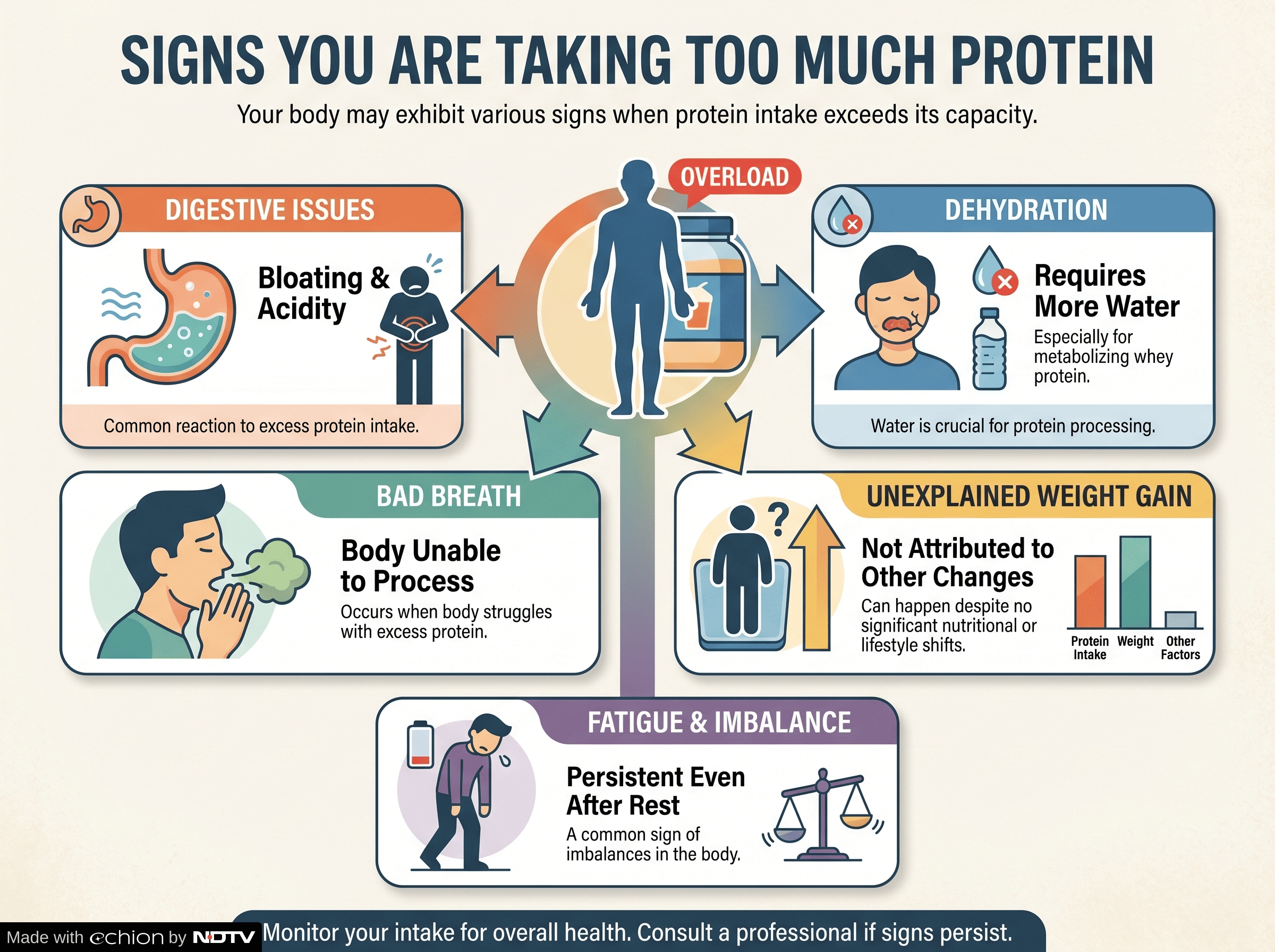
Signs You Are Taking Too Much Protein
Your body can exhibit various signs that may indicate that you are consuming too much protein; here is what you need to know:
- Digestive issues such as bloating or acidity are common if your protein intake is too high.
- Dehydration is a common byproduct, as the whey protein requires enough water to metabolise it.
- Bad breath is a common sign, as your body is unable to process the protein, which can cause this issue.
- Unexplained weight gain that can't be attributed to other changes in nutritional or lifestyle changes.
- Fatigue or imbalance that doesn't seem to go away even after proper rest.
How Much Protein Is Too Much?
The International Council of Medical Research (ICMR) - National Institute of Nutrition (NIN) has established general dietary guidelines to make sure that people of different ages can get their nutritional requirements as per their body's needs.
The general guideline is as follows:
- 0.8-1 g per kg (sedentary individuals), as the body needs physical activity to digest it effectively.
- 1.2-2 g per kg (active individuals) as their daily exercise levels are higher.
An excess beyond the established requirement may not offer extra benefit to the body.
Who Should Be Careful With Whey Protein?
Whey protein should be carefully consumed by people who have pre-existing health issues that require medical supervision. Those with:
- Kidney issues arise as the organ filters out toxins from substances that are consumed.
- Heart disease, as the heart can suffer from damage over time, can silently trigger a major and sudden cardiac event.
- Sedentary lifestyle, as their body is unable to get the exercise it needs to digest the protein it is consuming.
- Those relying heavily on supplements over natural food should be especially careful about consuming whey protein.
Also Read: Protein Cravings Explained: The Hidden Gut-Brain Link That Controls What You Eat
Healthier Ways To Meet Your Protein Needs
There are healthier ways to meet your daily protein needs as per your body's requirements. You need to consume enough protein-rich foods that are commonly available. These can be dal, paneer, eggs, and nuts, along with a balanced meal approach to get the maximum health impact. You need to avoid overdependence on supplements to mitigate the risks involved.
Protein is essential, but excess intake can be harmful, especially for your heart. You need to focus on balance, consuming enough whole foods, and consulting an expert for a safe approach.
Disclaimer: This content including advice provides generic information only. It is in no way a substitute for a qualified medical opinion. Always consult a specialist or your own doctor for more information. NDTV does not claim responsibility for this information.