

)
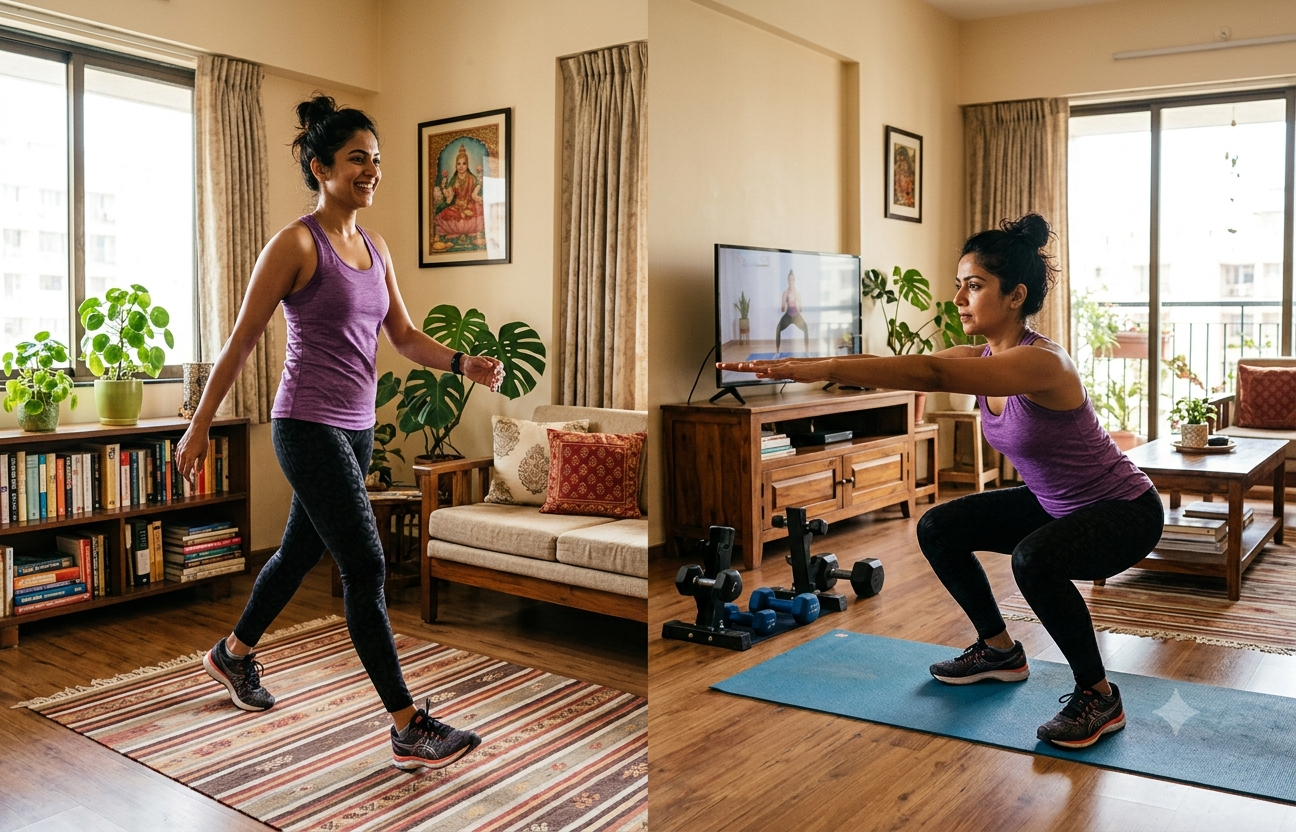
When it comes to building a daily fitness routine, accessibility is key. Walking and squats stand out as two of the most popular, zero-equipment exercises you can do anywhere, anytime. But if your main goal is burning calories, shedding fat, or getting stronger, you might wonder: squats or walking, which one burns more calories? The answer lies in how each exercise facilitates in burning calories. While both work wonders for your body, they operate through vastly different physiological mechanisms. Here is how they stack up against each other and how you can leverage both for maximum health benefits.
How Does Calorie Burning Actually Work?
Before comparing numbers, it helps to understand what drives your daily energy expenditure. Research published in the International Journal of Health Sciences highlights that your overall calorie burn depends heavily on your basal metabolic rate (BMR), which is the baseline energy your body requires just to stay alive, plus your exercise calorie expenditure.
Several key factors determine how many calories you burn during a workout:
- Intensity: How hard your muscles and cardiovascular system are working.
- Duration: How long you sustain the movement.
- Individual Characteristics: Age, body weight, muscle mass, and baseline fitness level.
Because of these variables, two people doing the same 20-minute workout can end up burning significantly different amounts of calories.
How Many Calories Does Walking Burn?
Walking is a low-impact, highly sustainable cardiovascular exercise. According to research published in Nutrients Journal, walking anywhere from 5 to 60 minutes can burn between 20 and 300 calories, depending on speed and incline.
For a standard brisk walk (3.5 to 4 mph / 5.6 to 6.4 km/h), the estimated calorie expenditure scales with duration:
- 15 Minutes: 45 - 90 kcal
- 20 Minutes: 60 - 120 kcal
- 30 Minutes: 120 - 180 kcal
- 45 Minutes: 180 - 270 kcal
- 60 Minutes: 240 - 360 kcal
Types of Walking Paces
- Slow Walking: Burns around 25-40 calories per 15-20 minutes. While calorie burn is modest, it offers great metabolic and recovery benefits.
- Brisk Walking: Increases cardiac output and yields the highest steady-state calorie expenditure for flat terrain.
- Incline Walking: Adding a steep grade engages more lower-body musculature, burning 240 to 320+ calories per session.
Beyond calorie burning, daily walking strengthens heart health, lowers cortisol (stress levels), and is exceptionally gentle on joints, making it ideal for beginners. You can easily track your progress using a real-time calorie burn monitor or smartwatch.
How Many Calories Do Squats Burn?
Squats are a compound strength-training movement. Research in the Journal of Sport and Health Science shows that a session of squats can burn between 30 and 240 calories, heavily influenced by form, speed, repetition count, and added weight.
Because squats force large muscle groups including your glutes, quadriceps, hamstrings, calves, core, and lower back to contract dynamically against gravity, they demand a high rate of energy per minute. Doing high-frequency bodyweight sets, circuit training, or weighted squats significantly amplifies this energy output.
Squats vs Walking: A Side-by-Side Comparison
- Calorie Burn Per Minute: Squats generally burn more calories per minute because high-intensity compound movements recruit large muscle fibres rapidly, whereas walking provides a moderate, steady-state burn.
- Total Burn Over 30 Minutes: Walking often wins over longer durations, as it is much easier to sustain continuous walking for 30 minutes than doing continuous squats.
- Afterburn Effect (EPOC): Squats create a significant "afterburn effect", keeping your metabolic rate elevated post-workout. Walking produces minimal afterburn, with metabolism returning to baseline quickly.
Which Is Better For Fat Loss?
When it comes to fat loss, a combination of both is superior to choosing just one.
- Walking Benefits: Excels at sustainability. Because it causes minimal fatigue, you can do it daily to maintain a consistent calorie deficit without overtraining.
- Squats Benefits: Builds lean muscle tissue. More muscle mass raises your resting metabolic rate, helping you burn more calories even at rest.
Which Exercise Builds More Muscle?
- Walking: Primarily builds cardiovascular endurance with a limited muscle-building effect.
- Squats: Dynamically target and build major muscle groups, including glutes, quadriceps, hamstrings, and core.
Which Is Better For Belly Fat?
It is important to address the spot reduction myth: you cannot choose where your body loses fat first. Neither squats nor walking selectively targets belly fat directly. Instead, both exercises contribute to an overall total calorie deficit, which causes fat loss across the entire body over time when paired with proper nutrition.
Who Should Choose Which?
Choose Walking:
- Beginners restarting a fitness routine and older adults or individuals with joint concerns.
- People navigating higher body weight or obesity, where high-impact exercises cause pain.
- Sedentary or desk workers looking to break up long periods of sitting.
Choose Squats:
- People seeking lower-body muscle gain and strength improvement.
- Anyone needing faster, higher-intensity workout sessions.
- Home exercisers working with limited space or equipment.
Why Experts Recommend Combining Both
A sports medicine expert, such as Dr Rajat Chauhan, Sports Medicine Physician, Musculoskeletal Medicine Specialist explains, "Fat loss is never a matter of 'either/or' and it is about functional capacity. Walking builds consistent baseline energy expenditure without causing systemic strain or elevated stress hormones. Squats, on the other hand, preserve lean muscle tissue while in a calorie deficit. If you only do cardio during weight loss, you risk losing muscle along with fat. Combining both ensures you shed fat while keeping your metabolic engine strong."
Example Daily Routine:
- Morning: A crisp, 30-minute brisk walk to kickstart circulation and burn steady calories.
- Evening: 3 to 4 sets of bodyweight squats (12-15 reps per set) to stimulate muscle growth and trigger post-workout metabolic elevation.
Dr Reetadyutu Mukhopadhyay, Additional Director of Orthopaedics, Fortis Hospital, Gurugram, answers the most common questions that people ask when it comes to practising squats and walking as exercises:
Do Squats Burn More Calories Than Walking?
Per minute, yes. Over 30 minutes, walking often burns more because it can be sustained much longer.
Which Is Better For Fat Loss?
Walking is generally better for increasing total calorie expenditure; squats help preserve and build muscle, which supports long-term fat loss.
How Many Squats Equal A 30-Minute Walk?
There isn't a reliable conversion. Energy use depends on body weight, squat intensity, pace, and walking speed.
Are Squats Safe For Older Adults?
Yes, when performed with proper technique and appropriate progression.
Best Combination Of Exercise?
A mix of walking and strength training (including squats) is usually the most effective approach.
Squats typically burn more calories per minute because they are a higher-intensity strength exercise recruiting major lower-body muscle groups. However, walking often burns more total calories overall simply because it can be sustained for longer durations without fatigue.
For optimal fat loss, functional strength, and long-term heart health, integrating both into your weekly routine gives you the best of both worlds.
Also Read: 10000 Steps vs 30 Minutes Of Cardio: Which Is More Effective For Fat Burn?
Disclaimer: This content including advice provides generic information only. It is in no way a substitute for a qualified medical opinion. Always consult a specialist or your own doctor for more information. NDTV does not claim responsibility for this information.