

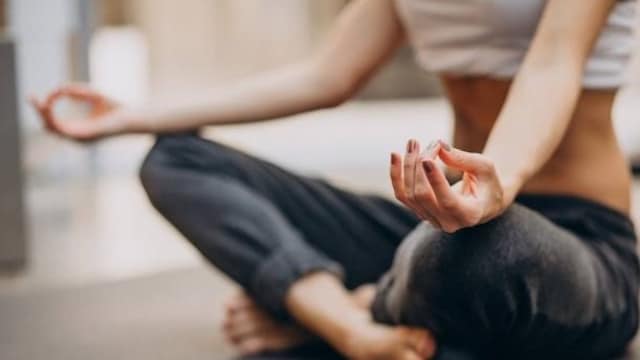
Rohan Mehta could lift 80 kg at the gym and run several kilometres without stopping. Yet, when he tried to bend forward and touch his toes, he struggled. After long hours at his desk, his back often felt stiff. He was strong, active and committed to fitness. But was his body moving as well as he thought it was?
Rohan's experience reflects a common gap in modern fitness routines. We lift heavier weights, run longer distances and track our progress through personal bests, workout statistics and changes on the weighing scale. But how often do we stop to ask a simpler question: Can we move comfortably and with control?
Being physically active does not automatically mean having good mobility. A person can have considerable strength and endurance while still finding certain movements difficult. Could yoga help bridge that gap?
The answer is not to trade the gym for a yoga mat or give up running. Both strength training and cardiovascular exercise are important for overall health. Instead, it is worth looking at fitness as a combination of different abilities, including strength, stamina, balance, mobility and recovery.
Yoga can add another dimension to this mix by combining movement, balance, flexibility and breathwork in a practice that complements other forms of exercise.
Strength training builds muscle and supports bone health, while running improves cardiovascular fitness and endurance. However, being good at either does not necessarily mean that every joint can move comfortably through its available range.
Mobility refers to the ability to move a joint through its range of motion with control. Flexibility, meanwhile, describes the ability of muscles and other tissues to lengthen. Both can influence how we perform everyday activities, from bending to pick something up to reaching for an object on a high shelf.
Yoga can work on several of these aspects simultaneously. Depending on the style and intensity, it can challenge balance, flexibility, muscular endurance and body awareness. It also encourages practitioners to pay attention to how they move and breathe.
Sharan Khanna, yoga and wellness expert and founder of SharanYoga, believes the practice should not be reduced to the pursuit of picture-perfect postures.
"Yoga is not just about how a pose looks; it is about how you connect with your breath."
For Sharan, the breath forms the foundation of the practice. Whether through asana, or physical postures, or pranayama, or breathing techniques, paying attention to the breath can help practitioners develop greater awareness of the relationship between their mental state and physical responses.
"Running and weight training are wonderful forms of movement, but they tend to direct our energy outwards," she says.
While these activities challenge the body and build strength and endurance, yoga offers an opportunity to slow down, coordinate movement with breathing and cultivate awareness. A measured breathing practice can also encourage relaxation and help some people manage stress.
"This is why I believe yoga complements every form of movement," Sharan adds. "It isn't just about becoming stronger or more flexible; it's about learning to balance effort with ease, activity with stillness, and the external demands of life with an internal sense of awareness."
Dr DM Manoj, sports physiotherapist and founder and director of Physioactive India, says it is important to distinguish between strength and flexibility before assuming that yoga is the answer to every movement limitation. "Strength and flexibility are two different capacities, and having one does not necessarily mean you have the other. A person may be able to lift heavy weights yet have restricted movement at certain joints. Equally, not being able to touch your toes does not automatically mean something is wrong or that you need yoga. Movement is influenced by individual anatomy, technique and training history."
This distinction matters because flexibility is not a universal benchmark of fitness. What is useful for one person may not be necessary for another. The aim should be to identify movement limitations that affect comfort, function or sporting performance rather than chase an arbitrary standard.
For runners, this means paying attention to mobility and movement control while continuing to build strength. "Yoga can complement running by improving flexibility and movement control. Limitations in foot flexibility and pelvic control can also contribute to injury risk. However, yoga should not replace progressive strength training, which remains essential for building muscle strength and improving performance." For anyone recovering from an injury, the approach needs to be more individualised. Manoj recommends modifying postures according to a person's symptoms, mobility and stage of recovery instead of pushing through pain or discomfort.
Going back to Rohan's back stiffness, Yoga is not a guaranteed solution for back pain, nor can it prevent every exercise-related injury. Its benefits depend on the individual, the type of practice and how it is performed. Research suggests that yoga may help some people with chronic low-back pain and can offer benefits for balance, sleep and aspects of mental well-being. However, results vary, and yoga should complement rather than replace appropriate medical assessment and treatment when these are needed.
For people accustomed to measuring progress through heavier lifts or faster running times, this introduces a different way of thinking about exercise. Improvement does not always mean pushing harder. It can also mean recognising limitations, moving with greater control and allowing the body time to recover.
Adding yoga to a fitness routine does not require abandoning workouts. Beginners can start with short, guided sessions involving comfortable postures, gentle mobility work and breathing exercises, gradually adapting the practice to their needs. Anyone with persistent pain, a recent injury or a relevant medical condition should seek professional advice before attempting demanding postures.
Five beginner-friendly yoga asanas to explore
Five simple asanas suggested by Sharan Khanna;
- Supta Padangusthasana (Reclining Hand-to-Big-Toe Pose): A supine posture that can help stretch the hamstrings and support hip mobility. A strap can make the movement more accessible.
- Vrikshasana (Tree Pose): Challenges balance, concentration and postural control while engaging the muscles that help stabilise the body.
- Uttanasana (Standing Forward Bend): Stretches the back of the legs and encourages a gentle forward fold. The knees can be bent to accommodate individual flexibility.
- Bhujangasana (Cobra Pose): Introduces gentle spinal extension and engages the back muscles. The movement should remain comfortable, without forcing the lower back into an excessive arch.
- Karani (Legs-Up-the-Wall Pose): A supported, restorative posture that many people find relaxing, particularly after a long day on their feet.
These postures are starting points, not a universal prescription. Their suitability depends on individual needs, and they should be performed without forcing a stretch or aggravating existing symptoms.
And what about touching those toes? It can be a personal milestone, but it should not become the ultimate test of physical fitness. Natural ranges of motion differ, and flexibility is only one component of how well the body functions. The more meaningful goal is to build a body that is strong, capable and comfortable enough to meet the demands of everyday life.
Fitness is not simply about how much you can lift or how far you can run. It is also about how comfortably you move, how well you control your body and whether your exercise routine supports an active life in the years ahead. Yoga may not be the missing link for everyone. But for people whose routines focus almost entirely on strength and endurance, it could be a valuable addition bringing greater attention to mobility, balance, breathing and the relationship between effort and recovery.
Disclaimer: This content including advice provides generic information only. It is in no way a substitute for a qualified medical opinion. Always consult a specialist or your own doctor for more information. NDTV does not claim responsibility for this information.