

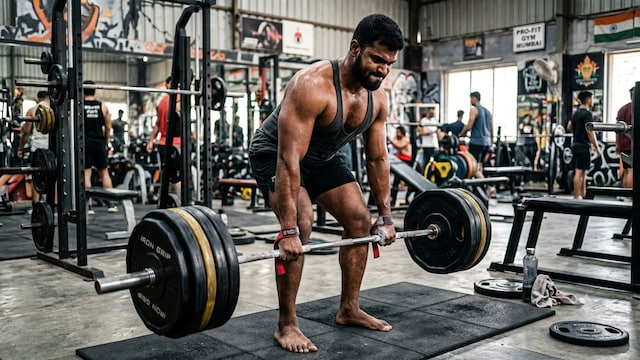
Building a deadlift is not just about lifting heavier weights. It also means getting stronger, fixing your form and being able to create power during the movement. Even though the regular deadlift is one of the exercises for building total strength, different versions, like the deficit deadlift can help people fix certain weaknesses and get better at pulling. The deficit deadlift is a type of deadlift where you stand on a raised surface while doing the lift. This tiny change makes the bar have to move a way which makes the exercise harder especially at the beginning of the lift. By making the movement deficit deadlifts can help build strength from the floor, improve how you position yourself and work many important muscles.. The exercise needs good form and should be started slowly especially for people who are still learning the regular deadlift.
What Is A Deficit Deadlift?
A deficit deadlift is a strength-training exercise performed by standing on a raised surface, usually a weightlifting plate or a purpose-built platform, while lifting a barbell from the floor. Unlike a conventional deadlift, where your feet remain on the floor, the elevated position places your body slightly lower in relation to the bar. This increases the distance you need to pull the weight before reaching a fully upright position.
The additional range of motion makes the starting position more demanding. Your hips and knees need to move through a greater range, while your back and core muscles work to maintain stability. The exercise is commonly used by powerlifters and experienced strength-training enthusiasts to improve their ability to initiate a deadlift and generate force from the floor.
How Does Deficit Deadlifting Make Your Pulls More Powerful?
One of the biggest challenges in conventional deadlifting is breaking the barbell off the floor. Some lifters can lock out a heavy weight comfortably but struggle during the initial pull. Deficit deadlifts address this weakness by increasing the range of motion and making the starting portion of the lift more demanding. Here is how they can help:
1. Improves Strength Off The Floor
The increased distance between the starting position and lockout requires you to generate force over a longer range of motion. This can help strengthen the muscles involved in the initial pull, making it easier to overcome the resistance when performing conventional deadlifts.
2. Builds Stronger Posterior Chain Muscles
Deficit deadlifts recruit several muscles across the posterior chain, including the glutes, hamstrings and spinal erectors. These muscles play an important role in hip extension, maintaining spinal stability and controlling the movement of the barbell. Strengthening them can contribute to better overall pulling performance.
3. Improves Starting Position And Technique
The elevated stance requires lifters to pay closer attention to their hip position, torso angle and spinal alignment. Maintaining a stable starting position becomes particularly important because the increased range of motion can make it easier to lose proper form. Practising the movement with manageable weights can help experienced lifters develop better control and consistency during their conventional deadlifts.
4. Increases Range Of Motion
One of the defining benefits of this variation is the additional range of motion. Your body has to move through a greater distance to complete the lift, increasing the demands on the muscles involved. This can provide a useful training stimulus for lifters who have already developed a solid conventional deadlift technique.
5. Challenges Core Stability
Maintaining a stable torso is essential during deficit deadlifts. Your abdominal muscles and other core stabilisers work to resist unwanted movement and help keep your spine in a controlled position throughout the lift. This can improve your ability to maintain a strong lifting posture under load.
Which Muscles Do Deficit Deadlifts Work?
Deficit deadlifts are a compound exercise that engage multiple muscle groups simultaneously. The primary muscles involved include:
- Glutes: Help extend the hips and drive the body towards an upright position.
- Hamstrings: Assist with hip extension and contribute to controlling the movement.
- Quadriceps: Help extend the knees, particularly during the initial phase of the lift.
- Spinal erectors: Help maintain spinal stability and support the torso.
- Core muscles: Stabilise the trunk and help prevent unwanted movement.
- Trapezius and upper back: Help maintain upper-body positioning and control the barbell.
The exercise therefore offers a comprehensive strength-training stimulus rather than isolating one particular muscle group.
How To Perform A Deficit Deadlift Correctly
Proper technique is particularly important because the increased range of motion can make the exercise more demanding than a conventional deadlift. Follow these steps:
Step 1: Choose A Stable Elevated Surface
Stand on a weightlifting platform or a secure elevated surface. Beginners should avoid using objects or stacking loose weight plates. A small deficit of 2-5 cm is generally sufficient for most lifters.
Step 2: Position Yourself In Front Of The Barbell
Place your feet hip-width apart with the barbell positioned over the middle of your feet. Bend your hips and knees to reach the bar while keeping your spine in a position.
Step 3: Establish A Strong Grip
Grip the bar outside your legs. Keep your shoulders ahead of the bar and engage your lats to create a stable upper-body position.
Step 4: Brace Your Core
Before lifting take a breath and brace your abdominal muscles. Maintain a torso and avoid rounding your lower back to reach the bar.
Step 5: Drive Through Your Feet
Push through the floor while extending your knees and hips. Keep the barbell close, to your body throughout the movement. Avoid jerking the weight off the floor or allowing your hips to rise quickly.
Step 6: Complete The Lift
Stand by extending your hips and knees without leaning excessively backwards at the top.
Step 7: Lower The Bar With Control
Push your hips first then bend your knees as the bar travels down. Return the barbell to the floor under control before beginning your repetition.
How Heavy Should You Lift?
Deficit deadlifts should not automatically be performed with the same weight you use for conventional deadlifts. Because the exercise increases the range of motion, it can feel considerably more challenging, particularly during the initial pull. Start with a lighter load that allows you to maintain proper technique throughout every repetition. Focus on controlled movement rather than lifting the heaviest possible weight. Experienced lifters can gradually increase the load as their strength and technique improve.
Common Mistakes To Avoid
Although deficit deadlifts can be useful for improving pulling strength, incorrect execution can compromise technique and increase unnecessary strain.
Watch out for these mistakes:
- Using an excessively high deficit: A higher platform does not automatically translate into better strength gains. It can force you into an uncomfortable starting position.
- Rounding the lower back: Maintaining a stable spinal position is important throughout the movement.
- Lifting too heavy: Using excessive weight can make it difficult to maintain proper technique.
- Letting the bar drift away: Keep the barbell close to your body to maintain efficient lifting mechanics.
- Rushing the repetitions: Controlled movements allow you to maintain positioning and consistency.
Who Should Try Deficit Deadlifts?
Deficit deadlifts are particularly useful for experienced lifters who struggle with the initial phase of conventional deadlifts or want to introduce a more challenging variation into their strength programme.
However, beginners should first learn the conventional deadlift and develop sufficient strength, mobility and lifting control before attempting this variation. People with existing back, hip or knee injuries should consult a qualified fitness professional or healthcare provider before incorporating the exercise into their routine.
Deficit Deadlift Vs Conventional Deadlift: What Is The Difference?
Both exercises develop overall strength and recruit similar muscle groups. The primary difference is the range of motion. While conventional deadlifts involve lifting the barbell from the floor with your feet on the ground, deficit deadlifts require you to stand on an elevated surface. This makes deficit deadlifts more demanding during the initial pull and can help address specific strength limitations. However, they are not necessarily better than conventional deadlifts. The two exercises serve different purposes and can complement each other in a well-structured strength-training programme.
Deficit deadlifts can be a useful addition to a strength-training routine, particularly for lifters looking to improve their pulling power and overcome weaknesses when lifting a barbell from the floor. By increasing the range of motion, challenging the posterior chain and demanding better control during the initial pull, this variation can help develop strength and improve deadlift performance.
However, more range of motion does not always mean better results. Start with a small deficit, prioritise proper technique and increase resistance gradually. Ultimately, consistency, progressive overload and sound lifting mechanics remain essential for building strength safely
Disclaimer: This content including advice provides generic information only. It is in no way a substitute for a qualified medical opinion. Always consult a specialist or your own doctor for more information. NDTV does not claim responsibility for this information.