

Muscular strength is an important part of overall health and fitness. It helps the body perform everyday activities such as lifting grocery bags, climbing stairs, getting up from a chair and carrying objects without feeling tired too quickly. Strong muscles also benefit the joints, improve balance and stability, and help maintain good posture. As people age, muscle strength can gradually decline, which can eventually make daily tasks more difficult and increase the risk of falls and injuries. Therefore, building and maintaining muscle strength is important.
Certain exercises can help strengthen different muscle groups and help the body perform daily movements. These exercises work by making muscles push or pull against resistance, which can come from body weight, resistance bands or weights. With regular practice, muscles gradually become stronger. Strength training can also support bone health, improve physical function and help people maintain independence as they grow older. Here are some exercises that can help to improve your muscular strength.
Exercises For Muscular Strength
1. Squats
Squats are one of the best exercises for building strength in the lower body. They work the quadriceps, hamstrings, glutes and core muscles, which eventually helps to improve leg strength, balance and stability. Strong leg muscles also make everyday activities easier. Stand with your feet shoulder-width apart and your toes pointing slightly outward. Bend your knees and push your hips back as if you are sitting on a chair. Lower yourself as much as you're comfortable, then push through your feet to return to the starting position.
2. Push-Ups
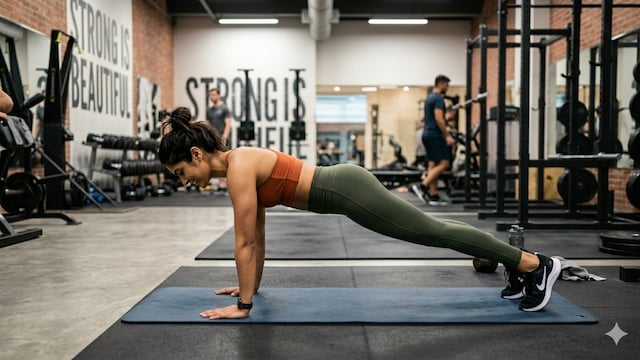
Push-ups help strengthen the chest, shoulders, triceps and core muscles. They use body weight as resistance which makes them a convenient exercise that can be performed easily at home. Regular practice can improve upper-body strength. Place your hands slightly wider than shoulder-width apart on the floor and extend your legs behind you. Keep your body in a straight line from your head to your heels. Bend your elbows to lower your chest towards the floor, then push yourself back up.
3. Lunges
Lunges strengthen the quadriceps, hamstrings and glutes while also helping improve balance and coordination. Since each leg works separately, the exercise can help identify and improve differences in strength between the two sides of the body. Stronger lower-body muscles also support everyday movements. Stand upright with your feet hip-width apart. Take a step forward and bend both knees, lowering your body until your front thigh is approximately parallel to the floor. Keep your front knee aligned with your foot and your upper body upright. Push through your front foot to return to the starting position. Repeat with the other leg.
4. Planks
Planks help strengthen the core muscles, including the abdominal muscles and those that support the spine. A stronger core improves stability and helps maintain good posture during daily activities and other exercises. Lie face down and place your forearms on the floor, with your elbows directly beneath your shoulders. Extend your legs behind you and lift your body, keeping your head, back and hips aligned. Tighten your abdominal muscles and breathe normally. Hold the position for 15-30 seconds initially, gradually increasing the duration as your strength improves.
5. Dumbbell Rows
Dumbbell rows target the upper back, shoulders and biceps. They help build pulling strength, which is useful for lifting objects. Strengthening the back muscles can also help improve posture which can be beneficial for people who spend long hours sitting at a desk. Hold a dumbbell in one hand and lean forward slightly, keeping your back straight. Support yourself with the other hand on a sturdy bench or chair. Pull the dumbbell towards your waist while keeping your elbow close to your body. Lower it slowly and repeat.
6. Deadlifts
Deadlifts strengthen several muscle groups, including the glutes, hamstrings, back and core. They train the body to lift objects by using the hips and legs rather than placing excessive strain on the lower back. When performed correctly, deadlifts can improve overall strength and support everyday lifting activities. Stand with your feet hip-width apart and a light dumbbell in each hand. Bend at your hips, push them backwards and lower the weights along the front of your legs while keeping your back neutral. Stop when you feel a stretch in your hamstrings, then push through your feet and bring your hips forward to stand upright.
Disclaimer: This content including advice provides generic information only. It is in no way a substitute for a qualified medical opinion. Always consult a specialist or your own doctor for more information. NDTV does not claim responsibility for this information.