

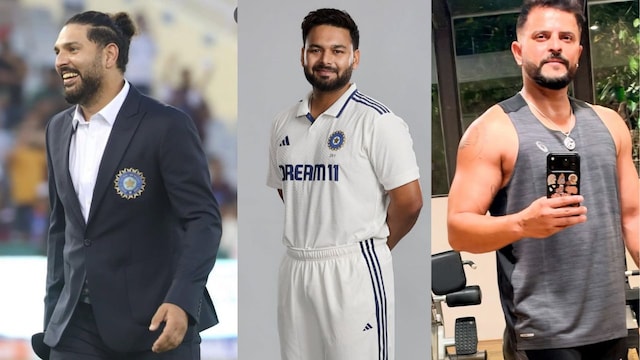
A sudden twist of the knee, an awkward landing after a jump or an abrupt change in direction can turn an ordinary cricketing moment into a career-threatening injury. For professional cricketers, whose performance depends on running between wickets, sprinting, bowling, fielding and maintaining balance, damage to the knee ligaments can have far-reaching consequences. Several well-known cricketers, including Rishabh Pant, Yuvraj Singh, Suresh Raina and Kieron Pollard, have experienced serious ligament injuries during their careers. Some spent months away from competitive cricket, while others faced multiple surgeries and lengthy rehabilitation before returning to the field. More recently, Bangladesh fast bowler Ebadot Hossain and India women's wicketkeeper-batter Yastika Bhatia have also demonstrated how challenging recovery from an anterior cruciate ligament (ACL) injury can be. But what exactly happens when a ligament is injured? Why can something as seemingly simple as walking, climbing stairs or changing direction become difficult? And what does rehabilitation involve before an athlete can safely return to competitive sport? Here are seven cricketers whose injury journeys highlight the physical and mental challenges of ligament damage.
1. Rishabh Pant: Multiple Ligament Injuries After A Horrific Car Accident
Rishabh Pant's December 2022 car accident near Roorkee resulted in one of the most serious injuries suffered by an Indian cricketer in recent years. The wicketkeeper-batter sustained extensive injuries to his right knee, including damage to the anterior cruciate ligament (ACL), posterior cruciate ligament (PCL) and medial collateral ligament (MCL). The accident also caused injuries to other structures around the knee. The severity of the injury was such that his mother was initially concerned about whether he would be able to walk normally again.
According to Dr Dinshaw Pardiwala, who treated Pant at Mumbai's Kokilaben Dhirubhai Ambani Hospital, restoring basic walking ability was the first priority. Returning to professional cricket was a much bigger challenge. Pant underwent surgery and extensive rehabilitation at the National Cricket Academy (NCA). His recovery involved gradually rebuilding knee movement, muscle strength, stability and confidence. After spending months away from the game, he returned to competitive cricket during IPL 2024, approximately 15 months after the accident. His journey demonstrated that recovering from a complex knee injury is not simply about healing the damaged ligament. It also involves restoring the strength and coordination needed for demanding sporting movements.
READ | 7 Resistance Band Exercises That Can Help Reduce Your Belly Fat
2. Yuvraj Singh: ACL Injury Before The 2006 Champions Trophy
Yuvraj Singh suffered an anterior cruciate ligament injury in his left knee during a kho-kho session at a practice camp in Mohali in 2006, ahead of the ICC Champions Trophy. The injury disrupted his preparations and raised concerns about how soon he could return to competitive cricket.
According to contemporary reports, the BCCI's orthopaedic consultant, Dr Anant Joshi, said Yuvraj's initial recovery involved reducing swelling and restoring the knee's range of motion. Once these improved, the focus shifted towards rebuilding muscle strength before introducing running and other cricket-related activities.
Interestingly, Yuvraj also spoke publicly in 2008 about the difficulties he had faced with a knee problem. He credited physiotherapy and treatment for helping him avoid a prolonged absence from the game. His experience illustrates why an ACL injury requires more than simply waiting for pain and swelling to subside. The athlete must regain sufficient strength and stability before returning to movements involving sudden acceleration, deceleration and changes in direction.
3. Suresh Raina: A Career-Threatening Knee Injury In 2007
Suresh Raina's knee injury in 2007 came at a particularly difficult stage of his international career. The left-handed batter suffered a knee ligament injury during a Deodhar Trophy match in February that year. The setback affected his selection prospects and ruled him out of India's inaugural T20 World Cup squad. Raina later recalled how the injury affected him mentally as well as physically. In an interview in 2023, he revealed that he had been bedridden for six months and experienced considerable anxiety about whether he would ever play for India again.
READ | Want Stronger And Shinier Hair? Follow These Oiling Tips From A Dermatologist
He also spoke about financial worries, including a loan he had taken, and the uncertainty surrounding his cricketing future. Raina eventually returned to competitive cricket after rehabilitation and worked towards regaining his match fitness. His experience highlights another important aspect of serious ligament injuries: the psychological impact of being separated from the sport that defines an athlete's professional life. The uncertainty surrounding recovery, selection and the ability to perform at the previous level can make rehabilitation particularly challenging.
4. Kieron Pollard: Two ACL Injuries In Different Knees
West Indies all-rounder Kieron Pollard experienced an unusual and particularly difficult injury journey, suffering ACL injuries in both knees at different stages of his career. He injured his left ACL in 2013 and underwent reconstructive surgery in Pittsburgh, United States. He subsequently returned to the field in less than four months. However, in November 2015, Pollard suffered another ACL injury, this time involving his right knee, while playing for Cape Cobras in South Africa's Ram Slam T20 Challenge. The second injury was considered potentially career-threatening. According to a 2016 report by the University of Pittsburgh Medical Center, Pollard underwent reconstructive ACL surgery on both occasions and managed to return to cricket after each procedure.
His journey highlights how demanding cricket can be on the knees, particularly for all-rounders who regularly sprint, jump, land, dive and change direction. It also demonstrates that an athlete's recovery following an ACL reconstruction can vary depending on the nature of the injury, surgical procedure, rehabilitation and individual response.
5. Ebadot Hossain: Five Knee Surgeries And More Than Two Years Away
Bangladesh fast bowler Ebadot Hossain suffered an ACL injury during the team's home series against Afghanistan in July 2023. The injury kept him away from international cricket for an extended period and required multiple surgical procedures.
In an interview with Cricbuzz, Ebadot revealed that he underwent surgeries on five different spots of his knee. He described the rehabilitation process as long and difficult, explaining how challenging it was to remain away from competitive cricket for nearly two years. Ebadot returned to competitive cricket in November 2024 after approximately 16 months away from the game. His return to international cricket followed in 2025.
For a fast bowler, recovering from a serious knee injury involves additional challenges. The knee must withstand the forces generated during the bowling run-up, delivery stride and landing.
A bowler also needs adequate lower-limb strength and control to maintain balance and repeat the same movement throughout an extended spell. Ebadot's experience shows why returning to everyday movement and returning to the physical demands of fast bowling are two very different rehabilitation milestones.
6. Yastika Bhatia: Building Herself From Scratch After An ACL Injury
India women's wicketkeeper-batter Yastika Bhatia suffered a serious ACL injury to her left knee during preparations for the 2025 Women's ODI World Cup. The injury forced her to miss the tournament and spend an extended period away from competitive cricket. Her recovery involved months of rehabilitation, during which she had to rebuild her physical strength and cricketing fitness. In May 2026, Yastika spoke about having to build herself from scratch after the injury. She marked her return to international cricket with a match-winning 54 off 40 balls against England in the first women's T20I. She subsequently completed another remarkable milestone by scoring an unbeaten 113 at Lord's in July 2026, becoming the first woman cricketer to score a Test century at the venue.
Her journey is a reminder that ACL injuries can affect women cricketers just as significantly as their male counterparts. Returning to competitive cricket requires rebuilding strength, balance, confidence and the ability to perform repeated high-intensity movements.
7. Kane Williamson: An ACL Tear That Threatened His World Cup Preparations
New Zealand batter Kane Williamson suffered a ruptured ACL in his right knee while playing for Gujarat Titans during IPL 2023. The injury occurred in March 2023 when he landed awkwardly while attempting to take a catch near the boundary. He immediately experienced discomfort and had to be helped off the field. Williamson subsequently underwent surgery in April 2023 and began a prolonged rehabilitation programme.
By August 2023, the New Zealand batter had returned to batting in the nets, although he acknowledged that he still had considerable work to do before regaining international match fitness. His recovery was particularly important because the 2023 ODI World Cup in India was approaching. Williamson eventually returned to international cricket during the tournament, demonstrating how structured rehabilitation can help elite athletes regain the physical capabilities required for professional sport. His injury also highlights the importance of knee stability during landing, especially when a player is jumping, turning or changing direction at speed.
How Do Ligament Injuries Affect Mobility?
Ligaments are strong bands of connective tissue that connect bones and help stabilise joints. Around the knee, four major ligaments play an important role in maintaining stability and controlling movement.
- Anterior cruciate ligament (ACL): Helps prevent the shinbone from sliding too far forward and controls rotational stability of the knee.
- Posterior cruciate ligament (PCL): Prevents the shinbone from moving excessively backwards.
- Medial collateral ligament (MCL): Provides stability on the inner side of the knee.
- Lateral collateral ligament (LCL): Provides stability on the outer side of the knee.
When these ligaments are stretched or torn, the knee can become unstable, making everyday activities and sporting movements difficult. Depending on the severity of the injury, a person may experience:
- Difficulty walking: Pain, swelling and instability can make it difficult to put weight on the affected leg.
- Reduced ability to bend or straighten the knee: Swelling and damage to surrounding structures can restrict the joint's range of motion.
- Difficulty climbing stairs: Activities involving knee bending and weight-bearing can become uncomfortable.
- Instability while running: An injured ACL, in particular, can make sudden changes in direction and pivoting movements difficult.
- Loss of muscle strength: Reduced activity following an injury can cause the muscles surrounding the knee, particularly the quadriceps, to weaken.
- Difficulty jumping and landing: Damaged ligaments can compromise the stability required to absorb impact and maintain balance.
What Does Recovery From A Serious Ligament Injury Involve?
Recovery depends on which ligament is injured, whether it is partially or completely torn, the presence of associated injuries, and the individual's physical condition. Not every ligament injury requires surgery. Some partial tears and isolated ligament injuries can be managed with rehabilitation, activity modification and appropriate medical supervision. However, complete ACL tears, particularly in athletes who participate in sports involving pivoting and sudden changes in direction, may require surgical reconstruction. Rehabilitation generally involves several stages:
- Initial management: Controlling pain and swelling, protecting the injured joint and gradually restoring comfortable movement.
- Restoring mobility: Physiotherapy focuses on regaining the ability to bend and straighten the knee without significant discomfort.
- Strength training: Exercises gradually rebuild the quadriceps, hamstrings, calf muscles and surrounding hip muscles.
- Balance and stability training: Exercises help improve coordination, joint control and confidence while standing on the affected leg.
- Sport-specific rehabilitation: Athletes gradually progress to jogging, sprinting, jumping, landing, turning and other movements required by their sport.
- Return-to-sport assessment: Medical professionals assess strength, movement quality, stability and functional performance before clearing an athlete for competition.
Importantly, the disappearance of pain does not necessarily mean that the ligament has recovered sufficiently for high-intensity activity. Returning to sport too early can increase the risk of another injury.
Can A Cricketer Return To Full Fitness After A Ligament Injury?
Many athletes return to professional sport following serious ligament injuries, including ACL reconstruction. However, recovery is not identical for everyone. A cricketer's position and responsibilities also influence the rehabilitation process. A batter needs to regain the ability to sprint between wickets and change direction, while a fast bowler must rebuild the strength and stability needed to withstand repeated high-impact landing forces. Wicketkeepers require adequate mobility, flexibility and the ability to repeatedly squat, rise and move laterally. The psychological aspect is equally important. Athletes may experience anxiety about reinjury, loss of confidence and frustration during prolonged rehabilitation. The experiences of these seven cricketers show that a serious ligament injury can affect much more than an athlete's ability to play cricket. It can temporarily compromise basic mobility, independence and confidence. A structured rehabilitation programme, appropriate medical care and a gradual return to activity remain essential for achieving a safe and sustainable recovery.
Disclaimer: This content including advice provides generic information only. It is in no way a substitute for a qualified medical opinion. Always consult a specialist or your own doctor for more information. NDTV does not claim responsibility for this information.