

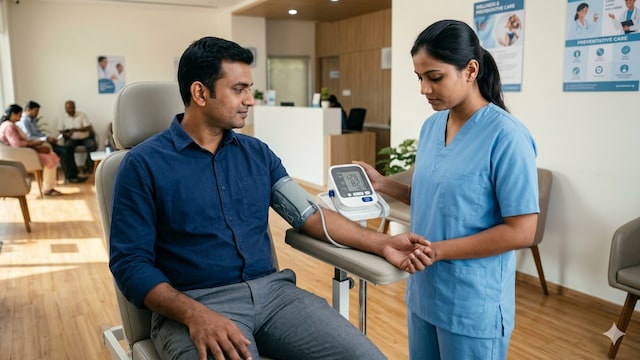
High blood pressure, also known as hypertension, is a common yet serious health condition. It often presents no symptoms but can lead to significant health problems over time. Uncontrolled blood pressure silently increases the risk of heart disease, stroke, kidney damage, and other critical complications. Checking blood pressure regularly is essential for maintaining healthy numbers because it allows for early detection and management of hypertension.
While checking blood pressure, if you see a sudden high blood pressure reading, it's important to take action.
What to do when blood pressure is high?
"A person should take a reading of high blood pressure seriously, but there is no need to panic. The best idea is to find a comfortable spot to sit down and relax. Get away from anything that may raise blood pressure temporarily, like any kind of exercise, smoking, caffeine or stress," says Dr. Rohit Goel, Associate Director - Cardiology at Max Hospital Gurugram.
The cardiologist also recommends taking another reading of blood pressure after resting for five minutes. "Make sure to sit in a chair with your back supported and feet flat on the ground and your arm at heart level. Use a cuff that is the appropriate size and do not talk while taking the reading. If the blood pressure remains high, note it down and contact the doctor," he added.
READ | What Happens If You Forget To Take Your Blood Pressure Medication?
High blood pressure with symptoms
"If blood pressure is 180/110 mmHg or above, wait for a minute before taking another reading. If the reading remains the same and symptoms show like chest pain, breathlessness, severe headache, blurred vision, weakness, numbness, confusion or trouble in speaking, seek medical help immediately," Dr. Goel recommends.
High blood pressure without symptoms
If your reading is high (even above 180/120 mmHg) and you feel completely fine, do not panic. Temporary spikes are often triggered by stress, caffeine, pain, or a full bladder.
- Sit down and rest quietly: Sit upright with your back supported, feet flat on the floor, and legs uncrossed for at least 5 minutes.
- Practice slow, deep breathing: Breathe in slowly through your nose and exhale gently through your mouth for a few minutes to help relax your nervous system.
- Sip water: Mild dehydration can contribute to elevated readings, so drink a glass of plain water slowly.
- Wait and recheck: Measure your blood pressure again after 5 minutes of quiet rest to confirm whether the first reading was a temporary spike.
However, if your blood pressure reading has remained at or above 180/110 mmHg, and you don't experience any troubling symptoms, seek urgent help from a doctor right away. Don't make the mistake of trying to drop your blood pressure by taking more medication than what is prescribed or by taking someone else's medications," advised Dr. Goel.
READ | High Blood Pressure? Essential Tips For Hypertensive Individuals To Preserve Kidney Health
"To keep blood pressure under control in the long run, one must carry out regular monitoring, reduce salt intake, follow a correct diet, maintain a healthy weight, exercise regularly, manage stress, and refrain from smoking and drinking alcohol. A single high reading doesn't mean that you have hypertension, but a series of high readings may lead you to seek medical help," Dr. Goel concluded.
If you are prescribed daily blood pressure medication and missed a dose, take it as directed, but never double your dose without speaking to a doctor.
Disclaimer: This content including advice provides generic information only. It is in no way a substitute for a qualified medical opinion. Always consult a specialist or your own doctor for more information. NDTV does not claim responsibility for this information.