

)
Bodyweight fitness challenges have become increasingly popular, with many people aiming to complete 100 push-ups or 100 squats every day to get stronger and fitter. While both exercises are excellent for building strength, a common question remains: Which one is better for your core? Most people associate core workouts with crunches or planks, but the truth is that many compound exercises activate the abdominal and lower back muscles as well. Push-ups and squats both require the core to stabilise the body throughout the movement, although they do so in different ways. So, if your goal is to build a stronger core, should you choose 100 push-ups or 100 squats? Experts say the answer depends on what you're trying to achieve.
Why Is A Strong Core Important?
Your core includes much more than the visible abdominal muscles. It consists of the muscles of the abdomen, lower back, pelvis, hips, and deep stabilising muscles that help support the spine. A strong core can:
- Improve posture
- Enhance balance and stability
- Reduce the risk of lower back pain
- Improve athletic performance
- Make everyday activities such as lifting, bending, and climbing stairs easier
- This is why many exercises even those that don't directly target the abs can contribute to core strength.
How Do Push-Ups Work The Core?
According to Dr. Satish Koul, Principal Director & Unit Head Internal Medicine, Fortis Memorial Research Institute (FMRI), Gurugram, push-ups do much more than strengthen the upper body. "When people think about strengthening the core, exercises like planks often come to mind. However, both push-ups and squats engage the core significantly just in different ways. The question is not which exercise is 'better,' but which one aligns with your fitness goals," he explains. Push-ups primarily target the:
- Chest
- Shoulders
- Triceps
However, they also require continuous activation of the:
- Abdominal muscles
- Lower back
- Glutes
to maintain a straight body position throughout the movement. Dr. Koul notes that performing push-ups with proper technique provides excellent anti-extension core training, meaning the abdominal muscles work continuously to prevent the lower back from arching excessively.
How Do Squats Engage The Core?
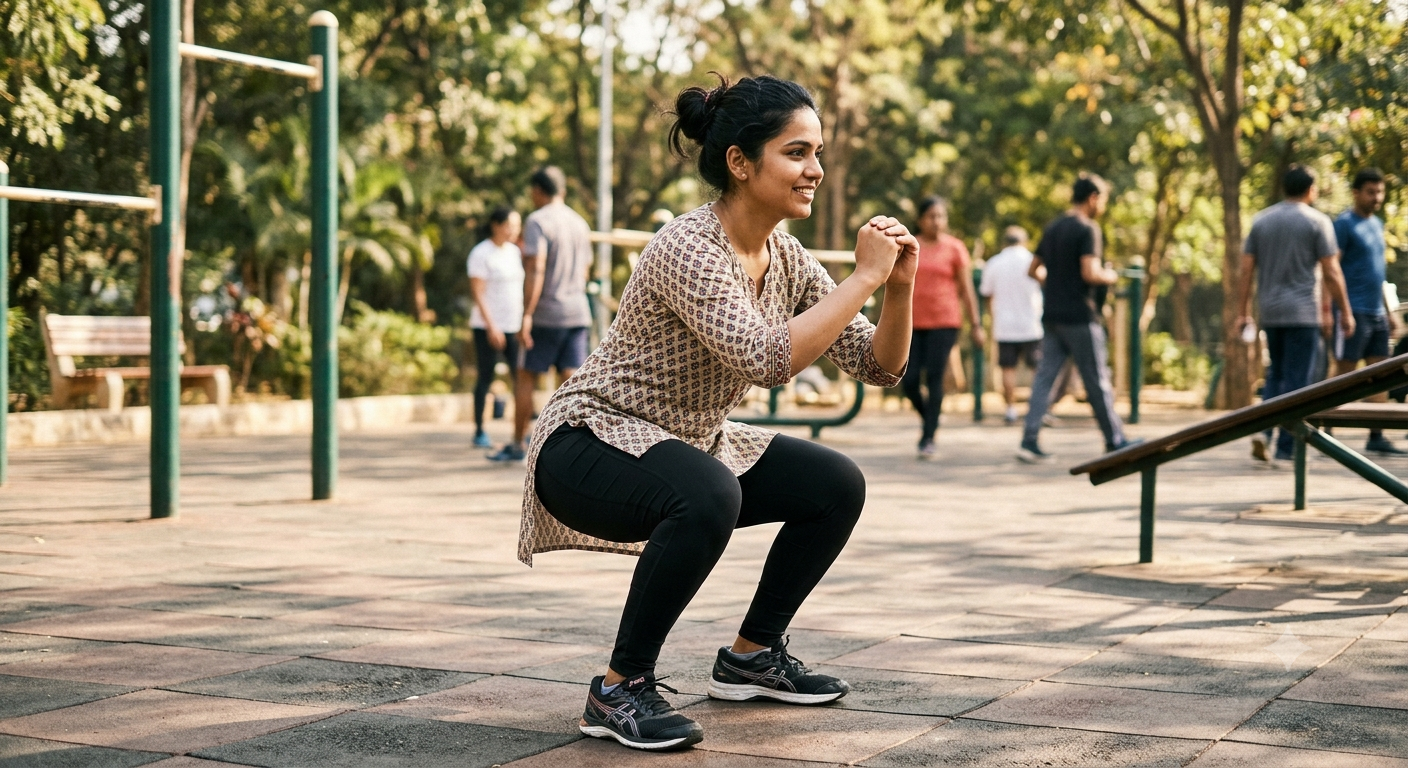
Although squats are usually considered a leg exercise, they also rely heavily on core stability. During a squat, the primary muscles involved include:
- Quadriceps
- Hamstrings
- Glutes
At the same time, the core contracts to stabilise the spine, maintain balance, and keep the torso upright. According to Dr. Koul, bodyweight squats provide moderate core activation, while weighted squats or single-leg variations require significantly greater engagement from the abdominal and lower back muscles.
Which Exercise Builds Core Muscles Better?
If you're comparing only bodyweight exercises, push-ups generally provide greater direct core engagement than standard bodyweight squats. This is because the core remains under constant tension throughout every push-up repetition to keep the body rigid from head to heels. Squats certainly activate the core, but much of the workload is handled by the powerful muscles of the hips and legs. As Dr. Koul explains, "If the goal is to strengthen the core through bodyweight training alone, 100 well-executed push-ups are likely to provide greater direct core engagement than 100 bodyweight squats."
Does Doing 100 Repetitions Make A Difference?
Many fitness challenges focus on reaching impressive repetition numbers, but experts caution against prioritising quantity over quality. Performing 100 push-ups or squats with poor technique may:
- Increase the risk of shoulder, wrist, knee, or lower back injuries
- Reinforce incorrect movement patterns
- Reduce muscle activation
- Delay recovery
Instead, maintaining proper form throughout every repetition is far more beneficial than simply completing a high number.
Should You Only Do Push-Ups Or Squats?
Neither exercise is designed to be a complete core workout on its own. Dr. Koul recommends combining both exercises with movements that specifically target core stability. A balanced routine may include:
- Push-ups
- Squats
- Planks
- Side planks
- Dead bugs
- Bird-dogs
These exercises train the core from multiple angles while improving overall functional strength.
Can Beginners Start With 100 Repetitions?
For most beginners, completing 100 repetitions in one session may be unrealistic and unnecessary. Instead, gradually increasing the workload is safer and more effective. For example:
- Begin with 10-15 quality repetitions.
- Complete multiple sets with adequate rest.
- Increase repetitions or difficulty over time.
- Focus on proper breathing and technique.
Progressive overload not extreme repetition is what leads to long-term strength gains.
Other Ways To Strengthen Your Core
Along with bodyweight exercises, maintaining a healthy lifestyle also supports muscle development. To build a stronger core:
- Eat enough protein to support muscle recovery.
- Include resistance training two to three times a week.
- Get adequate sleep.
- Stay physically active throughout the day.
- Practice good posture during daily activities.
Consistency is far more important than occasional high-volume workouts. Push-ups and squats are both excellent compound exercises that strengthen multiple muscle groups while engaging the core. However, if the goal is specifically to improve core strength using bodyweight exercises, push-ups generally provide greater direct core activation than standard squats. That said, neither exercise should replace dedicated core training. Experts recommend combining push-ups, squats, and targeted core exercises while focusing on proper form rather than chasing repetition milestones. A strong core is built through balanced, consistent training not simply by completing 100 repetitions every day.
Disclaimer: This content including advice provides generic information only. It is in no way a substitute for a qualified medical opinion. Always consult a specialist or your own doctor for more information. NDTV does not claim responsibility for this information.