

)
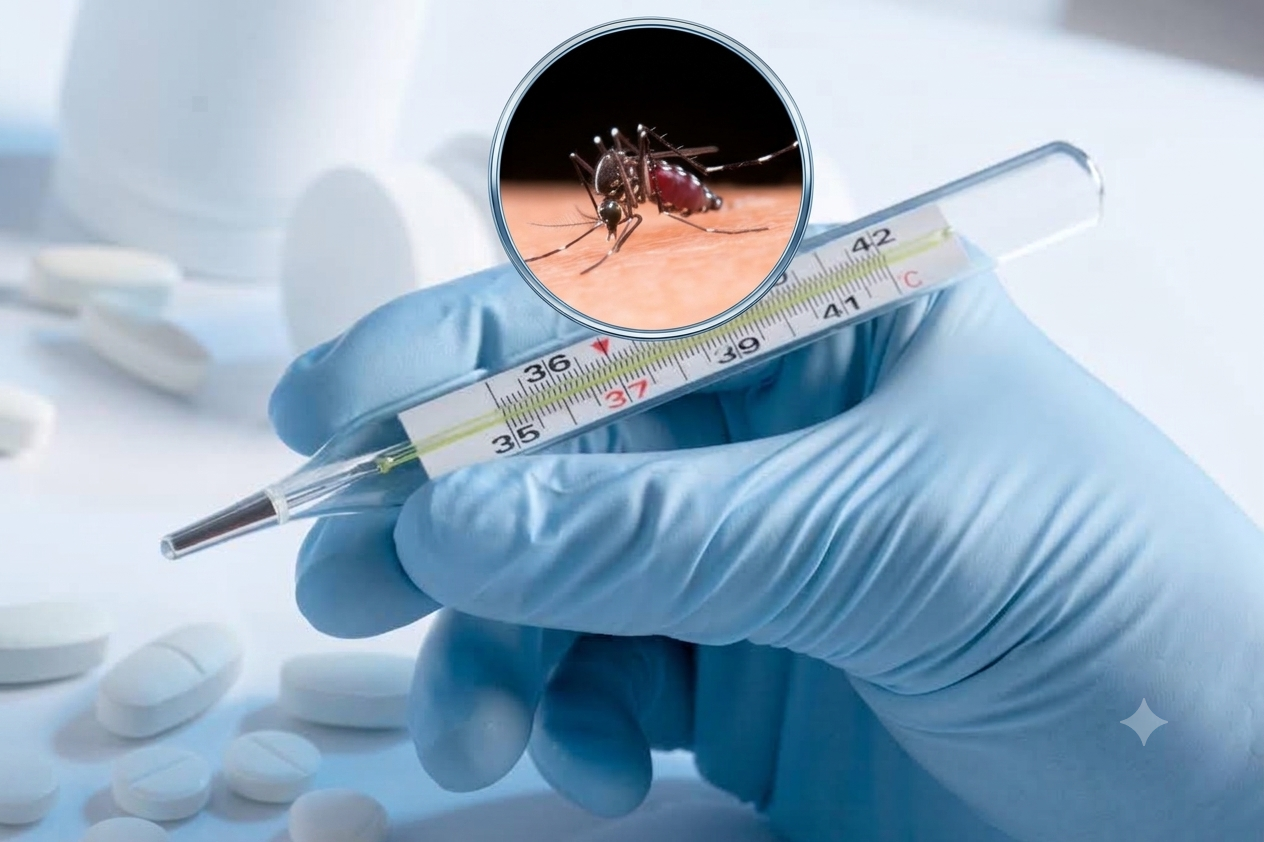
Dengue cases in India have seen a spike, with 6,927 cases and 10 deaths recorded in 2026. These figures, as per the National Centre for Vector-Borne Disease Control (NCVBDC), Ministry of Health and Family Welfare portal, have highlighted that attention to dengue fever is important for recovery. The post-dengue phase, when your fever breaks from day 4 to 6, is considered to be the most dangerous, as the risk of serious health issues can occur. From the chance of blood plasma leakage, shock, bleeding, and organ complications has been flagged by the Centre for Disease Control and Prevention (CDC). This exact time period can influence whether a dengue patient can recover safely or be at risk of serious health issues.
The Three Phases Of Dengue Fever
Dengue fever has an established pattern where the time period of infection taking hold of the body has been divided. These three phases have specific days wherein a patient develops symptoms that need to be managed in a timely manner.
Febrile Phase (Days 1 to 3)
The initial stage of dengue can affect a patient with symptoms such as:
- High fever that could spike to 40 degrees celsius
- Severe headache
- Body aches
- Nausea and fatigue
Critical Phase (Days 4 to 6)
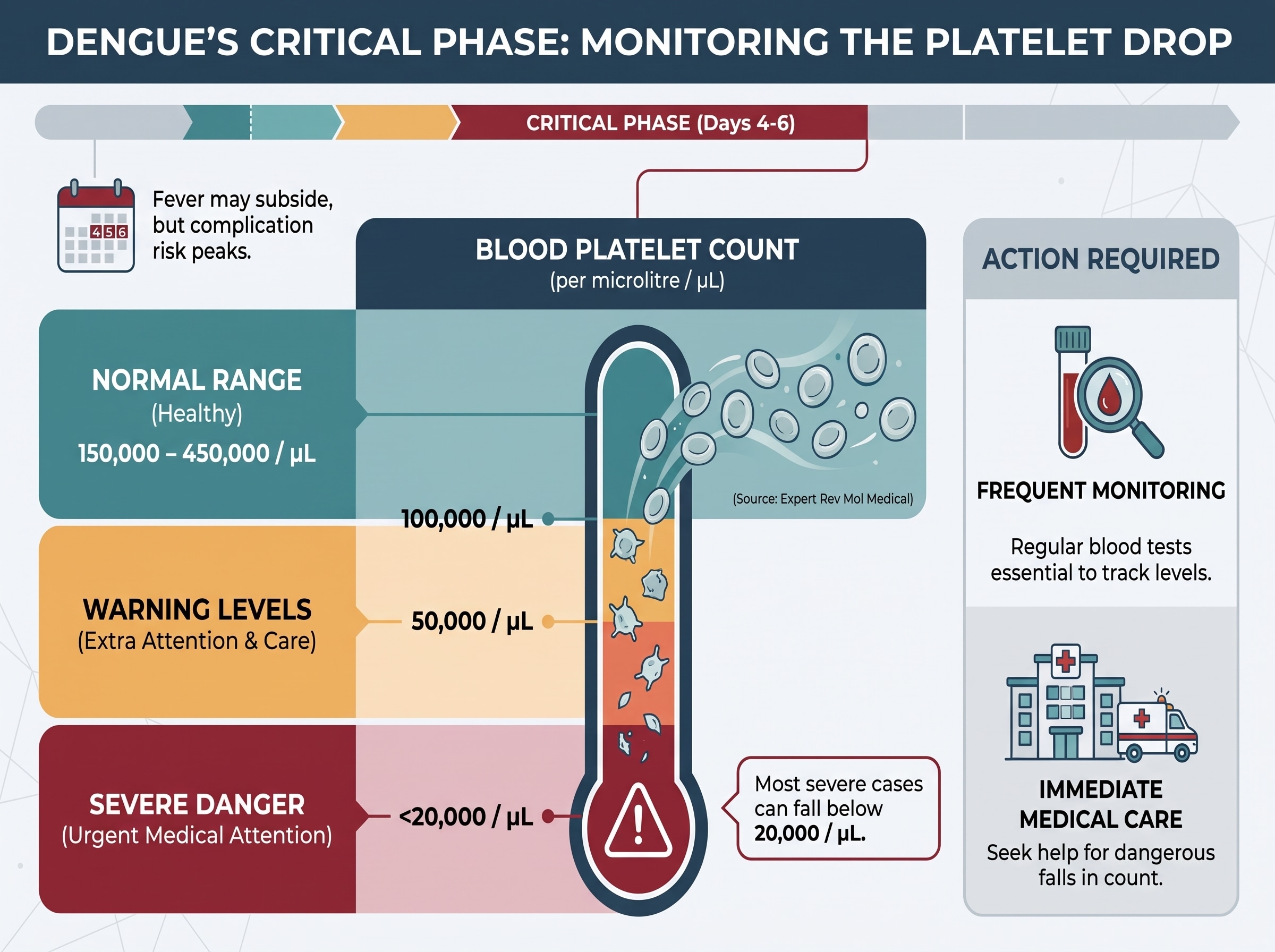
This is the most critical phase after a dengue infection, as the fever may disappear, but the risk of health complications is far greater.
The most important critical health complication is a fall in blood platelet count that needs medical testing.
Frequent blood platelet count monitoring is required to be safe, as a dangerous fall from the normal range needs immediate medical attention.
The Expert Rev Mol Medical has highlighted that the normal blood count is 150,000 to 450,000 platelets per microlitre (ul) of blood for healthy individuals.
But when dengue reaches the severe stage, here are the levels that demand extra attention and care:
- 100,000/uL
- 50,000/uL
Note: The most severe dengue case can even cause your blood platelet count to fall to below 20,000.
Recovery Phase
In the recovery phase after a dengue infection, when your fever has broken, you can start getting your appetite back.
In a dengue infection, your normal appetite struggles as your energy levels are busy fighting the infection.
The balance of fluid can start stabilising once a dengue patient is in the recovery stage.
Why Dengue Can Become More Dangerous After the Fever Drops
Dengue can turn into a danger after the patient's fever breaks, as the body is at its weakest point and can be more vulnerable to developing health issues.
Your blood count is negatively affected during a dengue infection, which means that the blood vessels can be exposed to plasma leakage.
The liquid part of the blood can escape the blood vessel and enter the surrounding tissues, which can cause a health issue that needs to be medically addressed.
The Thromb Haemost Journal has found that plasma leakage from blood vessels is common during the days 4 and 6 stages, and paying attention to it is medically necessary.
The overall blood volume can also reduce, which affects overall body functioning.
Note: Your body can also go into shock even if dengue fever breaks if your foundational health lacks the support of proper immune function.
Why Do Dengue Patients Feel Extremely Weak During Days 4 To 6?
Dengue patients could feel extremely weak from day 4 to 6, as their body is undergoing a critical stage wherein the immune system is trying to eliminate the virus from the system.
The common symptoms that dengue patients could have vary depending on the patient's immunity and the severity of the infection. Here are the common signs that you need to pay attention to:
- Dehydration
- Limited intake of food
- Immune system response
- Reduced blood volume
- Falling blood platelet counts
- Less sleep and tiredness
Warning Signs Of Severe Dengue That Should Never Be Ignored
The warning signs that severe dengue can present with can cause discomfort, and people need to know them to seek timely medical attention.
- Severe stomach pain
- Frequent vomiting
- Bleeding gums
- Blood in stools
- Blood in vomit
- Extreme weakness
- Restlessness
- Difficulty breathing
- Reduced urination
- Cold hands and feet
Who Is At Higher Risk Of Severe Dengue?
The risk of severe dengue is far greater for those who have a compromised immune system, as it can turn into a severe case. The people who should be most careful of contracting dengue during dengue cluster outbreaks are as follows:
- Older adults
- Pregnant women
- Children
- People with diabetes
- Heart disease patients
- Kidney disease patients
Previously infected individuals, as they have a higher chance of a second-time dengue infection.
What Should You Do During Days 4 To 6?
Dengue patients should be aware of the stage of their infection, or those who are taking care of them should prioritise their body's reaction to the infectious disease. Here is what you should do during the most dangerous phase of your dengue infection:
- Keep your intake of fluids balanced by alternating between fresh fruit juices, salads, water and hydrating drinks.
- Monitor urine output, as your kidneys should be functioning properly, as most dengue patients are also on multiple medications for the management of symptoms.
- Follow medical advice strictly, as it could make your recovery much faster.
- The symptoms of each stage need to be recorded for a doctor to consult.
- Constant blood monitoring is necessary, as dengue patients and their blood platelet levels could fluctuate.
- Make rest your priority, as your body needs to recover.
- A schedule of light and highly nutritious meals is necessary to boost immune function during this stage.
When Should You Go To The Hospital Immediately?
If you have an active dengue infection and experience any of these symptoms, then you need to go to the emergency room for medical attention. Here are the symptoms that should force you to seek medical help:
- Severe weakness
- Breathing difficulty
- Bleeding symptoms
- Confusion
- Severe abdominal pain
- Persistent vomiting
- Signs of shock
Dengue can turn dangerous between days 4 and 6, as it directly impacts the blood that circulates throughout your body. Especially if your fever drops and if you are still weak, then you need to focus on following a practical checklist to safeguard your health.
Dr Anu Preethi, MBBS, Dip in Diabetology, Family Physician, Apollo Medical Centre, Annanagar, answers commonly asked questions that dengue patients have and offers solutions.
1. Is Dengue Over When The Fever Disappears?
After the fever passes, the patient may not be entirely cured of dengue. Although the fever may have gone down, other ailments such as weakness, muscle pain, loss of appetite, and slight faintness may continue. Signs that need attention may show themselves simultaneously with the drop in fever too. Thus, the patient has to watch his/her symptoms and obey the doctor's instructions. It is important to stay hydrated, get enough sleep, and get medical follow-up. Signs of trouble like vomiting, stomachaches, bleeding, breathing difficulties, and dizziness should be conveyed to a doctor immediately.
2. Why Does Weakness Continue After Dengue Fever?
Patients recovering from dengue often experience weakness and fatigue even after the fever has subsided. The reason for this is the excessive energy used up by the body while fighting the disease. On top of that, losing appetite and food intake while the disease lasts, as well as dehydration, contributes to the feeling of weakness. In some other patients, changes in the blood count can contribute to the sensation of weakness. Recovery after dengue is a prolonged process, and one must give the body the period it needs to recover. To speed up the process of recovery, one may try numerous methods like drinking plenty of fluids and eating properly. However, if weakness and fatigue become serious, worsen, or last for an extended period of time, medical help must be consulted.
3. Do Low Platelets Always Mean Severe Dengue?
Just a low platelet count in the patient's blood does not mean that the patient has severe dengue. Despite being connected to dengue, the health of the person can lead to a decrease in the level of platelets. However, the level of platelets is going to improve thanks to medical treatment received by a sick person. A doctor will study the patient's complete medical history in addition to calculating the number of platelets in the patient's blood. That is why the symptoms of the disease, blood pressure, hydration level, the amount of urine, and other test results are crucial for the doctors to make a diagnosis. A low platelet count does not always mean that dengue is severe. However, people with conditions like diabetes, high blood pressure, asthma, or obesity, and those taking blood-thinning medicines, need to be watched more closely.
4. How Many Days Does Dengue Weakness Last?
The time taken to recover from dengue differs for everyone. While a few individuals feel fine after a few days of rest, others will experience weakness for a longer time period. How long people feel weak after having dengue has a lot to do with how severe the infection is and how well one eats, sleeps, or exercises. One needs to be careful not to overdo things. As strength improves, patients can begin to exercise gradually. If the weakness gets worse and the person faints, becomes confused, has trouble breathing, cannot drink enough fluids, passes very little urine, or has any bleeding, they should get medical help.
5. What Foods Help During Dengue Recovery?
During the recovery from dengue fever, one should focus on nutrition. The diet should contain the necessary calories, proteins, vitamins, and minerals and be nutritionally balanced and easy to digest. Proper hydration is also essential during recovery; the person is required to drink a lot of fluids like plain water, oral rehydration solutions, and broths. Eating fresh fruits and vegetables, rice, khichdi, dal, yoghurt, eggs, or any protein source a person prefers is crucial. Taking small meals is also good if the patient does not have much appetite.
Disclaimer: This content including advice provides generic information only. It is in no way a substitute for a qualified medical opinion. Always consult a specialist or your own doctor for more information. NDTV does not claim responsibility for this information.