

)
As adults grow older, managing health often comes with a growing shelf of prescription bottles and over-the-counter supplements. It is medically known as polypharmacy; taking multiple medications together is common for managing chronic conditions like hypertension, diabetes, and joint pain. However, as the human body ages, age-related changes in liver and kidney function naturally slow down how drugs are metabolised and cleared from the system. A drug combination that was harmless in one's 30s can trigger severe side effects, toxicity, or organ stress in the 60s and beyond.
Doctor Explains The Exact 5 Drug Combinations To Avoid As You Age
Dr Om Prakash Sharma, Senior Consultant and Geriatrician, Indraprastha Apollo Hospitals, New Delhi, explains, "As the human body ages, physiological changes in hepatic metabolism and renal clearance fundamentally alter how drugs are processed.”
He pinpoints, "In older adults, what appears to be a routine combination of daily prescriptions can easily cascade into adverse drug reactions or cognitive impairment. Regular medication reconciliation, evaluating every pill, supplement, and over-the-counter remedy, is not just good practice; it is vital preventive medicine."
He also adds, "What many patients don't realise is that an ageing liver and kidneys don't process drugs at the same speed they did twenty years ago. As this can cause blood flow to decrease and glomerular filtration rates to decline with age, medications remain in the systemic circulation for significantly longer periods. This prolonged exposure dramatically lowers the threshold for drug toxicity, meaning a dosage that was perfectly safe in midlife can easily cross the line into dangerous overload in older age."
Drug Combinations To Avoid For Their Potential Health Risks
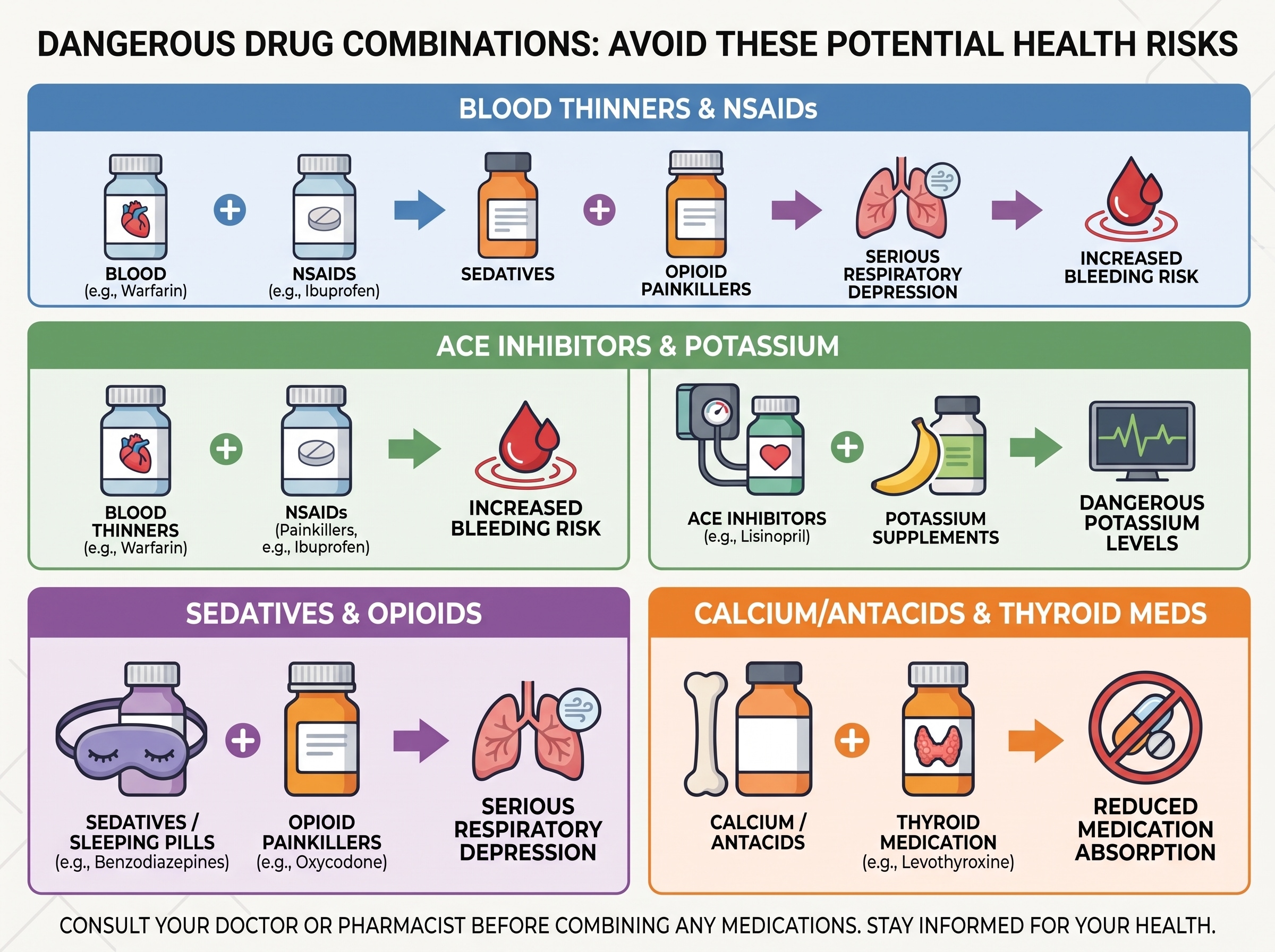
1. Blood Thinners and NSAID(Non-Steroidal Anti-Inflammatory Drugs) Painkillers
(e.g., Warfarin/Aspirin and Ibuprofen or Naproxen)
The Risk: Severe internal gastrointestinal bleeding and stomach ulcers.
Why It Happens: Anticoagulant (blood-thinning) medications and non-steroidal anti-inflammatory drugs (NSAIDs) both work to stop blood clotting while simultaneously irritating the gastric lining.
When combined, they could heighten the risk of internal haemorrhage.
Safer Alternative: Patients are advised to consult their primary care physician about paracetamol for mild pain relief or explore targeted, non-NSAID therapeutic options.
2. ACE Inhibitors and Potassium Supplements
(e.g., lisinopril and spironolactone or dietary potassium supplements)
The Risk: A dangerous spike in blood potassium levels (hyperkalaemia). Hyperkalaemia).
Why It Happens: ACE inhibitors, commonly prescribed for high blood pressure, naturally cause the body to retain potassium.
Pairing them with potassium-sparing diuretics or over-the-counter potassium supplements can lead to toxic accumulation in the blood, potentially causing severe cardiac arrhythmias or sudden heart palpitations.
Safer Alternative: Individuals should avoid starting potassium or speciality salt supplements without first getting their serum potassium levels checked via routine blood tests.
3. Sedatives or Sleeping Pills and Opioid Pain Medications
(e.g., Diazepam/Alprazolam and Oxycodone/Tramadol)
The Risk: Central nervous system depression, extreme sedation, and respiratory distress.
Why It Happens: Benzodiazepines (frequently prescribed for anxiety or insomnia) and opioids both act on relieving pain without loss of consciousness, but the central nervous system could suffer from side effects.
When taken together, their sedative effects compound, significantly increasing fall risks, confusion, and the danger of abnormally slow or stopped breathing during sleep.
4. Calcium Supplements / Antacids and Thyroid Medication
(e.g., calcium carbonate and levothyroxine)
The Risk: Unmanaged hypothyroidism due to blocked drug absorption.
Why It Happens: Calcium supplements and aluminium/magnesium-based antacids readily bind to synthetic thyroid hormones in the stomach.
This chemical binding prevents the thyroid medication from being properly absorbed into the bloodstream, making the dose ineffective.
Safer Alternative: Doses should be spaced out by at least four hours. Thyroid medication is typically best taken first thing in the morning on an empty stomach with plain water.
5. Statins and Certain Antifungals or Antibiotics
(e.g., Atorvastatin/Simvastatin and Erythromycin or Ketoconazole)
The Risk: Severe muscle toxicity (rhabdomyolysis) and potential acute kidney injury.
Why It Happens: Specific macrolide antibiotics and azole antifungals stop the enzyme CYP3A4, the key liver enzyme responsible for breaking down statins.
It can also stop this enzyme, causing statin levels to build up to toxic concentrations in the bloodstream, triggering severe muscle breakdown and organ strain.
These exact medication combinations should be avoided, as they could lead to serious health risks. Especially as you age, the health issues could make your recovery process longer and much more difficult. Older people need to consult their doctor for the exact medical guidance regarding their medications, and if any of them shows any side effects, the medication prescription needs to be revised.
Also Read: Ozempic Enters India: Diabetes Drug, Not A Miracle Fix, Novo Nordisk MD To NDTV
Disclaimer: This content including advice provides generic information only. It is in no way a substitute for a qualified medical opinion. Always consult a specialist or your own doctor for more information. NDTV does not claim responsibility for this information.