

)
More than 42 million Indians are living with some kind of thyroid disorder, as per the Medical Science Journal. This makes thyroid disease a major public health concern that needs early detection, and being aware of your body is the first step in this process. Seeking timely treatment is only possible when early detection takes place, and a simple home check can be used to identify possible thyroid malfunction, but it can't replace a medical diagnosis, as a doctor needs to look at your blood report as well as your symptoms. In order to check your thyroid at home, you need to know the symptoms that indicate a hyperactive or underactive thyroid. In India, about 10-11% of adults suffer from hypothyroidism, and 1-2% of Indians suffer from hyperthyroidism, making knowing your thyroid status vital. Furthermore, women tend to be more susceptible to developing thyroid issues, and those who are in the reproductive years or pregnant tend to be more at risk.
What Is the Thyroid And Why Is It Important?
The thyroid is a small, butterfly-shaped endocrine gland that is located in the front of the neck, just below your chin. It primarily produces hormones thyroxine (T4) and triiodothyronine (T3) that are responsible for regulating the body's cells and how they metabolise energy. These hormones are responsible for nearly every organ's function, energy production, body temperature, heart function, and weight management.
The thyroid gland is responsible for multiple processes, which is why when it becomes hyperactive or underactive, it could become a cause of multiple health issues. Thyroid health needs vigilance and paying attention to any symptoms that you may experience, as it needs to be diagnosed in a timely manner for medical treatment.
Can You Really Check Your Thyroid At Home?
Yes, you can, but it is only used as a method to identify visible asymmetry, difficulty swallowing, or any bulges. This is why it is important to perform a home check, but it should not replace medical diagnosis and diagnostic testing. Any visible abnormalities can be identified, but they are subjected to individual bias, as some people may think that something is wrong with their thyroid, but the medical test may come back normal. This is why blood tests are necessary, but at-home thyroid checks can be performed.
Step-By-Step Neck Test To Check Your Thyroid At Home
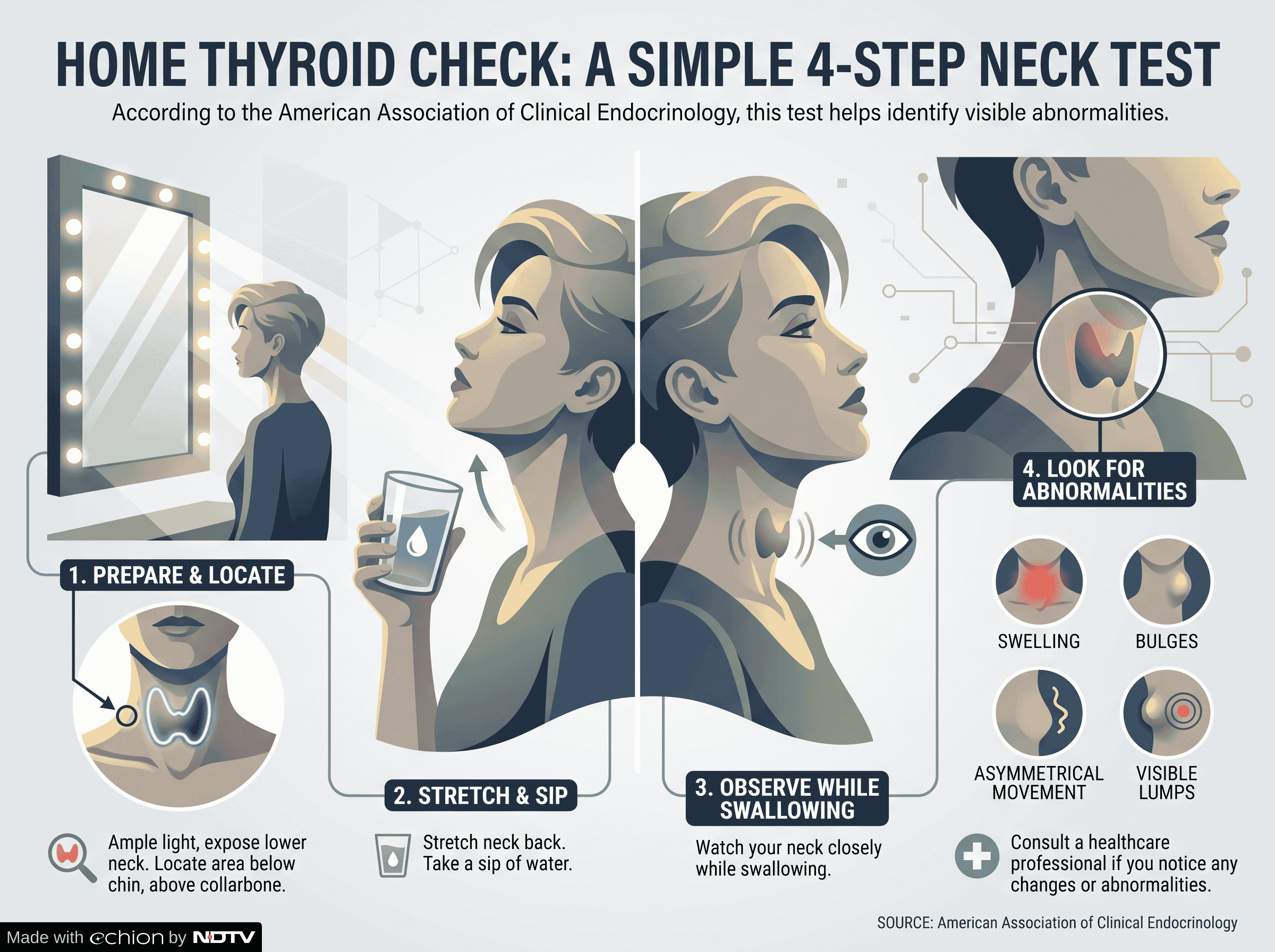
The American Association of Clinical Endocrinology pinpoints that a simple 6-step thyroid test could be used to identify any visible abnormalities in your thyroid.
Step 1: Stand In Front Of A Mirror
Make sure that you have ample natural light and that the lower part of your neck area is exposed.
Step 2: Locate Your Thyroid Area
Your thyroid area is located below the chin but is above the collarbone.
Step 3: Stretch Your Neck Back Slightly
You need to stretch your neck back slightly and identify the exact thyroid gland.
Step 4: Take a Sip of Water
After this, you need to take a sip of water and observe any visible changes that are out of the ordinary.
Step 5: Watch Your Neck While Swallowing
You need to watch your neck while swallowing to notice any signs of the following:
- Swelling
- Bulges
- Asymmetrical movement
- Visible lumps
Step 6: Repeat Several Times
After multiple gulps of water and observation, you can identify any abnormalities with this thyroid neck test.
The thyroid self-exam is based on observation, which means that you need to clearly know what is normal and abnormal.
Note: Blood tests are needed to correctly diagnose any thyroid disorders; the self-check exam is only for visible issues.
What Does A Healthy Thyroid Look Like During A Neck Check?
A healthy thyroid shows no visible signs that indicate any abnormalities that may cause any alarm. Upon performing the test, you may notice symmetrical movement during swallowing water with no obvious lumps or swelling present.
Note: No visible signs don't mean that a thyroid disorder is not present; blood tests are necessary to detect exact hormone levels.
Symptom Checklist: Signs That May Suggest A Thyroid Problem
A review published in The Lancet Journal pinpoints that an underactive thyroid can be identified by any symptoms that may occur. These symptoms can be the following:
- Fatigue
- Weight gain
- Dry skin
- Hair thinning
- Constipation
- Depression
- Cold intolerance
While an overactive thyroid can be indicated by symptoms such as:
- Weight loss
- Rapid heartbeat
- Anxiety
- Tremors
- Excess sweating
- Sleep disturbances
- Heat intolerance
Hypothyroidism symptoms need to be timely manner, as it can affect people who are asymptomatic and also cause severe illness.
Hyperthyroidism symptoms can vary in people, as some individuals may also be deficient in iodine or be genetically inclined to develop the disorder.
What Are The Earliest Signs Of Thyroid Problems?
The earliest signs of thyroid problems can range from fatigue, low energy, unexplained weight gain, and much more. The Lancet Journal has pinpointed that thyroid dysfunction can be categorised by the following:
- Persistent fatigue
- Changes in weight
- Menstrual irregularities
- Hair changes
- Mood shifts
- Neck swelling
A major sign of thyroid disease could be increased sensitivity to cold, as people tend to feel colder than those around them.
Warning Signs You Should Never Ignore
Certain warning signs that should never be ignored are visible signs that can be felt when you do an at-home thyroid check:
- Visible neck mass
- Difficulty swallowing
- Hoarseness
- Persistent throat pressure
- Rapidly growing lump
- Breathing difficulty
Thyroid nodule symptoms can be felt, but to be sure, you need an endocrinologist for diagnosis.
Enlarged thyroid symptoms can vary depending on what needs you are feeling near your thyroid gland.
Can A Neck Test Detect Thyroid Cancer?
No, neck checks are the first step towards identifying any suspicious markers of a thyroid malfunction. Lumps have even been identified by doctors, as they are visible and can be felt near the thyroid gland. But effective thyroid cancer diagnosis is not possible, as an ultrasound and biopsy are necessary to figure out if the lump is benign or malignant.
Who Is At Higher Risk Of Thyroid Disorders?
A major review published in The Lancet Journal has found that thyroid problems or disorders can especially affect people who fall under the specific category or age, those who are
- Women
- Adults over 60
- Family history
- Autoimmune conditions
- Pregnant and postpartum women
- Iodine deficiency
Thyroid disease risk factors can be many and need to be identified with precision for an accurate diagnosis.
What Blood Tests Confirm Thyroid Disease?
There are specific blood tests that confirm the presence of thyroid disease. These blood tests are the following:
- A TSH, or thyroid-stimulating hormone, test can be used to detect an underactive or overactive thyroid.
- Free T4 (Free Thyroxine) can be used to measure unbound (active) thyroxine circulating in the bloodstream.
- Free T3 (Free Triiodothyronine) is used to evaluate an overactive thyroid.
- A thyroid antibodies test is needed to figure out if any antibodies are attacking the thyroid and causing issues.
Note: Certain blood tests for thyroid function depend on the results as per the analysis by the endocrinologist.
When Should You See A Doctor?
You should seek a doctor when your symptoms last for more than a few weeks. This means that the underlying biological cause needs to be timely treated and diagnosed.
Especially seek medical help if your neck is swollen and the symptoms are lasting for more than a few weeks.
Those with a family history of thyroid issues need to perform at-home thyroid checks and seek annual or bi-annual health screenings.
If your self-check thyroid exam has identified some abnormalities, then you need to make sure that you consult a doctor.
Also Read: Can Constipation Be A Sign Of Thyroid Disease?
Disclaimer: This content including advice provides generic information only. It is in no way a substitute for a qualified medical opinion. Always consult a specialist or your own doctor for more information. NDTV does not claim responsibility for this information.