

)
Normally, people experience a blood sugar spike whenever they consume food. But regulating it is of utmost importance, as a sudden high spike can negatively impact the body's organs. Not only is there a possibility of internal damage, but the overall metabolic health could also be at risk. Changes in metabolism are possible if your blood sugar levels are imbalanced. This can happen due to frequent blood glucose that may surge suddenly, which has been widely studied in nutritional research.
The Frontiers in Cardiovascular Medicine Journal documents that the order of your meal has a direct impact on your blood sugar levels. The ideal sequence should be taking a fibre-first approach to cushion the complex carbohydrates and other components on your plate. Without making many changes to your diet order, you can regulate your blood sugar spikes. To understand exactly how this happens, focusing on how your blood sugar works is essential.
What Are Blood Sugar Spikes, and Why Do They Matter?
After consuming any type of food, your pancreas releases a certain quantity of insulin, and there is a consequent blood sugar secretion in your bloodstream. When this rise is in excess, then your blood sugar can skyrocket, causing an effect on energy levels, hunger, and even long-term metabolic health.
If these blood sugar spikes are too high, then your oxidative stress and internal inflammation levels can increase.
It also plays a direct role in increasing the chances of heart disease and diabetes.
What Causes Blood Sugar Spikes After Eating?
A review published in the Diabetes, Obesity and Metabolism Journal mentions that if you consume too many carbohydrates without eating enough fibre-rich foods first, then your blood glucose can go out of control.
How Does Fibre Slow Down Sugar Absorption?
The Foods Journal mentions that the intake of soluble fibre is important, as the viscous fibres slow down blood sugar spikes. It also plays a role in coating the stomach and making the content in the intestines absorb carbohydrates and release glucose.
Why Does Fibre Reduce Blood Sugar Spikes?
Yes, as it can function as an absorber of excess blood sugar glucose, the fibre quality in fibre-rich foods such as psyllium, beta-glucan, resistant starch, and inulin regulates blood sugar levels.
What Happens When You Eat Fibre Before Carbohydrates?
The Journal of Clinical Biochemistry and Nutrition documents that adults who have type-2 diabetes showed better blood sugar levels when they consumed vegetables that are fibre-rich before eating carbohydrates.
The exact sequence of the meal is what causes blood sugar spikes, and you can manipulate it if you know which food causes more blood sugar spikes and which can flatten the sudden spike.
Can Meal Order Affect Blood Glucose Levels?
Yes, as nutritional science published in the Foods Journal suggests, the soluble and viscous fibres in high-fibre foods can slow down gastric emptying and support blood sugar regulation.
Is Eating Fibre Before Carbs Scientifically Proven?
Yes, as there are multiple reviews and research studies that have proved that eating fibre first can regulate your blood sugar levels. For instance, eating salads, both cooked and raw, can regulate your blood sugar levels if you are planning to eat complex carbohydrates such as bread, pizzas, or heavy cheese or dairy food combinations.
Which Fibre-Rich Foods Are Best For Controlling Blood Sugar?
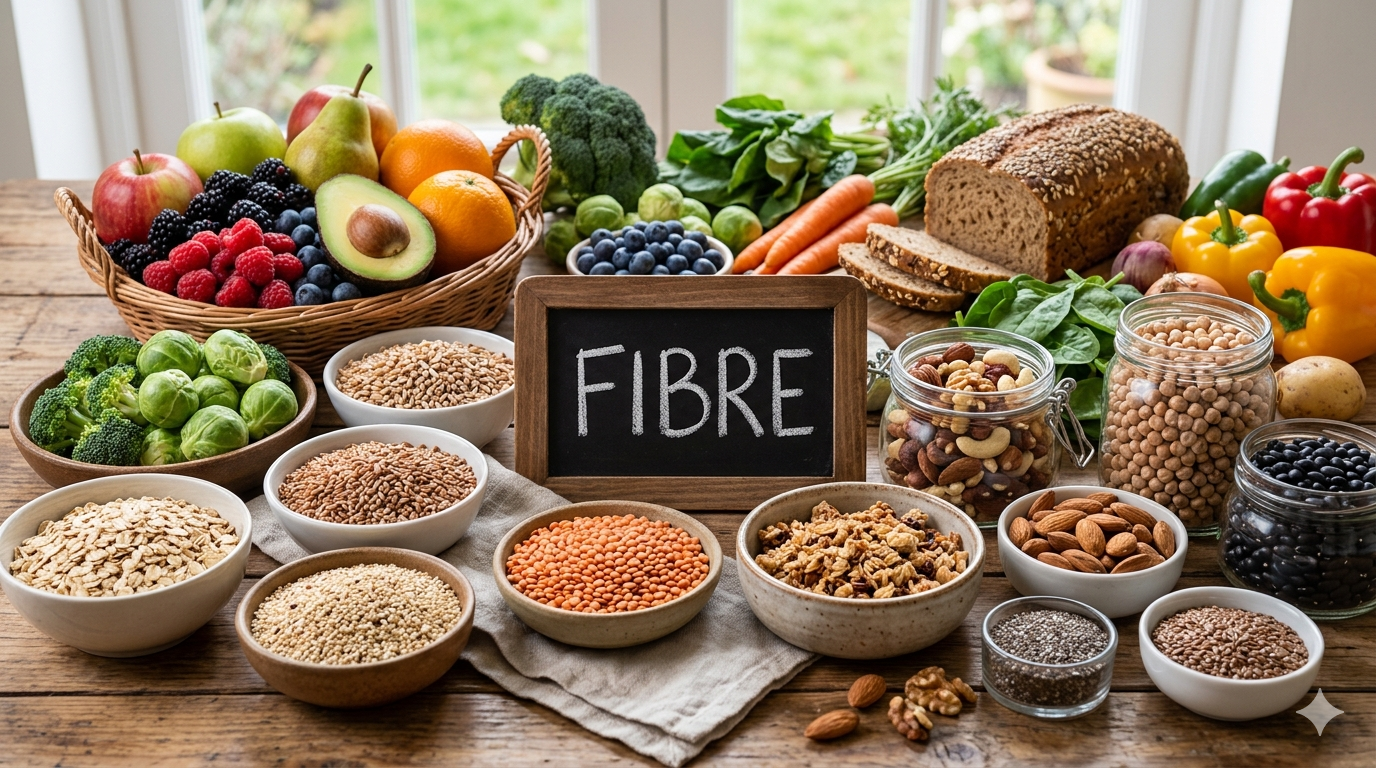
The exact fibre-rich foods that should be eaten before your main meals can be divided into different groups by their supposed effect on your digestive tract.
Non-Starchy Vegetables
- Cucumber
- Carrot
- Tomato
- Lettuce
- Spinach
Legumes and Pulses
- Chickpeas
- Lentils
- Kidney beans
- Black gram
High-Fibre Fruits
- Apple
- Pear
- Guava
- Orange
Seeds And Nuts
- Chia seeds
- Flaxseeds
- Almonds
- Walnuts
Note: You need to consult a nutritionist or dietician for the adequate dose or portion size of fibre on your plate.
Step-By-Step Guide To The Fibre-First Eating Method
Nutritional research suggests that taking a fibre-first approach to your plate is ideal if you want to control your resulting blood sugar levels. Here is a practical sequence, but this can vary depending on your exact nutritional needs:
1. Start with salad or vegetables to coat your stomach.
2. Eat protein next for maximum impact.
3. Consume healthy fats to increase your portion of good fats needed for a healthy diet.
4. Finish with rice, roti, potatoes, or other carbohydrates.
What Should You Eat First During A Meal To Avoid Blood Sugar Spikes?
Eating fibre-rich foods is vital to avoid blood sugar spikes that could hurt your internal functioning and long-term metabolic health.
Additional Benefits Beyond Blood Sugar Control
Research published in the Scientific Reports suggests that fibre could lower your total cholesterol levels and even reduce your bad cholesterol. Additionally, fibre-rich foods could introduce these health benefits if they are eaten in the ideal portion:
- Improved satiety or fullness can control overeating.
- Weight management efforts could be effectively supportive.
- Better digestive health is possible as the gut recovers better when there is fibre in the diet.
- Gut microbiome support can be provided as good bacterial strains are introduced at the right time.
- Reduced cravings can regulate weight gain.
Can Eating More Fibre Help With Weight Loss And Gut Health?
The Scientific Reports research has indicated that more fibre intake than the norm can help with weight loss as it reduces cravings. Furthermore, the beneficial strains in a high-fibre diet can be smartly introduced to the gut, making its microbiome stronger.
How Much Fibre Do You Need Daily?
According to the Indian Council of Medical Research (ICMR) and the National Institute of Nutrition (NIN), men and women need different levels of fibre in their diet. Here are the estimates:
- Women: approximately 25 g of fibre is needed daily.
- Men: 38 g of fibre is needed daily.
These values can fluctuate as fibre intake is also influenced by how much physical activity you get daily.
Fibre intake also needs a proportional hydration level to support its metabolism.
How Much Fibre Should You Eat Every Day?
The Lancet Journal suggests that you need 25-29 g of fibre per day, as it not only regulates blood sugar levels but also can have multiple health benefits.
Who Should Be Careful About Suddenly Increasing Fibre Intake?
If you don't consume enough fibre and are thinking of increasing your intake, then you need to be careful of these potential side effects:
- Bloating and gas
- IBS or digestive disorders
- The importance of gradual increases is vital
- Need for adequate fluid intake
Can Eating Too Much Fibre Cause Digestive Problems?
Yes, it can, as the fibre needs to be digested for it to have a positive effect on your gut. If it is not water-soluble, then digestive distress can be triggered.
What Are The Best Natural Ways To Prevent Blood Sugar Spikes?
You need to make use of these tested tips, as they are proven to regulate your blood sugar levels:
- Walking after meals is necessary for blood glucose absorption.
- Protein inclusion can make the blood glucose absorption rate better.
- Portion control is necessary for balance.
- Adequate sleep is foundational for blood sugar regulation.
- Regular exercise is needed for the muscles to absorb the blood glucose better.
Starting your meals with fibre-rich foods can coat your digestive tract and improve the blood glucose absorption rate.
Also Read: Fibre Types Explained: How Chia Seeds, Flaxseeds, And Psyllium Husk Affect Your Body Differently
Disclaimer: This content including advice provides generic information only. It is in no way a substitute for a qualified medical opinion. Always consult a specialist or your own doctor for more information. NDTV does not claim responsibility for this information.