

)
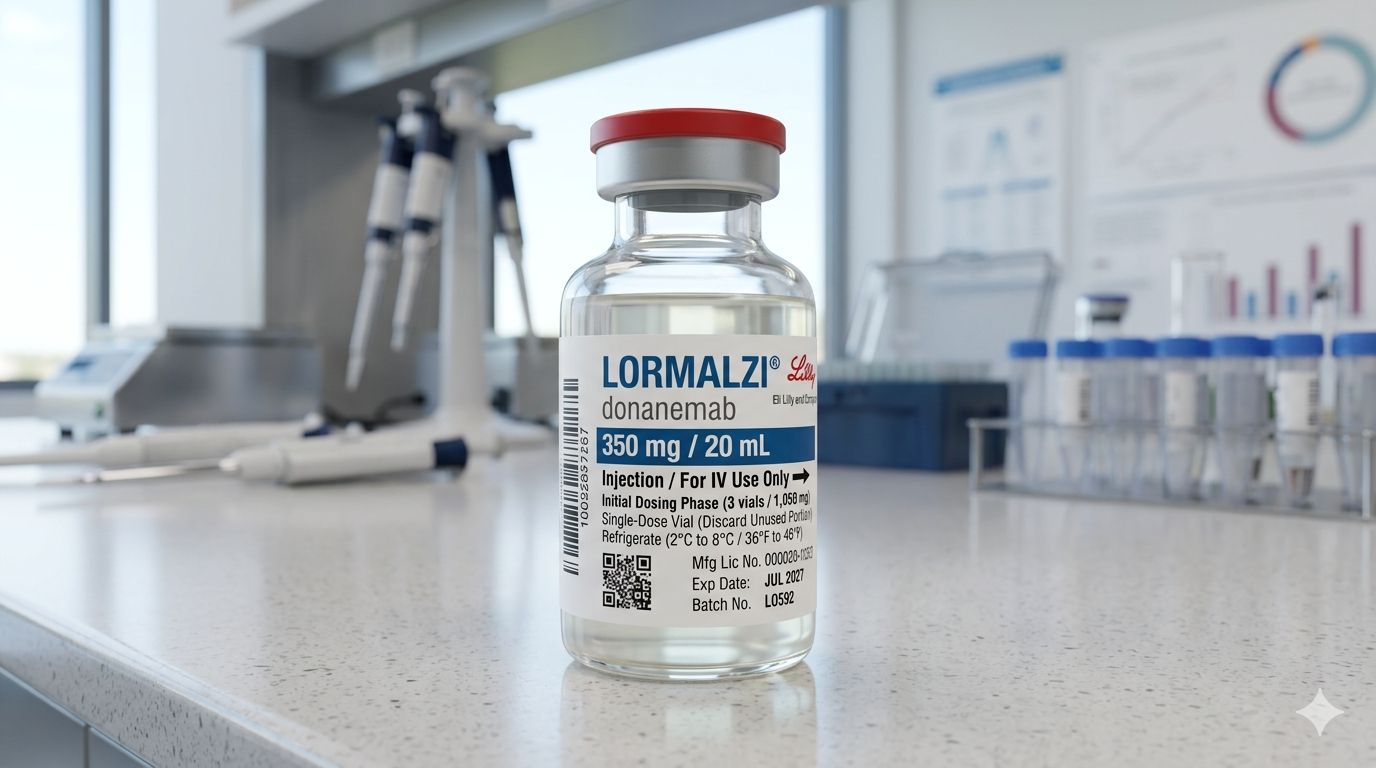
India has received a new treatment option for early Alzheimer's disease as Eli Lilly and Company (India) launched Lormalzi (donanemab), a once-monthly amyloid plaque-targeting therapy approved for patients with mild cognitive impairment or mild dementia due to Alzheimer's disease. Priced at Rs 91,688 for a 350 mg vial, the prescription-only intravenous therapy has received marketing authorisation from the Central Drugs Standard Control Organization (CDSCO). Lilly says the drug is the first and only once-monthly amyloid plaque-targeting therapy currently available in India, designed specifically for patients in the early symptomatic stages of Alzheimer's disease.
The launch comes as India faces a rapidly rising dementia burden driven by ageing populations, delayed diagnosis and limited awareness. According to estimates cited by Lilly, dementia affects approximately 8.8 million people in India, with Alzheimer's disease accounting for the majority of cases. That number is projected to nearly double by 2036.
What Is Lormalzi (Donanemab)?
Lormalzi is the Indian brand name for donanemab, a monoclonal antibody therapy developed to target amyloid plaques in the brain, one of the hallmark biological features associated with Alzheimer's disease. Donanemab is sold in the United States of America, United Kingdom, European Union, Japan and many other nations under the brand name Kisunla.
According to Eli Lilly, donanemab specifically targets a modified form of beta-amyloid known as N3pG, found in amyloid plaques. By binding to these plaques, the drug helps the immune system remove amyloid buildup from the brain.
The therapy is approved for:
- patients with mild cognitive impairment due to Alzheimer's disease, or
- those in the mild dementia stage,
- provided amyloid pathology is confirmed.
Amyloid plaques are abnormal protein deposits that accumulate between nerve cells in the brain and are believed to contribute to memory loss, impaired thinking and cognitive decline associated with Alzheimer's disease.
Also Read: Is Vitamin D Deficiency A Risk Factor For Alzheimer's Disease? Study Answers
How Does The Treatment Work?
Lormalzi is administered as a once-monthly intravenous infusion. Unlike conventional Alzheimer's medicines that mainly address symptoms temporarily, donanemab is designed to target the underlying disease biology by reducing amyloid plaque accumulation.
According to an Eli Lilly spokesperson, treatment in India is expected to continue for 18 months (76 weeks) in most patients because amyloid PET imaging, often used internationally to assess plaque clearance, is not yet widely available in India.
Treatment may be stopped earlier if:
- serious safety concerns develop,
- patients experience adverse effects,
- or the disease progresses to moderate Alzheimer's disease.
Researchers globally have increasingly explored limited-duration amyloid therapies where treatment is guided by plaque reduction rather than indefinite long-term dosing.
What Tests Are Needed Before Starting Treatment?
Doctors emphasise that not every patient with memory problems is eligible for donanemab therapy.
Patients must first be confirmed to have:
- early symptomatic Alzheimer's disease, and
- evidence of amyloid pathology.
According to Lilly, India has seen growing access to advanced Alzheimer's diagnostics in recent years, including:
- cerebrospinal fluid (CSF)-based biomarker testing,
- blood-based biomarker tests such as pTau217 and beta-amyloid 1-42.
The company says these newer blood tests may offer more than 90% sensitivity and specificity in detecting amyloid pathology. These diagnostic tools are currently available mainly at specialised neurological institutes and larger urban hospitals.
What Lilly Said About The Launch
Winselow Tucker, President and General Manager, Eli Lilly and Company (India), said the launch reflects the company's long-term focus on Alzheimer's disease innovation. "For 35 years, Lilly has been a global pioneer advancing research of therapies and diagnostics for people with Alzheimer's disease," Tucker said. "Alzheimer's is a complex, progressive condition that places a significant emotional, clinical, and societal burden on patients, caregivers, and healthcare systems."
He added that Lilly plans to collaborate with governments, healthcare systems and advocacy organisations to improve diagnosis and patient access. Rahul Kapur, Senior Director, Medical, Eli Lilly and Company (India), said approximately one-third of patients in early symptomatic stages may progress to more advanced disease within one year. "Early diagnosis, supported by appropriate patient assessment, remains central to enabling informed, evidence-led treatment decisions," he said.
Why Alzheimer's Disease Is Becoming A Major Indian Health Concern
India's dementia burden is rising rapidly as life expectancy increases. Dementia is currently among the leading causes of disability and dependency in older adults globally. Research published in The Lancet Public Health estimates that dementia prevalence in India could increase sharply over the coming decades due to demographic ageing. (thelancet.com)
Lilly estimates dementia already costs the Indian economy more than Rs28,300 crore annually. Experts say delayed diagnosis remains one of the country's biggest challenges because symptoms are often dismissed as normal ageing in the early stages.
Also Read: Smell Test For Alzheimer's Disease: Can It Detect Risk Years Before Symptoms?
Are There Risks Or Limitations?
Like other amyloid-targeting Alzheimer's therapies, donanemab may carry risks. One of the key concerns involves ARIA (amyloid-related imaging abnormalities), a side effect associated with swelling or bleeding in the brain that requires monitoring through MRI scans.
Experts also note that:
- the drug is not a cure,
- it does not reverse established Alzheimer's disease,
- and its benefits appear greatest in carefully selected early-stage patients.
The high cost of therapy may also limit accessibility for many Indian families despite Lilly's proposed Alternate Access programme.
The launch of Lormalzi marks a significant development in India's Alzheimer's treatment landscape. As one of the first disease-modifying therapies targeting amyloid plaques to enter the Indian market, donanemab represents a shift toward earlier and more biologically targeted intervention.
However, experts caution that successful use will depend heavily on early diagnosis, specialised testing infrastructure, MRI monitoring and affordability. As India's dementia burden continues to rise, the therapy may open a new chapter in Alzheimer's care, but access and awareness will remain critical challenges.
Disclaimer: This content including advice provides generic information only. It is in no way a substitute for a qualified medical opinion. Always consult a specialist or your own doctor for more information. NDTV does not claim responsibility for this information.