

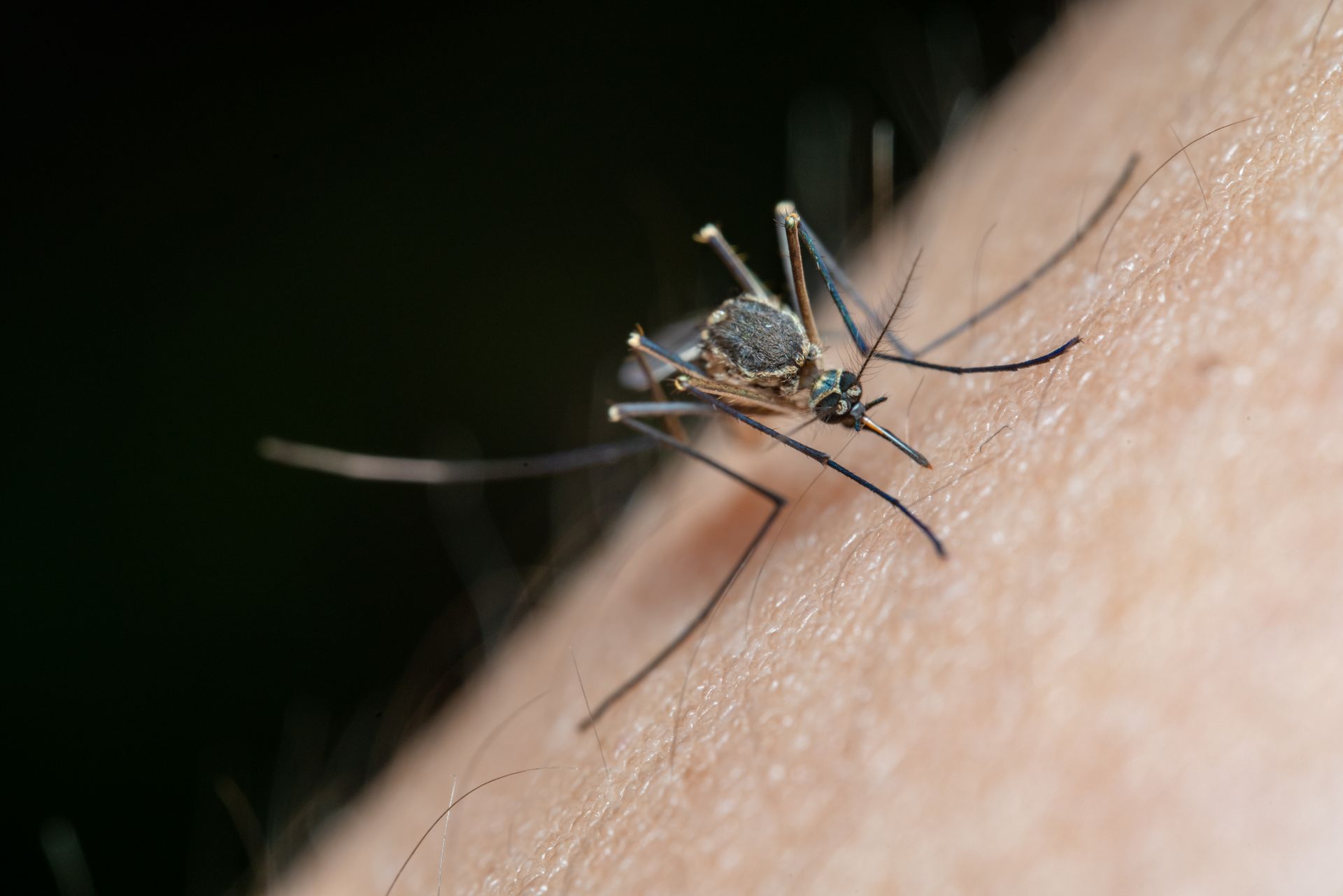
)
The World Health Organization (WHO) has issued a high-risk global health alert, placing India on "high to very high" risk status due to the intensifying El Nino climate phenomenon. The global public health evaluation warns that unseasonal weather shifts, severe heat spikes, and sudden rainfall patterns across South Asia are setting off a dual public health crisis: an alarming surge in mosquito-borne diseases like dengue and malaria, alongside a dangerous increase in severe heat-related illnesses. This warning aligns with worsening vector-borne disease metrics across Indian metros.
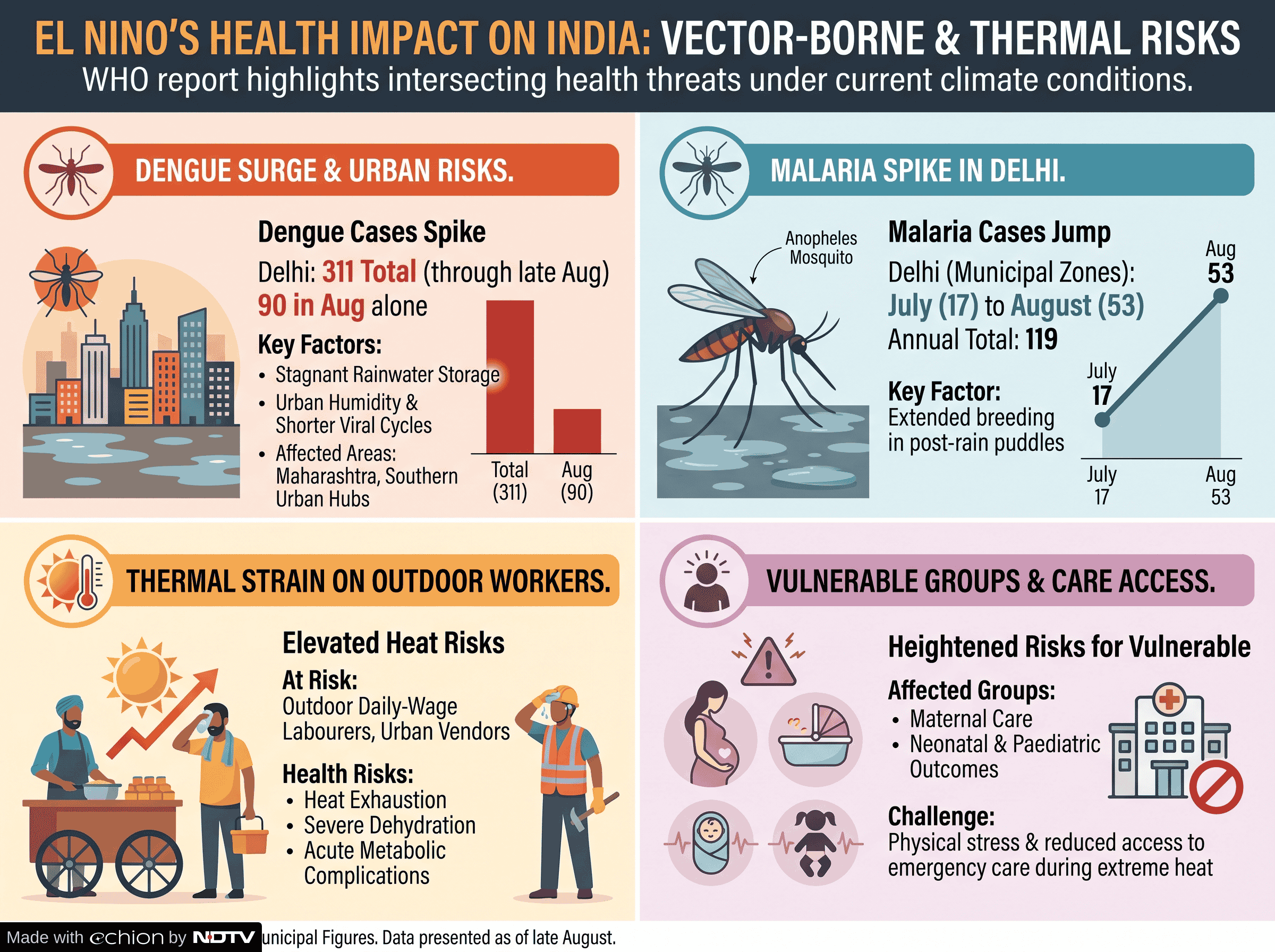
In Delhi, municipal data reveals that August recorded 90 fresh dengue cases, the highest single-month tally of the year, bringing the seasonal total to 311 cases. Concurrently, malaria cases in the national capital tripled in a single month, leaping from 17 cases in July to 53 in August. As vector density rises alongside erratic thermal shifts, public health infrastructure across northern and central India faces a complex dual burden.
How Climate Affects the Spread of Heat-Related and Dengue
El Nino is a climate pattern driven by the periodic warming of surface waters in the central and eastern Pacific Ocean that disrupts weather systems worldwide. In India, it manifests as a mix of prolonged dry spells, elevated baseline temperatures, and erratic monsoon downpours.
This shifting environment directly impacts public health through two main vectors:
Accelerated Mosquito Life Cycles: Higher ambient temperatures speed up the incubation rate of the dengue virus (DENV) inside the Aedes aegypti mosquito. Simultaneously, irregular rainfall leaves pockets of stagnant water in urban drainages, construction sites, air coolers, and household storage containers, creating ideal breeding sites.
Amplified Thermal Stress: Drier conditions paired with above-normal heat during late-monsoon months increase risks of heat exhaustion, heatstroke, and acute strain on individuals with pre-existing cardiovascular, respiratory, and renal conditions.
Regional Climate Expert Explains How El Nino Worsens Seasonal Illnesses
To understand the localised impact on the Indian subcontinent, climate scientists emphasise that traditional seasonal disease management models must adapt to these shifting weather baselines. Dr Anjal Prakash, Clinical Associate Professor (Research) and Research Director at the Bharti Institute of Public Policy and Regional Climate Adaptation Specialist, explains, "El Nino isn't just elevating regional temperatures; it is destabilising our seasonal vector baselines. When urban centres experience unseasonal humidity mixed with prolonged thermal spikes, the biological replication rate of the vector speeds up significantly. Mosquitoes bite more frequently, and the viral incubation period drops. In heavily populated Indian metros, a two-degree uptick in average temperature transforms localised stagnant pools into rapid breeding zones for vector outbreaks."
Localising the Impact: India Data Breakdown
The WHO situation report highlights multiple health vectors intersecting under current El Nino conditions across Indian states:
- Dengue Surge: Delhi reported 311 total cases through late August, with 90 cases recorded in August alone. Maharashtra and Southern urban hubs are also scaling up vector surveillance due to stagnant rainwater storage, urban humidity, and shorter viral replication cycles inside mosquitoes.
- Malaria Spikes: Delhi municipal figures showed a jump from 17 cases in July to 53 cases in August, bringing the annual total to 119 cases across municipal zones, driven by extended breeding cycles of Anopheles mosquitoes in post-rain puddles.
- Thermal Strain: Outdoor daily-wage labourers and urban vendors face an elevated risk of heat exhaustion, severe dehydration, and acute metabolic complications due to above-normal thermal indices projected through late autumn.
- Vulnerable Groups: High heat index levels cause physical stress and reduced access to emergency care, leading to heightened health risks for maternal, neonatal, and paediatric care outcomes during extreme heat events.
Recognising Symptoms: Heat Illness vs Dengue
Because El Nino creates overlapping environmental conditions, patients often present with overlapping symptoms. Distinguishing between thermal strain and vector infection early is critical for timely medical intervention:
- Heat Exhaustion and Heatstroke: Characterised by heavy sweating or hot/dry skin, sudden confusion, dizziness, rapid pulse, severe muscle cramps, and high body temperature without viral prodrome. Immediate cooling and fluid replacement are required.
- Dengue Fever: Characterised by high fever accompanied by severe retro-orbital (behind the eyes) pain, intense joint and muscle pain ("breakbone fever"), maculopapular skin rash, persistent nausea, and a sudden drop in blood platelet count.
Actionable Safeguards for Households
Health authorities recommend immediate preventive steps at the community and individual levels to mitigate both vector expansion and heat stress:
- Institute a Weekly 'Dry Day': Empty, scrub, and dry all ambient water storage vessels, cooler trays, and flowerpot drip pans once a week to break the 7-day larval cycle of Aedes mosquitoes.
- Vector Barrier Protection: Use EPA-approved vector repellents containing DEET or Picaridin, install wire mesh screens on windows and doors, and wear light-coloured, full-sleeved clothing.
- Thermal Regulation and Hydration: Maintain fluid balance with oral rehydration solutions (ORS), coconut water, or electrolyte-rich fluids, and avoid prolonged physical activity outdoors during peak afternoon hours.
- Community Surveillance: Report open municipal drains, overflowing water tanks, and uncollected waste to local ward officers promptly to prevent urban breeding hot spots.
The interplay of weather patterns could impact people with widespread diseases that are common during monsoon season and extreme heat.
Also Read: India Close To Dengue Vaccine: All About The Phase 3 Trials And More
Disclaimer: This content including advice provides generic information only. It is in no way a substitute for a qualified medical opinion. Always consult a specialist or your own doctor for more information. NDTV does not claim responsibility for this information.