

)
When dealing with a cough, cold or chest congestion, most people instinctively turn to "healthy" foods to recover faster. Fruits, dairy, seafood, spices and fermented foods are often considered immunity-boosting staples. However, medical research shows that certain nutritious foods can paradoxically worsen respiratory symptoms, especially during an active upper respiratory infection. Cough and cold symptoms are not caused only by viruses. They are largely driven by inflammation, mucus secretion, throat sensitivity and nerve irritation in the airways. Foods that stimulate mucus sensation, histamine release, acid reflux or throat irritation can intensify coughing, congestion and post-nasal drip, even if those foods are otherwise rich in vitamins, minerals and antioxidants.
Importantly, this does not mean these foods are "bad" or unhealthy. Rather, their effects during illness can differ from their effects during wellness, and responses vary from person to person. Understanding which foods may aggravate symptoms allows individuals to temporarily modify their diet for faster relief and comfort.
Below are seven nutrient-dense foods that scientific studies and clinical observations suggest may worsen cough, cold or congestion in some individuals, along with the mechanisms behind them.
1. Dairy Products (Milk, Cheese, Paneer, Dahi)
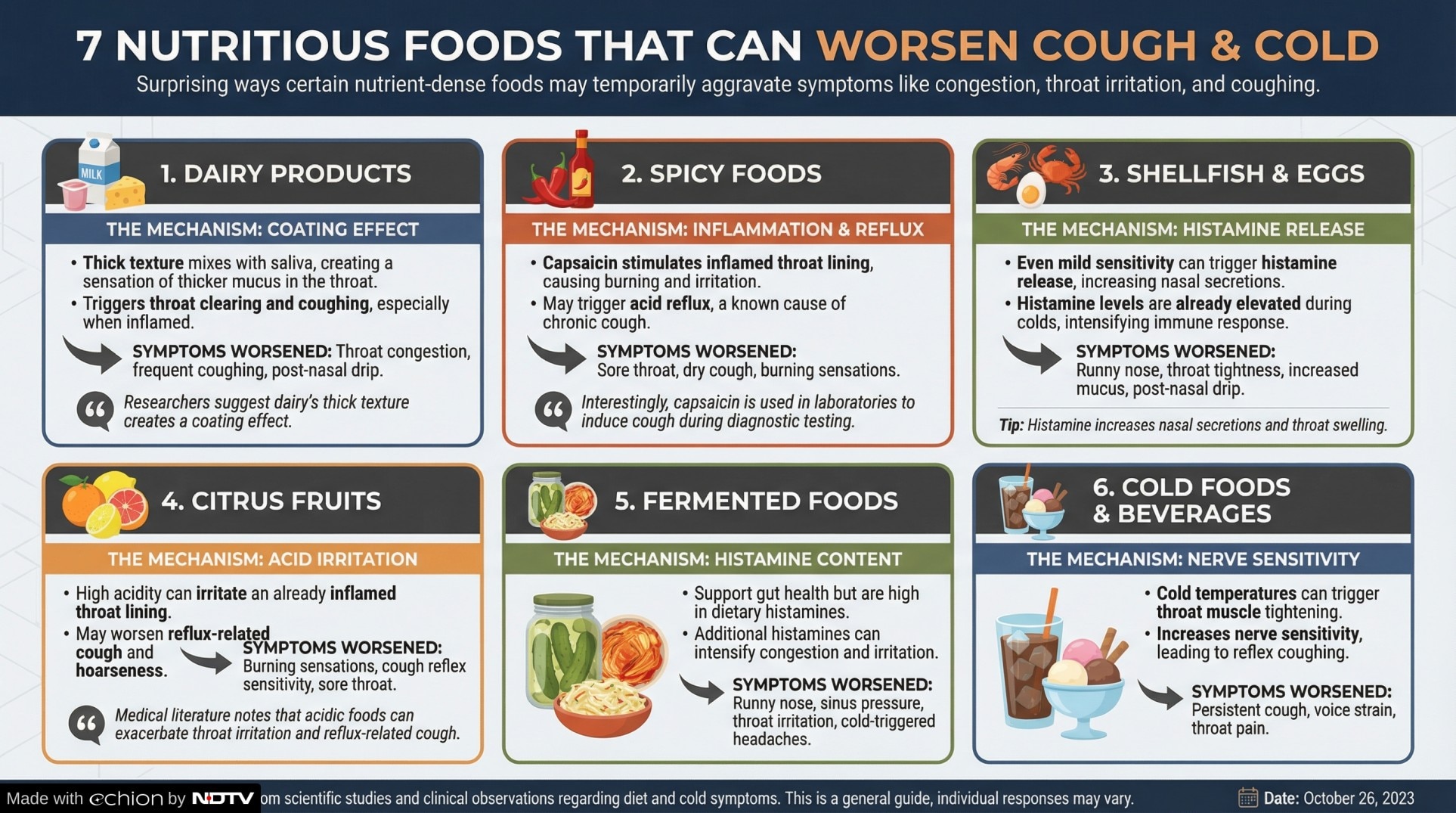
Dairy foods are rich in high-quality protein, calcium, vitamin B12 and probiotics, making them nutritionally valuable. However, they are frequently associated with worsening cough and congestion sensations during respiratory infections. Scientific studies show that dairy does not increase actual mucus production in the lungs. A controlled trial published in the American Review of Respiratory Disease found no measurable increase in nasal or bronchial secretions after milk consumption, even during colds.
So why do many people feel worse? Researchers suggest dairy's thick texture mixes with saliva, creating a coating effect in the throat that increases the perception of mucus thickness. This sensation can trigger throat clearing and coughing, especially when airways are already inflamed.
Additionally, individuals with lactose intolerance or milk protein sensitivity may experience increased inflammation, bloating and reflux, all of which can worsen cough.
Who should avoid temporarily: People who notice heavier throat congestion, frequent coughing or post-nasal drip after dairy during illness.
2. Spicy Foods (Spicy Curries, Hot Sauces, Chillies)
Spicy foods contain capsaicin, a bioactive compound with antioxidant and metabolic benefits. While capsaicin can briefly clear nasal passages, it can also irritate sensitive throat and airway nerves. Research published in Pulmonary Pharmacology & Therapeutics shows that capsaicin activates sensory nerve endings linked to the cough reflex.
During a cold, the throat lining is already inflamed. Capsaicin stimulation can lead to burning sensations, throat irritation, reflex coughing and worsening dryness. In some individuals, it may also trigger acid reflux, a known cause of chronic cough. Interestingly, capsaicin is used in laboratories to induce cough during diagnostic testing, highlighting its strong effect on airway nerves.
Who should avoid temporarily: People with sore throat, dry cough, acid reflux, or voice strain during infection.
Also Read: Why Winter Cough Lingers: Here's How Daily Habits Affect Recovery
3. Shellfish (Prawns, Shrimps, Crab, Lobster)
Shellfish are extremely nutrient-dense, providing zinc, selenium, iodine and omega-3 fatty acids, all vital for immune health. However, shellfish are also among the most common food allergens worldwide. According to the U.S. National Institute of Allergy and Infectious Diseases, shellfish can trigger histamine release, even in individuals without full-blown allergies.
Histamine increases nasal secretions, throat swelling, itching and mucus sensation, which can worsen congestion and coughing. During a cold, when histamine levels are already elevated due to immune activity, shellfish may intensify symptoms. Even mild histamine responses can cause runny nose, throat tightness or persistent cough, which may be misattributed to the infection itself.
Who should avoid temporarily: People with allergies, sinus congestion, post-nasal drip or unexplained cough worsening after seafood.
4. Citrus Fruits (Oranges, Lemons, Grapefruit)
Citrus fruits are excellent sources of vitamin C and antioxidants, but their high acidity can irritate an already inflamed throat. Medical literature from the National Institutes of Health notes that acidic foods can exacerbate throat irritation and reflux-related cough. In people with sore throat or acid reflux, common during colds, citrus juices may worsen burning sensations, hoarseness and cough reflex sensitivity. This does not negate vitamin C's benefits, but timing matters.
Tip: Whole fruits are better tolerated than juices, and non-acidic vitamin C sources may be preferable during active symptoms.
5. Eggs
Eggs are a highly nutritious food, rich in high-quality protein, vitamin D, vitamin B12, selenium and choline, all nutrients that support immune health. However, during a cough or cold, eggs may worsen congestion or throat discomfort in certain individuals. Research shows eggs do not directly increase mucus production. However, they are a common food allergen, and even mild sensitivity can trigger histamine release, which increases nasal secretions, post-nasal drip and throat irritation, potentially intensifying cough.
Additionally, eggs, especially when fried or cooked with oil, may worsen acid reflux, a recognised cause of persistent or infection-related cough. Some people also report a coating sensation in the throat after eating eggs, which may be perceived as excess phlegm during illness.
Who should avoid temporarily: Individuals with egg sensitivity, sinus congestion, reflux-related cough, or worsening symptoms after eating eggs while sick.
6. Fermented Foods (Pickles, Kimchi, Sauerkraut)
Fermented foods support gut health and immunity through probiotics. However, they are also high in histamines. According to reviews in Nutrients journal, histamine-rich foods can aggravate nasal congestion and mucus secretion in sensitive individuals. During respiratory infections, histamine levels naturally rise. Additional dietary histamines may intensify runny nose, sinus pressure and throat irritation, worsening cough.
Who should avoid temporarily: People with sinus congestion, allergic tendencies or cold-triggered headaches.
Also Read: Is Your Child Dealing With Cold And Cough? How To Reduce Risk In Winter
7. Cold Foods And Cold Beverages
Cold smoothies, ice cream and chilled drinks can be nutritious and hydrating, yet they may trigger throat muscle tightening and nerve sensitivity. Clinical observations published in ENT literature note that cold exposure can worsen throat irritation and cough reflex sensitivity in inflamed airways. Cold temperatures may also temporarily reduce local blood flow, slowing healing of irritated throat tissues.
Who should avoid temporarily: People with persistent cough, voice strain or throat pain.
Nutritious foods are essential for recovery, but during coughs and colds, how food interacts with inflamed airways matters as much as its nutrient content. Dairy, shellfish, spicy foods, citrus, fermented items, sugar and cold foods can worsen symptoms in certain individuals, not because they are unhealthy, but because they irritate sensitive respiratory pathways.
Listening to your body, choosing soothing alternatives and temporarily avoiding trigger foods can significantly improve comfort and recovery time. If cough or congestion persists beyond two weeks, medical evaluation is essential.
Disclaimer: This content including advice provides generic information only. It is in no way a substitute for a qualified medical opinion. Always consult a specialist or your own doctor for more information. NDTV does not claim responsibility for this information.