

)
As temperatures soar across India, coconut water has become a go-to summer drink, praised for its natural electrolytes, cooling properties and hydration benefits. From fitness enthusiasts to those battling heat exhaustion, many turn to this tropical beverage as a healthier alternative to sugary drinks. But while coconut water is often marketed as a "natural superdrink," experts caution that overconsumption can come with unexpected risks. Drinking excessive amounts, especially in a short period, may disrupt the body's electrolyte balance, trigger digestive issues and, in rare cases, even lead to serious complications.
According to global health guidance from organisations like the World Health Organization (WHO) and the American Heart Association (AHA), maintaining proper hydration is crucial during hot weather, but balance is key. Overloading the body with any single nutrient, including potassium, can be harmful rather than beneficial.
Scientific studies have also highlighted that coconut water is particularly rich in potassium, an essential mineral that, in excess, may pose health risks, especially for people with underlying conditions. As summer consumption rises, understanding how much is too much becomes essential for safe hydration.
Why Coconut Water Is Popular In Summer
Coconut water is about 95% water and contains natural electrolytes such as potassium, sodium and magnesium, making it useful for mild hydration. It is often recommended for:
- Replenishing fluids lost through sweat
- Supporting electrolyte balance
- Providing a low-calorie alternative to soft drinks
However, while it may help in mild dehydration, it is not always the ideal replacement for oral rehydration solutions, especially in severe dehydration cases where precise electrolyte balance is required.
Also Read: 8 Reasons Why Coconut Water Is The Perfect Summer Drink
The Hidden Risk: Too Much Potassium
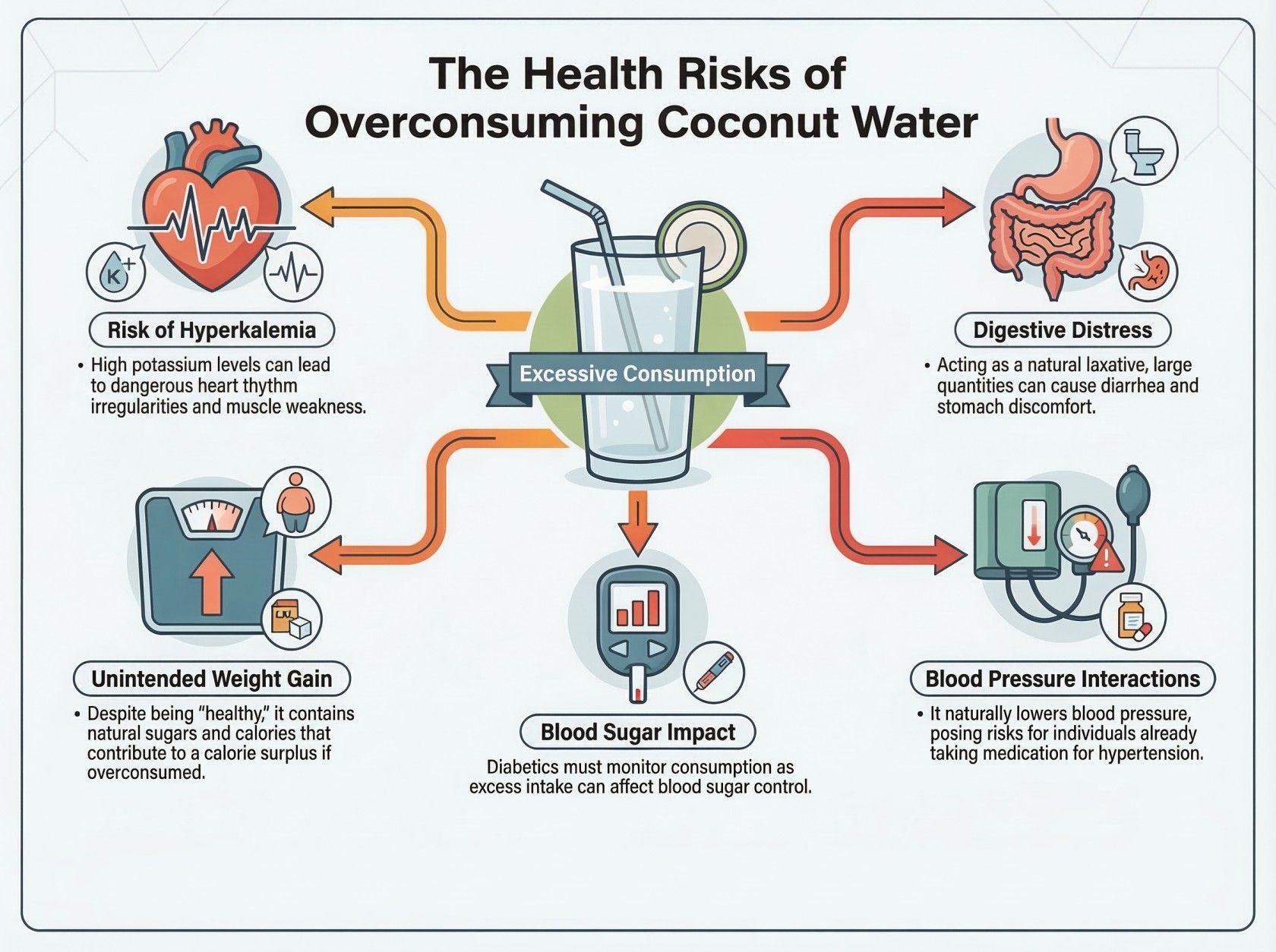
One of the biggest concerns with excessive coconut water consumption is its high potassium content. A single serving can contain significant amounts of potassium, and consuming large quantities can lead to hyperkalemia, a condition where potassium levels in the blood become dangerously high.
Hyperkalemia can cause:
- Muscle weakness
- Irregular heartbeat
- In severe cases, cardiac complications
Medical case reports have documented instances where excessive coconut water intake contributed to life-threatening hyperkalemia and even paralysis.
This risk is particularly high for:
- People with kidney disease
- Individuals on potassium-sparing medications
- Those with diabetes or heart conditions
- Studies also show coconut water consumption can significantly increase serum potassium levels in the body.
Digestive Issues And Gut Discomfort
Drinking too much coconut water may also affect digestion. Because it contains fermentable carbohydrates (FODMAPs), excessive intake can lead to:
- Diarrhoea
- Bloating
- Stomach cramps
Research indicates that high consumption may draw water into the intestines, causing loose stools in some individuals. Additionally, coconut water has mild natural laxative properties, which can worsen symptoms in people with sensitive digestive systems.
Electrolyte Imbalance And Low Blood Pressure
While coconut water contains electrolytes, consuming too much can actually disrupt the body's natural balance. Excess potassium combined with relatively low sodium levels may lead to:
- Electrolyte imbalance
- Dizziness
- Low blood pressure
Some studies note that high intake can alter sodium-potassium balance, which is critical for nerve and muscle function. For individuals already on blood pressure medication, this effect can be amplified.
Not Ideal For Everyone
Despite its health halo, coconut water is not suitable for all. Experts advise caution for:
- Kidney Patients: Impaired kidneys cannot efficiently remove excess potassium, increasing the risk of dangerous complications.
- People With Diabetes: Although natural, coconut water contains sugars and may affect blood glucose levels if consumed excessively.
- Children And Elderly: Smaller body size and existing health conditions can make them more vulnerable to electrolyte imbalances.
- People On Certain Medications: Drugs that affect potassium levels may interact negatively with high intake.
Can It Affect Hydration?
Interestingly, drinking too much coconut water may not always improve hydration. The World Health Organization recommends balanced fluid intake, primarily water, for most people. Over-reliance on electrolyte-heavy drinks without actual need may lead to imbalance rather than optimal hydration. In cases of severe dehydration, oral rehydration salts (ORS) are considered more effective because they provide a precise balance of glucose and electrolytes.
Also Read: Buttermilk vs Coconut Water: Which Offers Better Hydration In Summers?
How Much Coconut Water Is Safe?
There is no universal limit, but experts generally suggest:
- 1-2 glasses per day for healthy adults
- Avoid binge consumption (multiple servings in a short time)
- Adjust intake based on health conditions
Moderation is key. Coconut water can be part of a healthy diet, but not the only source of hydration. Coconut water remains a refreshing and nutritious summer drink when consumed in moderation. However, its growing popularity as a "health drink" has overshadowed an important fact, even natural beverages can cause harm when overconsumed.
From electrolyte imbalance to digestive issues and rare but serious complications like hyperkalemia, excessive intake carries real risks, especially for vulnerable individuals. As summer temperatures rise, the safest approach is a balanced one: Combine coconut water with regular water intake, listen to your body, and consult a healthcare professional if you have underlying health conditions.
Disclaimer: This content including advice provides generic information only. It is in no way a substitute for a qualified medical opinion. Always consult a specialist or your own doctor for more information. NDTV does not claim responsibility for this information.