

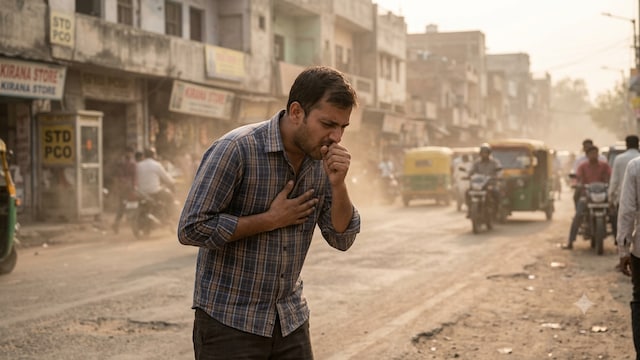
One lung cancer death every three days in Delhi, indicates information receieved via an RTI query, but the actual toll could be significantly higher than what official hospital records indicate, a leading chest surgeon has warned.
Dr Arvind Kumar, one of India's leading chest surgeons and a veteran lung cancer specialist, says data obtained through an RTI from four hospitals may not capture the full scale of the crisis.
Speaking to NDTV, Dr Kumar said the actual number of lung cancer cases and deaths in the community could be much higher than the figures reflected in hospital records.
The reason, he explains, lies partly in how hospitals record diagnoses. "Patients admitted with a suspected lung mass may be discharged while investigations are still underway. If cancer is confirmed after discharge, the diagnosis may never make it into that hospital's discharge records.
Deaths outside hospitals are another major gap. Even among hospital deaths, lung cancer may not always be recorded as the primary cause if a patient dies due to another complication." he said.
Lung Cancer No Longer Just a Smoker's Disease
Dr Kumar says the changing profile of lung cancer patients is particularly alarming.
Traditionally considered a disease affecting elderly male smokers, lung cancer is increasingly being seen among women, younger people and non-smokers.
He says he is now seeing smokers and non-smokers developing lung cancer in almost equal proportions in his clinical practice. Women, too, are increasingly represented among patients.
"Patients are also developing the disease around 10-15 years younger than they did three decades ago" he said
90% Diagnosed At Stage 4
Perhaps the most disturbing observation is how late patients are reaching specialised hospitals.
Dr Kumar estimates that nearly 90 per cent of patients reaching tertiary-care hospitals are diagnosed at stage four.
"At this advanced stage, treatment often focuses on controlling the disease rather than achieving a cure"
Delhi's Toxic Air: A Growing Health Concern
The findings raise urgent questions about the changing lung cancer burden in the national capital.
While smoking remains a major risk factor, the increasing number of non-smokers and younger patients calls for closer examination of environmental exposures, air pollution, occupational hazards and other possible contributors.
For Delhi, the concern is not just the number of lung cancer deaths being recorded. It is also the possibility that the official figures are capturing only part of the problem.
Experts say it is not just air pollution but even tobacco and exposure to second-hand and third-hand smoke that has led to a surge in cancer cases.
"Prevention and early diagnosis are critical. Avoid tobacco, minimise exposure to polluted environments and seek medical attention for persistent cough, breathlessness, chest discomfort, coughing up blood or unexplained weight loss. Risk-targeted screening and timely diagnosis can improve treatment outcomes." says Dr Pallavi Redhu Consultant - Medical Oncology, Kailash Hospital
Risk is also influenced by occupational exposure, smoking history and genetic susceptibility. Importantly, lung cancer may not cause noticeable symptoms in its early stages. A persistent or worsening cough, blood in the sputum, unexplained weight loss, chest discomfort or breathlessness should not be ignored.
"Low-dose CT screening may be recommended for certain high-risk individuals, particularly those with a significant smoking history. It is not routinely recommended for everyone living in polluted cities. Timely medical evaluation and early diagnosis remain critical."says Dr Ankit Jain, Senior Consultant, Medical Oncology, Indraprastha Apollo Hospital.
Disclaimer: This content including advice provides generic information only. It is in no way a substitute for a qualified medical opinion. Always consult a specialist or your own doctor for more information. NDTV does not claim responsibility for this information.