





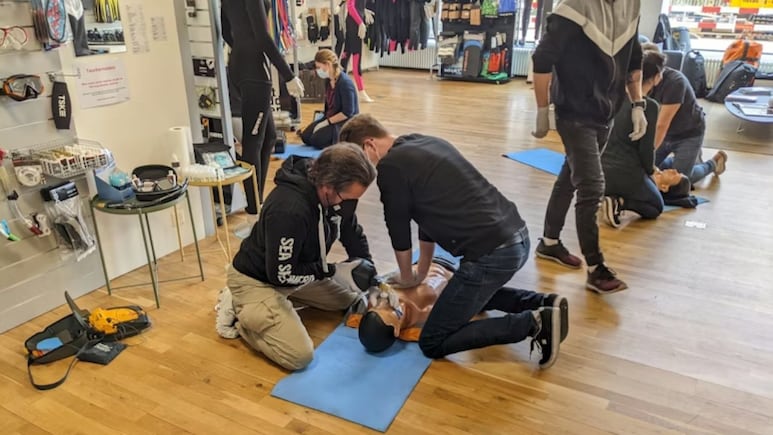
Cardiopulmonary resuscitation, popularly known as CPR, is an emergency procedure that is performed when someone's heartbeat or breathing stops. Giving CPR on time can increase the chance of survival two or sometimes even three times. CPR can be given to an individual when they collapse, don't respond, aren't breathing and don't have a pulse. This procedure can restore the functionality of the heart and/or keep their blood circulating. It is crucial that people learn this technique as it can help save lives in emergency situations.
CPR is an emergency technique that manually maintains heart function and breathing. It involves chest compressions that help to circulate blood, rescue breaths and oxygenate the body until there's professional help. CPR was developed in the 1950s and guided by organisations like the American Heart Association (AHA). It follows the CAB sequence: compressions (C), airway (A), and breathing (B).
Types of CPR
There are two types of CPR: hands-only CPR and CPR with breaths.
- Hands-Only CPR: For this, you push hard and fast in the center of the person's chest 100 to 120 times per minute.
- CPR with breaths: For this, you give chest compressions and then, pause to give the person two mouth-to-mouth rescue breaths. You give the breaths every 30 compressions (about 20 seconds or so).
Cleveland Clinic says that hands-only CPR can be as effective as CPR with breaths in the first few minutes during a cardiac arrest event for an adult.
When to Perform CPR?
Start CPR if a person is unresponsive, not breathing normally, and has no pulse. Common scenarios include heart attacks, drowning, or electrocution. Always make sure the area is safe first, then check responsiveness by tapping and shouting. Call emergency services immediately or instruct a bystander to do so.
Steps to Perform CPR for an Adult
- Put the individual on their back and on a firm surface.
- Place the heel of one hand in the center of the chest and stack the other hand on top.
- Then, push hard and fast at 100-120 compressions per minute to a depth of at least 2 inches (5-6 cm).
- Open the airway using head-tilt chin-lift.
- Pinch the nose, seal your mouth over theirs and deliver 2 rescue breaths lasting 1 second each. Watch their chest rise.
- If you see the chest rise, give a second breath.
- If their chest doesn't rise, repeat the head-tilt chin-lift.
- Then give a second breath. Thirty chest compressions followed by two rescue breaths is considered one cycle. Be careful not to provide too many breaths or to breathe with too much force.
- Continue chest compressions to restore blood flow.
- Continue CPR until there are signs of movement or until there's emergency medical help.
Steps to Perform CPR for a Child/ Infant
For children between 1-8 years, you can use one hand for compressions to one-third chest depth (about 2 inches) at 100-120 compressions per minute. For infants under 1 year, use two fingers in the centre of the chest center, compressing 1.5 inches deep. Rescue breaths differ for children and infants. Cover the infant's mouth and nose with your mouth, or pinch the child's nose for mouth-to-mouth.
CPR Risks
CPR has risks because of how hard the chest compressions have to be to keep the blood circulating. During the process, it is possible to break ribs and injure organs within the chest during CPR. But the risk is worth it when you're trying to save a person's life.
CPR Myths
It is a common myth that CPR always revives fully. However, that is not completely true. It only buys time until defibrillation or drugs restore heart rhythm.
Another myth is that when the rib fractures, you stop. Minor injuries are acceptable to prevent brain damage that can happen due to delays.
Disclaimer: This content including advice provides generic information only. It is in no way a substitute for a qualified medical opinion. Always consult a specialist or your own doctor for more information. NDTV does not claim responsibility for this information.
Track Latest News Live on NDTV.com and get news updates from India and around the world

