





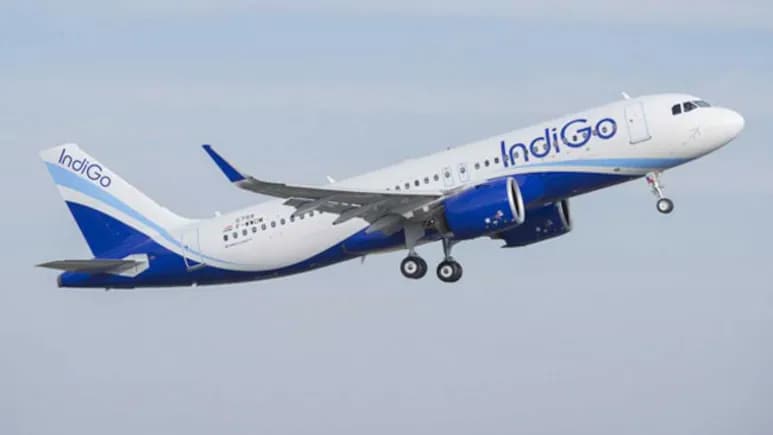
IndiGo CEO Pieter Elbers resigned Tuesday evening as the airline – which still holds nearly 60 per cent of the market – battles back from the December 2025 operational crisis caused by failure to comply with revised Flight Duty Time Limitation, or FDTL, rules.
Managing Director Rahul Bhatia will assume management till holding company InterGlobe Enterprises announces a new leader, the airline said in its brief statement.
Last month the airline said it had an 'optimum pool of staff' to ensure stable ops.
This was after the government agreed to temporarily suspend implementation of the new rules, to give it time to hire pilots and correct over-optimisation of rosters and support software errors.
That window expired on February 10.
Over 2,500 flights were cancelled and around 1,900 delayed between December 3 and 5 after new FDTL norms reduced the number of flying hours a pilot could log before a mandatory rest period.
The government came down hard on the airline, limiting its winter schedule services by 10 per cent and imposing penalties of Rs 22.20 crore. IndiGo was also directed to furnish a bank guarantee of Rs 50 crore to ensure compliance with directives and systemic corrective measures.
Introduced to ensure aircraft and passenger safety, the airline did not account for the increased number of pilots needed to keep its 2,000+ daily flights in the air. And resulting acute crew shortages meant flights were grounded because pilots had hit the legal limit of flying hours.
The situation was made worse by technical glitches at major airports and, in Delhi, poor weather conditions due to the annual blanket of toxic smog that smothers the city every winter.
The disruptions began December 2-3. Over 200 flights were cancelled and hundreds more delayed at airports across the country, leaving tens of thousands of passengers stranded.
On-time performance, a metric IndiGo prides itself on, plummeted to 35 per cent by the end of the day and dipped below 10 per cent within a further 48 hours. And, by December 4, over 1,000 flights had been cancelled, triggering protests and demands for refunds from affected fliers.
IndiGo's 'open letters' headache
As the crisis spiralled out of control, two 'leaked' letters added to IndiGo's headaches.
The first – allegedly from employees – claimed mass flight cancellations were the result of poor forward planning by company leadership. The letter, which went viral online, claimed the chaos was more than an op issue. The letter called it "failure of planning and frontline protection".
NDTV could not independently verify the letter.
Separately, an anonymous letter, also from a purported employee, held Elbers and other senior executives, including Senior VP for flight ops Ashim Mittra, responsible for the chaos.
Again, NDTV could not independently verify the letter.
On December 4 as disruptions peaked, Elbers issued a public apology, declaring that IndiGo had failed to live up to its promise of providing a good experience to its customers.
"These past few days have been difficult for many of our IndiGo customers and colleagues. We serve close to 380,000 customers a day and want each of them to have a good experience. We could not live up to that promise these past days and we have publicly apologised for that."
The operational crisis also led to a second wave of chaos, this time over refunds, with thousands of passengers angry at being fobbed off with vouchers for future tickets instead of getting their money back.
What is FDTL
FDTL norms cap the number of hours a crew member can be on duty. The rules limit flying to eight hours a day, 35 hours a week, 125 hours a month and 1,000 hours a year.
FDTL also specify mandatory rest periods, requiring every crew receive downtime amounting to twice their flight time, with a minimum of 10 hours of rest within any 24-hour window.
This was brought in by the aviation regulator DGCA to ensure pilots and cabin crew get sufficient rest and are not pushed into fatigue that could compromise safety.
Track Latest News Live on NDTV.com and get news updates from India and around the world

