

)
If your hands give up before your legs or back during exercises such as deadlifts, rows or farmer's walks, your grip strength could be the limiting factor. A strong grip is important not only for lifting heavier weights but also for maintaining control of equipment and performing everyday tasks such as carrying bags, opening jars or holding objects for longer periods. Grip strength refers to how much force you can generate when gripping an object. It involves the muscles of the hands and fingers, along with the forearms and wrist. The good news is that grip strength can be trained, just like other aspects of fitness. Here are some simple exercises that can help improve your grip and make it easier to hold weights during strength training.
1. Farmer's Carry
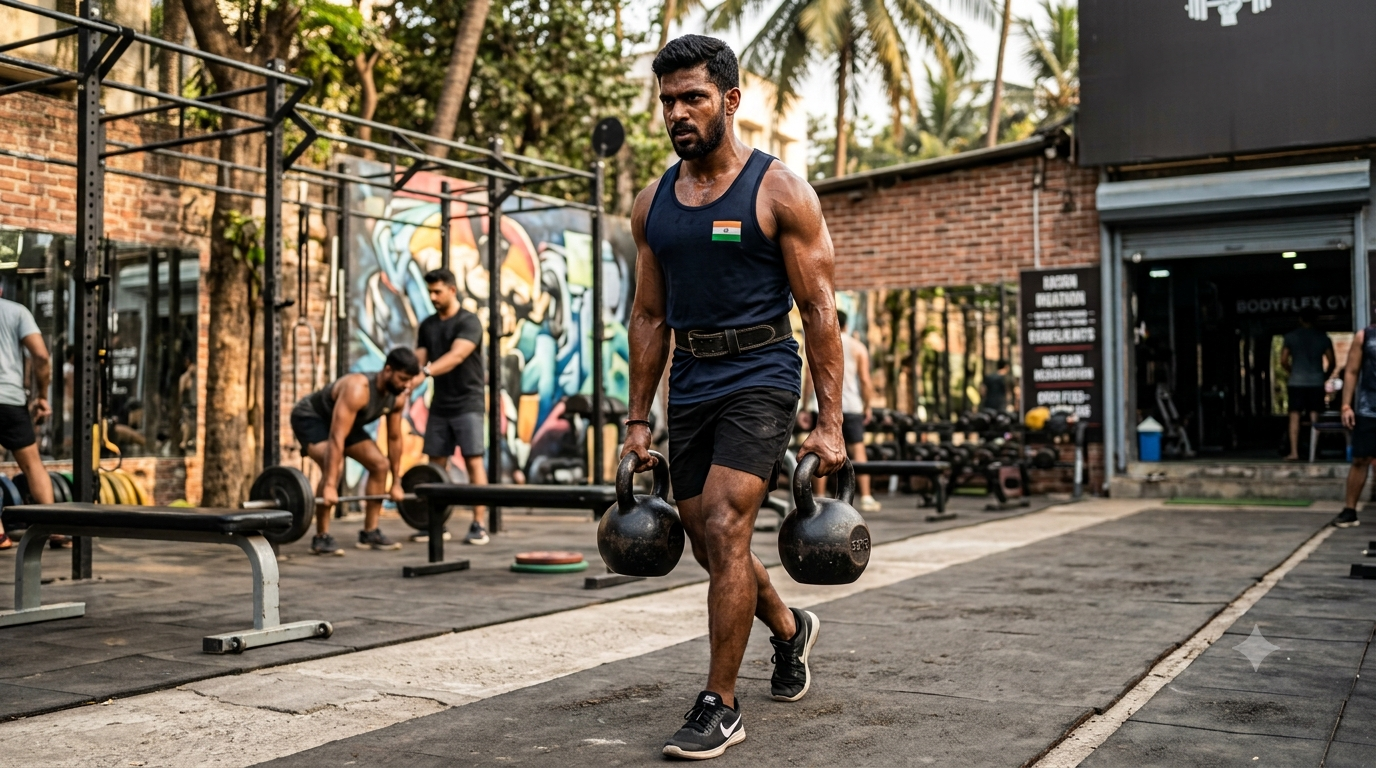
One of the simplest ways to train your grip is to carry heavy weights for a set distance or duration. Hold a dumbbell or kettlebell in each hand, stand tall with your shoulders pulled back and walk slowly while maintaining a firm grip. Keep your core engaged and avoid leaning from side to side. Start with a manageable weight and gradually increase the load or walking distance as your grip improves. Farmer's carries challenge your fingers, hands and forearms while also working your core and upper body.
2. Dead Hangs
Dead hangs are particularly useful if your grip tends to fail during pulling exercises.Grab a pull-up bar with both hands and allow your body to hang while keeping your shoulders controlled. Hold the position for as long as you can with good form. Beginners can start with shorter holds and gradually build up their time. If a full bodyweight hang is difficult, resistance-assisted variations can be used. It helps because the exercise forces your fingers and forearms to support your body weight, making it an effective way to build grip endurance.
3. Plate Pinches
Plate pinches target the thumb and fingers, which can sometimes be overlooked in conventional weight training. Stand upright and hold a weight plate between your thumb and fingers. Keep the plate secure without wrapping your fingers around it. Hold for 15-30 seconds, rest and repeat. Use lighter plates initially because the movement can become challenging quickly. It strengthens pinch grip, which is different from the gripping action used when holding a dumbbell or barbell.
4. Wrist Curls
Your forearm muscles play an important role in maintaining your grip. Wrist curls can help strengthen the muscles involved in wrist flexion. Sit on a bench and rest your forearms on your thighs or a bench while holding light dumbbells. Allow your wrists to move through a controlled range of motion, then slowly curl the weights upwards. Avoid using excessive weight or jerking the wrists.
5. Reverse Wrist Curls
Reverse wrist curls work the muscles on the opposite side of the forearm. Hold a light barbell or dumbbells with your palms facing down. Rest your forearms on your thighs or a bench and slowly extend your wrists upwards before lowering the weight under control. Because the muscles involved are relatively small, start with a light load.
6. Towel Holds
A towel can make a conventional grip exercise considerably more challenging. Loop a sturdy towel around a pull-up bar or another secure point and hold the ends firmly. You can perform static holds or, if sufficiently experienced, use the towel for assisted pulling movements. Make sure the setup is secure before attempting the exercise. The unstable surface forces your hands and fingers to work harder to maintain the grip.
7. Dumbbell Holds
You don't always need complicated equipment to train your grip. Simply holding a pair of dumbbells can be effective. Choose a weight that is challenging but allows you to maintain good posture. Stand upright and hold the dumbbells at your sides for 20-40 seconds. Rest and repeat for a few sets. As your grip becomes stronger, gradually increase the duration or weight.
How Often Should You Train Your Grip?
Grip training does not necessarily require a separate workout. You can add two or three grip-focused exercises to your existing strength-training routine two to three times a week. Avoid training to complete exhaustion every day. Your hands and forearms also need time to recover, particularly if your regular workouts already include deadlifts, pull-ups, rows or other exercises that heavily involve the grip.
Don't Ignore Your Technique
Sometimes the problem isn't simply weak grip strength. Poor lifting technique, excessive weight or fatigue can also cause your grip to fail. If you regularly lose your grip during an exercise, consider reducing the weight and focusing on controlled repetitions. Gradual progression is generally more useful than repeatedly attempting weights that you cannot hold safely. For exercises such as deadlifts, experienced lifters may also use different grip variations or lifting accessories depending on their training goals. However, these should complement rather than completely replace grip-strength training.
A weak grip can become a bottleneck during strength training, particularly when exercises involve holding heavy weights for several repetitions. Farmer's carries, dead hangs, plate pinches, wrist curls, reverse wrist curls and static dumbbell holds can help build stronger hands and forearms.
Start with manageable resistance, focus on proper technique and gradually increase the challenge. A stronger grip can help you maintain better control of weights and get more out of your overall strength-training routine.
Disclaimer: This content including advice provides generic information only. It is in no way a substitute for a qualified medical opinion. Always consult a specialist or your own doctor for more information. NDTV does not claim responsibility for this information.