

)
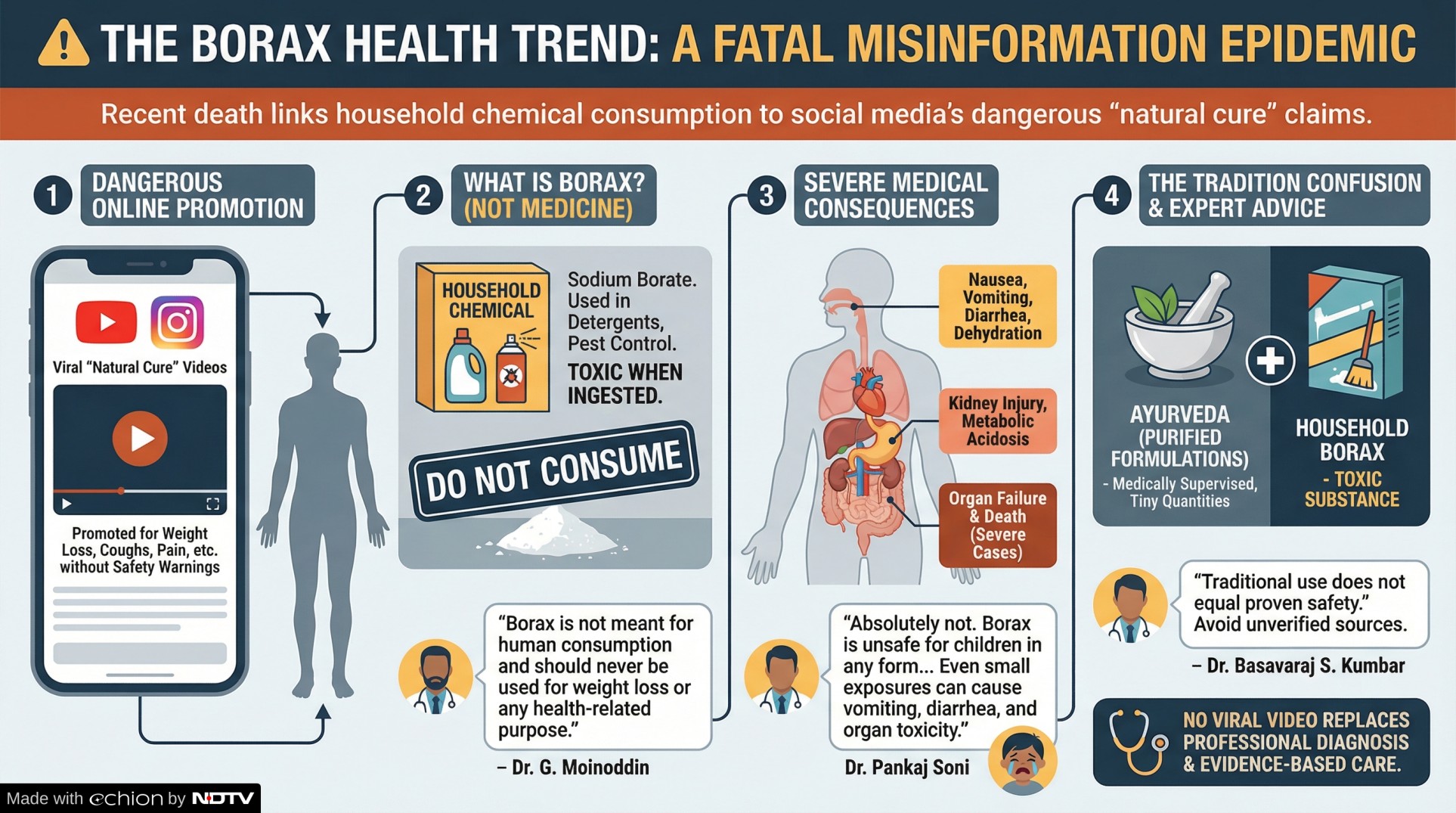
The recent death of a college student in Tamil Nadu after allegedly consuming borax for weight loss has sparked alarm across medical and public health circles. What initially appeared to be a fringe online trend has now revealed a wider and more troubling pattern: borax, a household chemical, is being promoted on social media platforms as a remedy not just for weight loss, but also for cough, menstrual pain, dandruff, and other health concerns. Videos and short clips on platforms such as YouTube and Instagram frame borax as a "natural" or "forgotten" cure, often without context, dosage clarity, or safety warnings.
This surge in misinformation has prompted NDTV to speak with doctors across specialties to understand what borax actually is, why it is dangerous when consumed, and how confusion between traditional medicine references and household chemicals is putting lives at risk.
Importantly, experts stress that the issue is not about discrediting traditional systems of medicine, but about distinguishing medically supervised, purified formulations from toxic household substances being casually recommended online. As doctors emphasise, no viral video can replace proper diagnosis, evidence-based care, and professional medical advice.
What Exactly Is Borax, And Why Is It Dangerous?
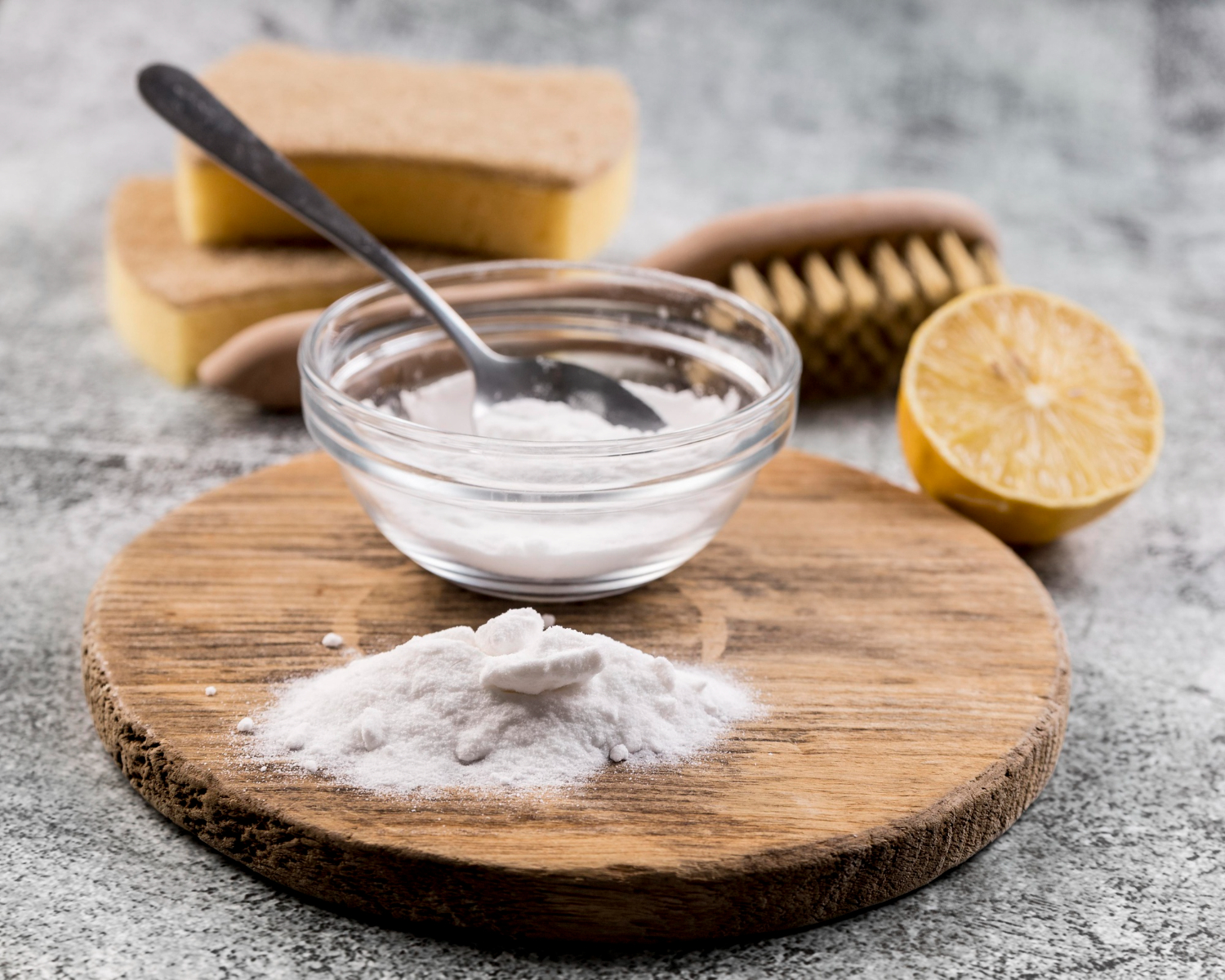
Borax, also known as sodium borate or sodium tetraborate, is a chemical salt widely used in detergents, pest control products, and household cleaners. It is not approved for human consumption.
"Borax is a salt, specifically a sodium tetrahydrate salt, and it is commonly used for detergent cleaning, toilet cleaning, and pest control. Borax is not meant for human consumption and should never be used for weight loss or any health-related purpose," says Dr. G. Moinoddin, Director - Bariatric & Metabolic Surgery, Manipal Hospital South India Region.
Medical literature classifies borax and boric acid as toxic when ingested, capable of causing nausea, vomiting, diarrhea, dehydration, kidney injury, and in severe cases, death. The U.S. National Library of Medicine notes that ingestion can also lead to metabolic acidosis and organ failure, particularly with repeated exposure or high doses.
Why Social Media Is Pushing Borax for Weight Loss
Weight loss content performs exceptionally well online, and experts say this has created fertile ground for dangerous shortcuts. According to Dr. Moinoddin, "There are many misleading suggestions circulating on platforms like Instagram that promote certain molecules or substances for weight loss. These should not be followed blindly. Weight loss should always be guided by a qualified doctor."
He explains that safe weight management depends on factors such as body mass index, body fat percentage, metabolic health, and existing medical conditions. Even approved anti-obesity medications can have side effects and require monitoring. "Anything recommended through social media or unverified sources should be avoided," he warns, adding that repeated vomiting and dehydration from such substances can become life-threatening.
The World Health Organization (WHO) has repeatedly cautioned against unregulated weight loss remedies, noting that toxic exposures from "natural" or household substances remain a global public health issue.
Cough Remedies For Children And Other Viral Claims
Beyond weight loss, borax is now being promoted online as an expectorant when mixed with honey, and even suggested for use in children. In one video, an "expert" is seen recommending "a pinch of suhaga [borax in Hindi] with honey for newborns". This is alarming because not only are doctors clear about borax's rampant use, but global agencies have also repeatedly warned that babies should not be given honey since it can cause infant botulism.
Dr. Pankaj Soni, Principal Director, Internal Medicine, Fortis Escorts Heart Institute, New Delhi clearly states that borax should not be used for cough relief. He clarifies that while honey alone has evidence for soothing cough, borax does not. "What Ayurveda refers to as Tankana Bhasma is a purified form used in very small quantities under supervision. This cannot be equated with consuming household borax at home," he explains.
On use for children, Dr. Soni is unequivocal: "Absolutely not. Borax is unsafe for children in any form or dilution. Even small exposures can cause vomiting, diarrhea, dehydration, and organ toxicity." The Centers for Disease Control and Prevention (CDC) also warns that boron compounds can be particularly dangerous for infants and children due to their lower tolerance levels.
Menstrual Pain, Skin Problems, And The Ayurveda Confusion
Some social media posts cite traditional medicine to justify borax use for menstrual pain, amenorrhea, dandruff, or eczema. Doctors say this is a dangerous oversimplification. "Borax is not used for menstrual pain or cycle-related problems in routine clinical care," says Dr. Soni. "Self-medication can do more harm than good."
Dr. Basavaraj S. Kumbar, Consultant - Internal Medicine, Aster Whitefield Hospital, Bengaluru, adds nuance: "There are a few small clinical trials examining boron supplements, not borax, and their possible role in dysmenorrhea. But that does not mean household borax can be consumed."
For skin conditions, Dr. Kumbar warns that boron compounds can actually cause skin irritation and even reversible hair loss. Proven treatments such as ketoconazole or zinc pyrithione shampoos have far stronger safety and efficacy data.
Why Doctors Stress Balance, Not Rejection Of Tradition
All three doctors emphasise that this debate should not become a clash between medical systems. "Traditional systems may describe highly processed substances used under strict supervision," Dr. Kumbar explains, "but household borax is a toxic chemical. Traditional use does not equal proven safety."
Modern medicine relies on toxicology, clinical trials, and dosage standardisation, areas where household borax has no evidence of safety or benefit. The National Institutes of Health (NIH) stresses that absence of high-quality clinical trials means a substance cannot be assumed safe.
The tragic death linked to borax consumption is a stark reminder of how quickly misinformation can turn fatal. From weight loss to cough remedies, social media has blurred the line between tradition, science, and outright danger. Doctors are not dismissing Ayurveda or alternative systems, but they are united in warning that household chemicals are not medicines. In an era of viral health advice, one principle remains unchanged: Nothing replaces informed medical consultation, evidence-based care, and a balanced, cautious approach to health.
Disclaimer: This content, including advice, provides generic information only. It is in no way a substitute for a qualified medical opinion. Always consult a specialist or your own doctor for more information. NDTV does not claim responsibility for this information.