

)
While building muscles is a common goal for many, maintaining muscle mass is crucial for everyone. Muscle mass is crucial for several reasons. Muscle tissue contributes significantly to your resting metabolic rate, which means that more muscle can help burn more calories at rest, aiding in weight management. Additionally, muscle mass plays a vital role in overall strength, stability, and functional fitness, which are essential for daily activities and injury prevention. High muscle mass is also associated with better insulin sensitivity and can lower the risk of chronic diseases, such as type 2 diabetes and cardiovascular issues. Moreover, preserving muscle mass becomes increasingly important as you age, as it helps combat the natural decline in muscle strength and function.
Strength training, also known as resistance training, is one of the most effective tools for building muscles. Strength exercises stimulate muscle growth by creating small tears in muscle fibres. During recovery, the body repairs these fibres, making them thicker and stronger, a process known as muscle hypertrophy. They also trigger the release of hormones like testosterone and growth hormone, which further contribute to muscle growth. Strength training can be performed using bodyweight exercises and dumbbells. Here, let's determine which method is more effective.
Bodyweight exercises vs dumbbells for muscle building
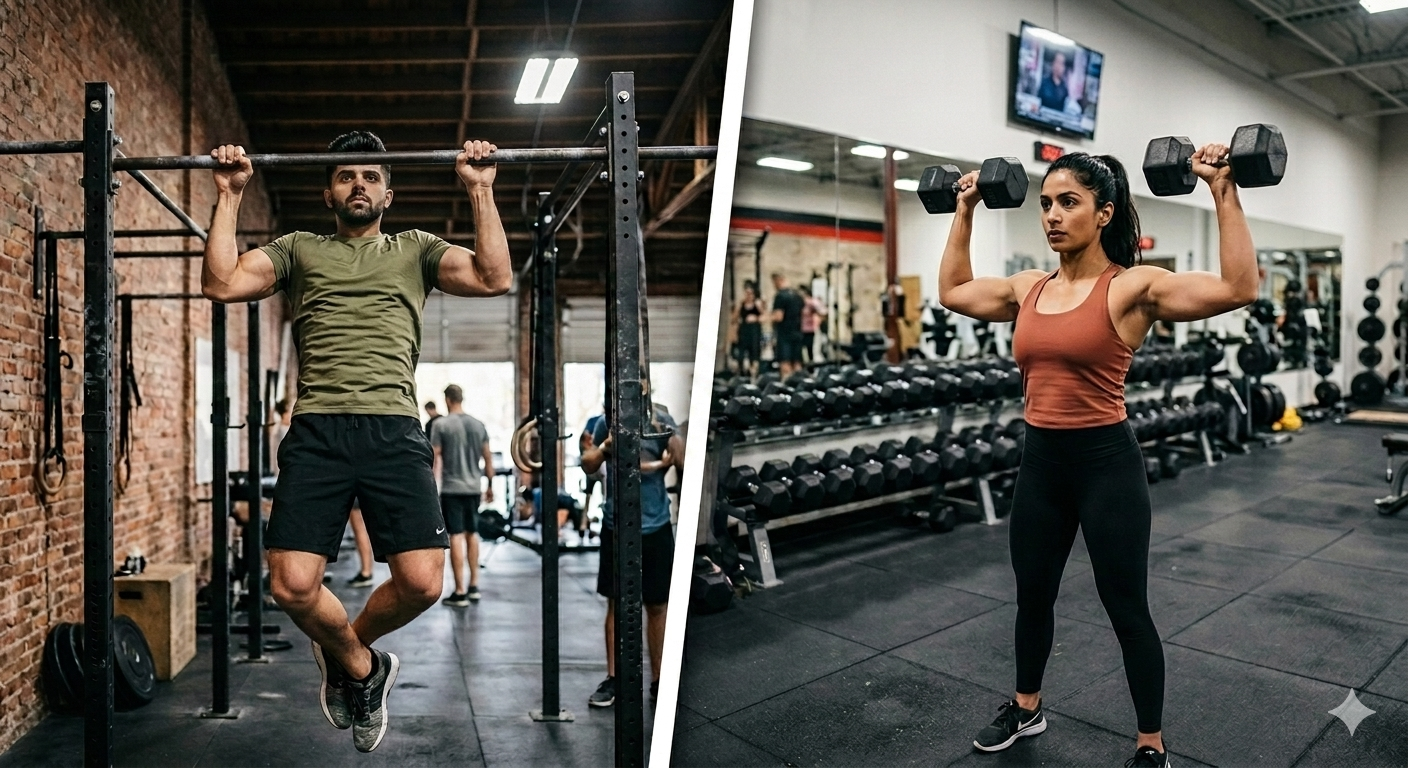
Both bodyweight exercises and dumbbells can effectively build muscle mass, but they serve different purposes and may suit different fitness levels.
In short, dumbbells are generally more effective for building raw muscle mass. They allow you to easily isolate specific muscles and continuously increase the weight as you get stronger. Bodyweight exercises are excellent for core stability and functional strength, but adjusting the difficulty requires changing leverage or angles, which is harder to standardise than simply grabbing a heavier dumbbell.
Bodyweight exercises
- These include push-ups, pull-ups, squats, and lunges
- They can be incredibly effective for building strength and muscle endurance, especially for beginners
- They also improve core stability and balance
- They may become less effective for advanced lifters as resistance becomes limited
- Movements like planks and pull-ups force your entire core to stabilise
- These exercises move with your natural anatomy, often reducing joint stress.
- You can work out anywhere, anytime, for zero cost.
Dumbbells
- With adjustable weights, dumbbells enable users to increase resistance as they get stronger, making them ideal for consistently challenging the muscles
- Dumbbells also offer a broader range of exercises that can isolate specific muscle groups
- Weights provide steady resistance throughout the entire movement
Tips for maximum results
1. Regular strength training at least 2-3 times a week is essential for muscle growth
2. Gradually increase the weight or resistance in your workouts to continue challenging your muscles
3. Incorporate exercises like squats, deadlifts, bench presses, and rows that work multiple muscle groups for a more effective workout
4. Include both upper and lower body exercises, and ensure your routine includes pushing and pulling movements
5. Consume enough protein to support muscle repair and growth. Aim for a balanced diet that includes carbohydrates and healthy fats
6. Allow your muscles time to recover by not training the same muscle groups on consecutive days and ensuring you get enough sleep
7. Keep a record of your workouts to see improvements in strength and adjust your routine as needed
For maximum results, choose a hybrid approach. Combine the best of both by using bodyweight for compound movements and dumbbells for isolation.
Disclaimer: This content including advice provides generic information only. It is in no way a substitute for a qualified medical opinion. Always consult a specialist or your own doctor for more information. NDTV does not claim responsibility for this information.