Strait Of Hormuz Shutdown, Oil Supply Crisis Triggers 'Red Zone' Warning
The IEA has already issued warnings about 'the most severe disruption' ever; in April agency chief Fatih Birol told CNBC: "We are facing the biggest energy security threat in history."
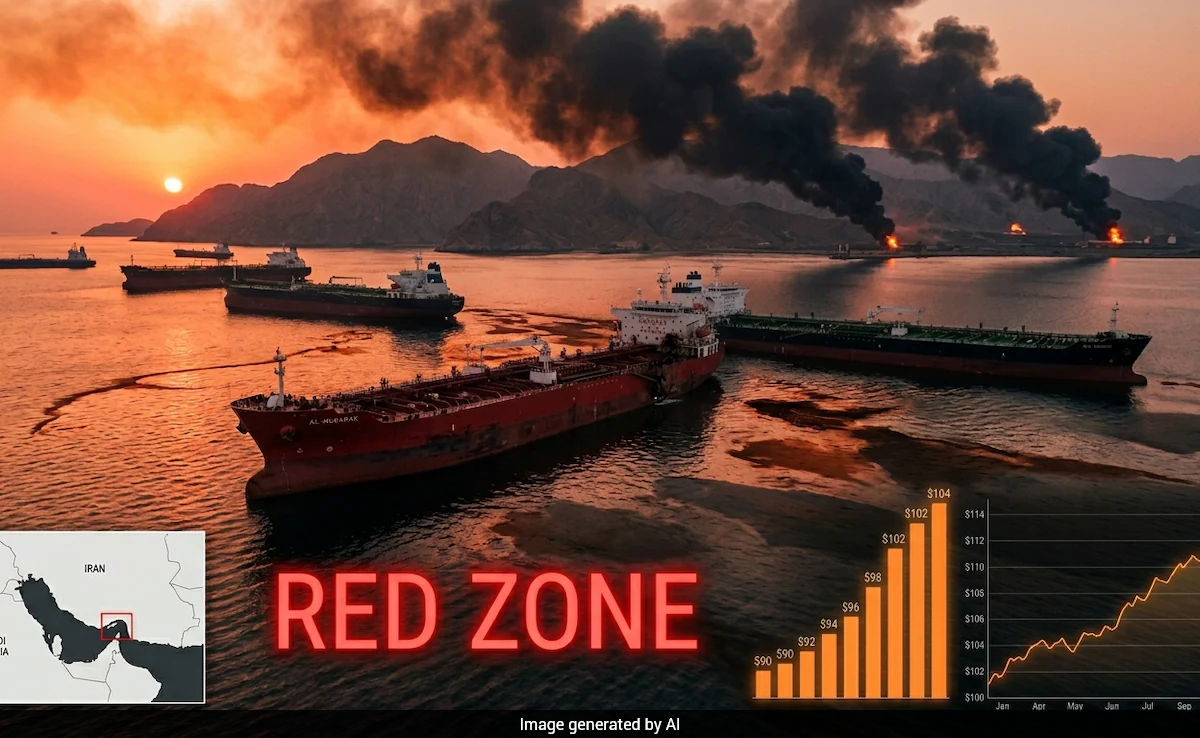
A billion barrels lost. A red zone approaches.
Warnings don't come starker than these for a world grappling with the fallout of an Iran war that has disrupted Middle East oil and gas production and led to the closure of the Strait of Hormuz - which ships 20 per cent of global seaborne energy.
Shutting down Hormuz traffic - possible because Iran exerts geographic control over the 21-km wide waterway - has removed an estimated 14 million barrels of oil from global markets every day, International Energy Agency chief Fatih Birol said this week.
And failure to re-open the strait, or ensure viable alternate routes to export energy, will push the world into an even more severe supply crunch, Birol warned.
The IEA Executive Director also said the disruption had forced depletion of global stockpiles - including the record-breaking 400 million barrels the IEA and its 32 member-countries released in March.
On Thursday Birol said this persistent drawdown risked oil markets tumbling into a "red zone" as early as July.
What is a 'red zone'?
Birol was sounding a supply adequacy alarm and not necessarily warning the world about runaway oil prices, though it does signal that risk. Brent crude, the global benchmark, is currently trading at $104 to $105 a barrel, after resting at $72 a week before the war. It hit a high of $114 in early May and could cross $120 if fighting were to resume.
More specifically, he was referring to a state in which supply can no longer comfortably absorb demand shocks. This means existing reserves have been eroded to a point where any additional disruption could lead to supply shortfalls and price hikes.
The release of 400 million barrels - which dwarves the 182.7 million released in 2022, during Russia's war on Ukraine - has helped cushion the supply-side shock, but the shock has been so great that even those reserves are now nearly depleted.
Once breached, that threshold will be most acutely felt by poorer nations, like those in Africa and Southeast Asia, Birol warned, with knock-on effects including possible food shortages.
Why a 'red zone' warning now?
The IEA has already issued warnings about 'the most severe disruption' ever; in April Birol told US broadcaster CNBC: "We are facing the biggest energy security threat in history." That red flag is now being waved even harder.
Part of the reason is the advent of summer holidays, which is usually peak travel season. That particular impact has been seen in increased jet fuel prices as airlines struggle to balance costs while offering competitive fares.
In India that played out in early April and May; jet fuel prices went up by 25 per cent April 1 and a further five per cent (for international flights) May 1, taking it to $1,511.86 per kilolitre in Delhi.
However, this week Delhi and Mumbai - India's two largest aviation hubs - sharply cut taxes, dropping VAT from 25 per cent in Delhi and 18 per cent in Mumbai to seven per cent.
The reduction is valid for six months.
Delhi, Mumbai Slash ATF Tax: How This Could Impact Fares
Meanwhile, petrol and diesel prices were also hiked in quick succession; last week petrol was increased by 87 paise per litre in Delhi and 91 paise per litre in Mumbai to Rs 98.64 and Rs 107.59.
Three days earlier it had been increased by as much as Rs 3 per litre across India.
Will prices go up further?
Most likely, yes.
The longer the Hormuz is shuttered, or at least tanker traffic remains well below pre-war levels, the greater the stress on the world's oil and gas supply. And that pressure must be released.
Apart from India, prices have already increased in Africa, across Asia and Europe, and even in the US, where April average gasoline costs peaked at a record $5.8 per gallon.
Oil Cos Losing Rs 1,600 Crore Daily. Will Rs 3 Hike Help?
The big question now is this - at what point does the current disruption translate into a sustained supply crisis. The likely answer is - if Hormuz traffic remains restricted into July.
In such a scenario, countries could rapidly burn through what reserves they have left, which would initially drive price volatility - as secondary and tertiary sources are pursued.
Once spare capacity, at any level, becomes a premium, prices will rise, and sharply.
Diplomacy, the swing factor
Peace talks remain stalled with neither side willing to compromise.
The US has insisted Tehran must surrender its enriched uranium stockpile and disband its nuclear programme, while Iran wants Washington to pay for war damages and roll back sanctions on export of its oil.
The April 8 ceasefire remains in effect, for now, but the US is straining at the leash; President Donald Trump has reportedly held back a fresh wave of strikes on the promise of talks. And any renewal of fighting - which in the past has included attacks on energy infrastructure, in both Iran and neighbouring Gulf nations - will almost certainly send prices skyrocketing.
The truth is even if the strait were to re-open today, it would take weeks, if not months, for supply to stabilise, with insurers, shipping firms, and refiners likely keeping costs elevated.
The IEA chief has said the agency is ready to release more reserves in such a scenario, but stressed the world needs to act now - i.e., re-open the Hormuz - to mitigate long-term damage.
-
Opinion | India's UPI Miracle Has Created A Difficult, Rs 20,000-Crore Question

UPI's whole magic was the Rs 30 payment it charged nothing for. But how long can it stay free?
-
Opinion | Manmohan Singh, Bachchans, And Other Secrets Of 10 Janpath: The Sonia Gandhi Story
She entered politics reluctantly, mastered its power games, chose Prime Ministers, and managed betrayals. Congress's most powerful woman finally tells the world how.
-
Opinion | Why The Congress-Samajwadi 'Merger' Fantasy Could Be Opposition's Biggest Self-Goal
Rahul Gandhi and Akhilesh Yadav do not need to become one another. They need to become better at being themselves, together.
-
Opinion | Mumbai's 'Marathi' Test For Cabbies, And The Art Of Fixing The Wrong Problems
All these years, India's financial capital has worked just fine without a Marathi mandate for its taxiwallahs. Whose problem is the new language rule actually solving now?
-
Opinion | Rs 1.05 Lakh Crore Lost: Inside The Dangerous Rise Of India's Gen Z Stock Traders
Investors under 30 now account for 37.9% of the total investor base in India. But they are also losing money at a much higher rate. Why are they doing it?
-
Opinion | Why A 'Bangladesh' Proposal By Turkish Media Should Worry India
A recent article in Turkish media illustrates how Ankara is turning into a strategic threat for India and its neighbourhood
-
Opinion | 4,800 Indians Removed, 51,000 ICE Arrests: What's Happening In Trump's America?
According to Stop AAPI Hate, Indians are now one of the most targeted groups by ICE, with the highest number of arrests, detentions, and deportations out of all Asian and Pacific Islanders.
-
Opinion | Noakhali To Parliament, What Gandhi, Nehru, Jinnah And Faiz Were Doing On Aug 15, 1947
What was Gandhi doing while Nehru was making his famous midnight speech, and why was Jinnah hosting a lunch as a new nation began fasting? August 15, 1947, looked very different depending on where you stood.
-
Opinion | 79 Years On, India's Enduring Answer To Those Who Had Predicted Its Collapse
Seventy-nine years in the lifespan of an ancient civilisation is a mere heartbeat; yet, in the annals of modern nation-building, it's an audacious triumph.