

)
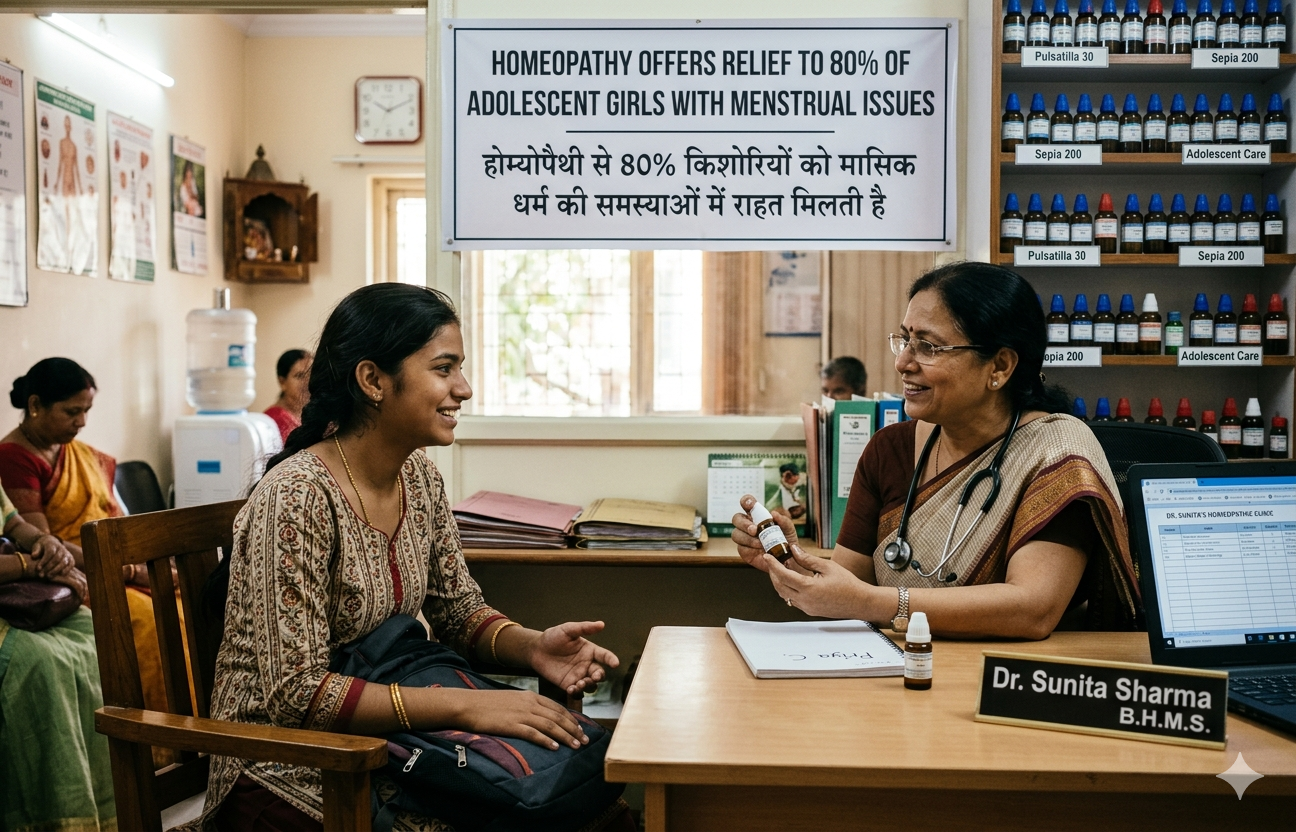
Nearly 80 per cent of adolescent girls in India experienced disruptions in daily activities due to menstrual problems, with around 30 per cent skipping school, show findings from programmes led by the Central Council for Research in Homoeopathy, underscoring a significant public health concern. Ahead of the World Homoeopathy Day on April 10 -- themed "Homoeopathy for Sustainable Health" -- the focus is increasingly shifting towards integrative and long-term approaches for managing menstrual health conditions among women and adolescents. Highlighting the importance of sustainable healthcare solutions, Union Ayush Minister Prataprao Jadhav said that menstrual health is central to women's overall well-being and dignity.
"As we move towards preventive and holistic healthcare, homoeopathy offers a safe, cost-effective and sustainable approach, especially for conditions that require long-term management," he told PTI.
Menstrual health has gained policy attention in recent years, with continued efforts to improve awareness and access to hygiene.
However, challenges in the timely treatment of disorders and sustained care persist, particularly among adolescents.
Vaidya Rajesh Kotecha, Secretary, Ministry of Ayush, said, "There is a growing need for healthcare systems that are not only effective but also accessible and patient-friendly. Homoeopathy, with its individualised approach, has the potential to address chronic menstrual disorders while contributing to sustainable health outcomes." Institutional efforts have further strengthened this shift. The Central Council for Research in Homoeopathy (CCRH), under the Ministry of Ayush, has been expanding research and outreach initiatives to address menstrual health challenges.
"Findings from the first phase of a CCRH-led programme, conducted across 24 states and 127 schools and involving over 10,000 adolescent girls, revealed that nearly 80 per cent experienced disruptions in daily activities due to menstrual issues, while around 30 per cent reported being absent from school," said Dr Anupriya Chaudhary, CCRH scientist and project coordinator.
Phase 1 of the programme was conducted in 2024 and 2025, and the findings were compiled early this year.
The second phase of the programme is being expanded to over 16 states and 54 schools, covering over 10,000 girls, with a focus on improving awareness, promoting menstrual hygiene, and providing homoeopathic treatment.
Researchers are also exploring the role of homoeopathy in addressing underlying endocrine imbalances associated with such conditions.
Health experts note that menstrual disorders -- ranging from irregular cycles and dysmenorrhea to conditions such as polycystic ovarian syndrome (PCOS) -- often require prolonged care, leading many patients to explore non-invasive and holistic treatment options.
Dr Subhash Kaushik, Director General, CCRH, emphasised, "Women's health forms the foundation of a healthy society. Our research indicates that individualised homoeopathic treatment can play a meaningful role in improving menstrual health, reducing symptom burden, and enhancing quality of life." In addition, a growing body of research highlights positive outcomes in conditions such as menstrual irregularities, PCOS, uterine fibroids and menopausal symptoms, with studies indicating improvements in cycle regulation and overall well-being.
Experts underline that with millions of girls affected and menstrual health continuing to impact education and quality of life, sustainable and patient-centric approaches are essential.
(Except for the headline, this story has not been edited by NDTV staff and is published from a syndicated feed.)