

With rescue operations still underway, the Satya Niketan building collapse has left parts of Delhi confronting a crisis. The death count in the five-storey building collapse has climbed to seven, while 12 people have been rescued from the debris, according to the Delhi Police update issued on September 7, 2026. Two days after the tragedy, authorities also declared the adjacent structure unsafe and ordered its demolition in a calibrated, phase-wise manner. But even as rescue, demolition and debris removal continue, experts in healthcare warn that the consequences may persist for weeks and months for the residents of Satya Niketan. Dust and debris may affect respiratory and cardiovascular health, while witnessing death, destruction or fearing another collapse can trigger anxiety, acute stress, grief and trauma. For Satya Niketan's students, residents, survivors and witnesses, recovery may take much longer than clearing the debris.
How Can Dust And Debris Affect Health?
Building collapses can generate large amounts of dust and airborne particles from concrete, cement, plaster, insulation and other construction materials. People who live, work or study close to the affected area may therefore be exposed to dust even after the immediate collapse. "From a cardiologist's perspective, people with heart disease, hypertension, diabetes, a history of heart attack or other cardiovascular risk factors may be more vulnerable to the effects of heavy dust exposure. Sudden exposure to high levels of particulate matter can increase stress on the cardiovascular system, potentially affecting blood pressure, blood-vessel function and the body's inflammatory and clotting responses," says Dr Akhil Kumar Rustagi, Senior Director and Head, Department of Cardiothoracic and Vascular Surgery, ShardaCare - Healthcity.
According to a research published in Turkish Journal of Emergency Medicine, patients extricated from collapsed buildings have a higher incidence of multiple fractures and axial skeletal fractures including rhabdomyolysis which is a serious medical condition where damaged skeletal muscle tissue breaks down rapidly and releases its contents, such as the protein myoglobin, into the bloodstream.
The Psychological Impact May Continue After The Debris Is Removed
The emotional impact of a disaster can be less visible but equally important. Dr Gayatri, Senior Consultant, Psychiatry, Amrita Hospital, Faridabad, said people who were trapped under concrete, heard others crying for help, witnessed deaths or spent hours uncertain about the safety of friends may continue to feel as though the danger has not passed. "This is what we refer to in psychiatry as an acute stress response," she explains. In the days and weeks following a traumatic event, survivors may experience flashbacks, nightmares, panic attacks, insomnia, emotional numbness, survivor guilt and hypervigilance, an unusually heightened alertness to sounds, vibrations or possible danger. A door suddenly slamming, construction noise or entering another building could become a psychological trigger for someone who has experienced such trauma.
Does Trauma Mean A Person Will Develop PTSD?
Dr Gayatri stressed that not everyone who experiences a traumatic event will develop post-traumatic stress disorder (PTSD). Many people gradually recover as the immediate shock passes and their sense of safety returns. However, persistent symptoms should not be ignored if they begin affecting sleep, studies, relationships or everyday functioning. A person may initially feel shocked, fearful or emotionally numb after a disaster. These reactions can be part of the body's response to an overwhelming event. But when symptoms continue or become increasingly disruptive, professional support may be needed.
Why Students In And Around Satya Niketan May Be Particularly Affected
Satya Niketan is a major student and young-professional hub, meaning many people living in and around the area may now be confronting a changed perception of safety. Dr Gayatri said young students can be particularly vulnerable because such an event can violently disrupt a fundamental assumption: that the place where they sleep is safe. For students, the consequences may extend beyond fear. The tragedy can disrupt studies, social interactions, sleep and daily routines.
Dr Samant Darshi, Psychiatrist and De-addiction Specialist, Psymate Healthcare, Noida, said the collapse could have psychological implications not only for survivors but also for students, families, rescuers and people who witnessed the incident. He said acute stress, anxiety, fear, shock, grief and emotional numbness are among the psychological consequences people may experience following such an event.
Repeated Exposure To Tragedy On Social Media Can Add To Anxiety
The psychological impact does not necessarily require someone to have been physically present at the collapse. Students and residents who repeatedly see videos, photographs and updates related to the tragedy may continue to relive the event mentally. Dr Darshi noted that exposure to news and images associated with the incident may add to feelings of anxiety among students living in and around Satya Niketan. Repeatedly consuming distressing content can keep the event psychologically active even after a person has physically moved away from the affected area.
Taking breaks from graphic images and continuously checking updates may therefore be useful for people who notice that news consumption is worsening their anxiety.
Grief And Survivor Guilt Can Be Difficult To Process
For people who lost friends, classmates, colleagues or family members, grief can become another major part of recovery. Some survivors may also experience survivor guilt, questioning why they survived when others did not or wondering whether they could have done something differently. Such thoughts can be emotionally overwhelming, particularly when a person repeatedly replays the incident in their mind. Dr Darshi said counselling can help people deal with grief and trauma following such incidents.
Mental Health Support Should Begin Early
Mental-health care should not be treated as something that begins only months after a disaster. Dr Gayatri said disaster recovery should include psychological first aid, family and peer support, restoration of routine and early access to professional counselling. For students, returning to some degree of normal routine can be particularly important. Maintaining contact with friends and family, continuing studies where possible and avoiding prolonged isolation can help restore a sense of stability. At the same time, people should not be pressured to "move on" quickly. Trauma recovery does not follow a fixed timeline.
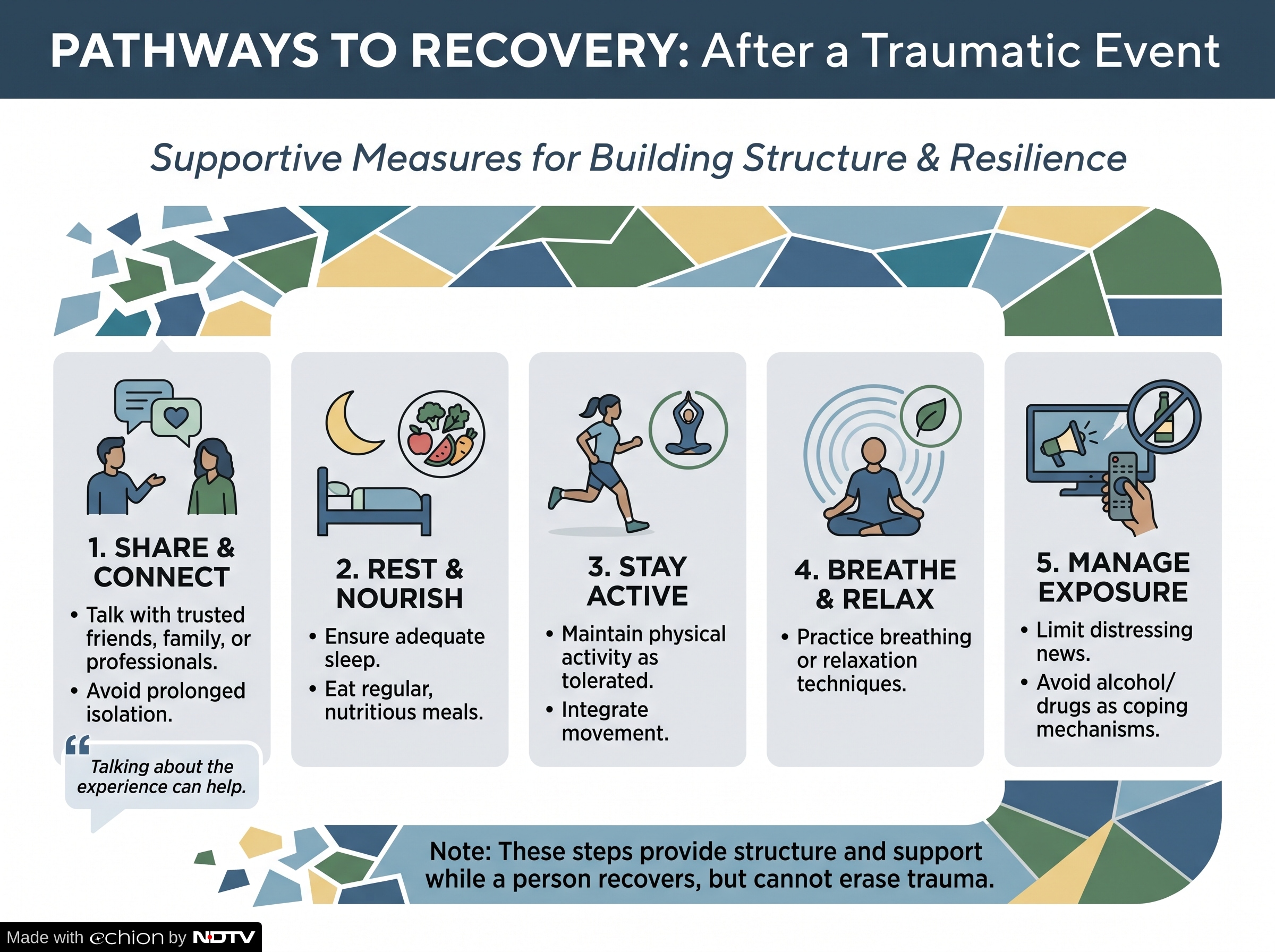
What Can People Do After A Traumatic Event?
Dr Darshi recommended allowing oneself to acknowledge difficult emotions rather than blaming oneself for what happened. Talking about the experience with trusted friends, relatives, counsellors or mental-health professionals can help. Other supportive measures include:
- Getting adequate sleep
- Eating regular, nutritious meals
- Staying physically active as tolerated
- Practising breathing or relaxation techniques
- Maintaining contact with supportive people
- Avoiding prolonged isolation
- Avoiding alcohol or drugs as a way of coping
- Limiting repeated exposure to distressing news and images
These steps cannot erase trauma, but they may provide structure and support while a person recovers.
When Should Someone Seek Professional Help?
It is important to seek professional support when emotional or psychological symptoms persist or begin interfering with everyday life. Warning signs may include recurring nightmares or flashbacks, severe anxiety or panic attacks, persistent insomnia, emotional numbness, inability to concentrate on studies or work, withdrawal from friends and family, intense guilt or a persistent feeling of being unsafe. Anyone experiencing thoughts of self-harm or suicide should seek urgent professional help or emergency assistance.
The Satya Niketan building collapse has created a health emergency that extends beyond the immediate physical injuries and loss of life. Dust and debris can cause respiratory and other physical problems, particularly for people exposed to debris or demolition activities. But the psychological consequences may last much longer.
Dr. Pradeep Bajad, Senior Consultant, Dept. of Pulmonology, Amrita Hospital, Faridabad, advises, "Do not enter active debris removal areas. Stay indoors with doors and windows closed when dust generation is high. Wear a mask respirator when exposure cannot be avoided. Do not ignore persistent breathlessness, wheezing, chest pain or worsening cough after significant dust exposure. They should be investigated."
For survivors and witnesses, sounds, vibrations, buildings and even images on a phone screen can become reminders of what happened. Students who once considered the area home may now struggle with a basic sense of security. As Dr Gayatri put it, the debris may be cleared within days, but for some survivors, feeling safe again can take much longer. Recovery therefore needs to address both the visible and invisible consequences of the disaster including physical safety, respiratory health, grief, trauma and mental-health support.
Disclaimer: This content including advice provides generic information only. It is in no way a substitute for a qualified medical opinion. Always consult a specialist or your own doctor for more information. NDTV does not claim responsibility for this information.