





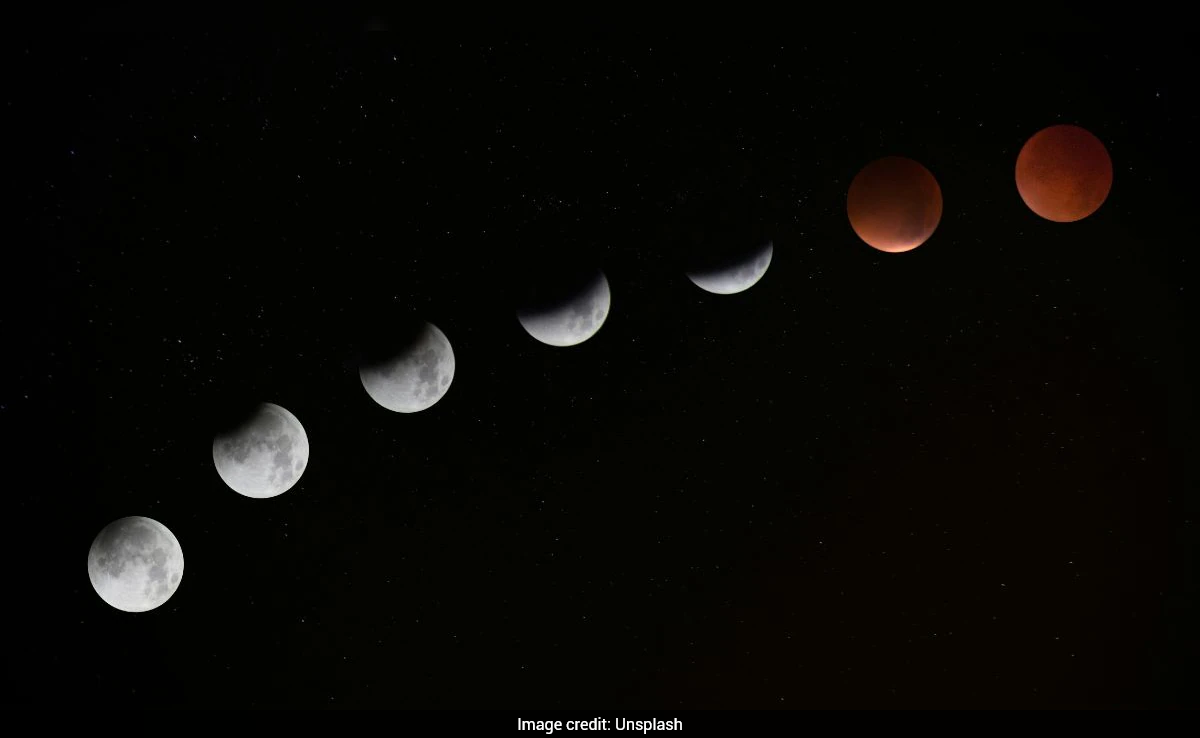
Lunar Eclipse 2026: The first lunar eclipse of 2026 will be on March 3 (Tuesday), and the event is set to offer the skywatchers a stunning celestial display. According to the data provided by NASA, a total lunar eclipse will occur on the same date globally, visible from eastern Asia, Australia, New Zealand, the Pacific region, and parts of North and South America. But most parts of India will only see the final phase of the eclipse around moonrise at sunset.
Also read | From Blood Moon To Planetary Parade: 9 Must-Watch Sky Events Lighting Up March
What Causes A Lunar Eclipse?
A lunar eclipse occurs when the Earth passes directly between the Sun and the Moon, casting its shadow across the lunar surface. This rare and spectacular alignment can only happen during a full moon.
The Earth's shadow has two parts: the umbra, the darker inner shadow and the penumbra, the lighter outer shadow. When the Moon passes through the Earth's umbra, it turns a deep reddish-orange colour, often referred to as a "Blood Moon". This is because the Earth's atmosphere scatters blue light, allowing only red light to reach the Moon.
"Anywhere from four to seven times a year, our Earth, Moon and Sun line up just right to create the cosmic-scale shadow show known as an eclipse. The Moon's orbit around Earth is tilted relative to Earth's orbit around the Sun. This tilt is the reason why we have occasional eclipses instead of eclipses every month," NASA explained in its article.
Also read | Nagpur, Chennai Among Cities To Witness Partial Lunar Eclipse on March 3
Types of Lunar Eclipses
Total Lunar Eclipse: It occurs when the Moon moves entirely into the Earth's umbra, causing the Moon to appear red.
Partial Lunar Eclipse: Only a portion of the Moon enters the Earth's umbra, making it appear as if a bite has been taken out of the Moon.
Penumbral Lunar Eclipse: The Moon passes through the Earth's penumbra, causing a subtle darkening of the Moon's surface.
Track Latest News Live on NDTV.com and get news updates from India and around the world

