





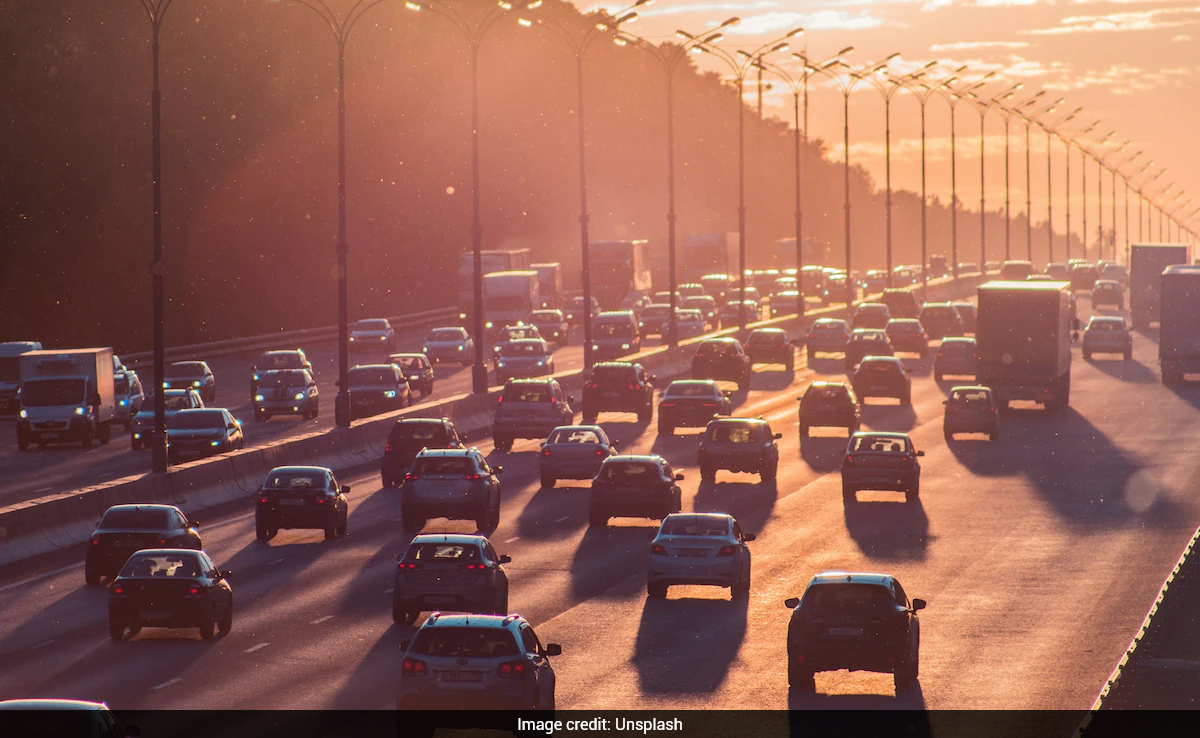
Scientists at the University of Manchester have created a new physics-based module that tracks how everyday traffic adds heat to cities. This tool has been integrated into the Community Earth System Model (CESM), enabling more realistic simulations of urban temperatures.
Unlike earlier studies that focused mainly on buildings and land surfaces, this breakthrough directly accounts for heat from vehicles, such as engines, exhaust and braking. The model shows how this heat spreads across roads, nearby buildings and the surrounding air, influencing overall urban warming.
Apart from outside, the study discovered that traffic heat also affects indoor temperatures, with heat released at street level that can transfer into buildings.
Also read | NASA Shares "Heavenly View" Of Milky Way Taken By Artemis II Crew
To test its accuracy, researchers used real traffic data from Transport for Greater Manchester and applied it to cities like Manchester and Toulouse. Published in the Journal of Advances in Modeling Earth Systems, the study highlights how vehicle-generated heat plays a measurable role in shaping city climates.
This advancement gives scientists a clearer picture of urban heat dynamics and could help improve future climate predictions and city planning strategies.
Also read | Blind Passenger Shares "Interesting" Encounter With Deaf Uber Driver: "Thought Of Cancelling"
"Research on urban heat has traditionally focused on buildings, materials and land surfaces. However, the direct heat produced by vehicles-from engines, exhausts and braking-has received far less attention in large-scale climate models," said lead author Dr. Zhonghua Zheng, who is co-lead for Environmental Data Science & AI at Manchester Environmental Research Institute (MERI) and Lecturer in Data Science & Environmental Analytics at The University of Manchester.
"Our model will allow scientists to simulate how heat released by vehicles interacts with streets, buildings and the surrounding atmosphere."
"We would like to highlight the importance of considering transport systems when planning for climate adaptation, urban cooling strategies and net-zero transitions," said Yuan Sun, first author of this paper and PhD researcher from The University of Manchester.
Track Latest News Live on NDTV.com and get news updates from India and around the world

