





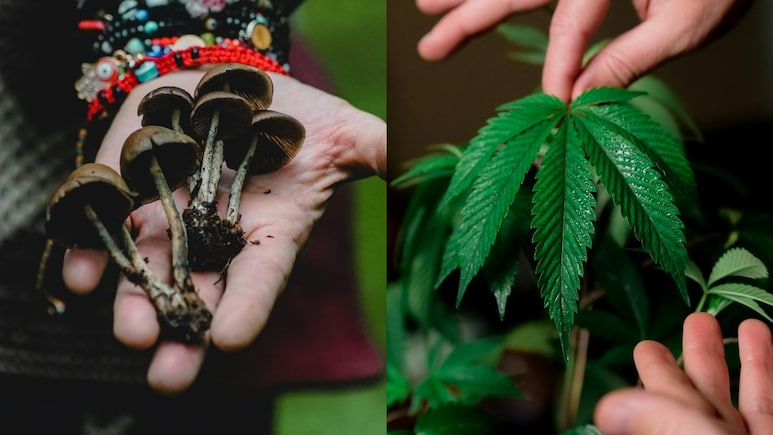
For thousands of years, psychedelic substances have been an integral part of indigenous cultures around the world. Now, scientists have managed to engineer a plant to produce five powerful psychedelic compounds normally found in plants, fungi and animals. Researchers at the Weizmann Institute of Science in Israel modified a tobacco plant (Nicotiana benthamiana) to produce different tryptamine-based psychedelics, making research into therapeutic uses and production of future medicines easier.
This single bio-engineered plant can now produce psilocin and psilocybin (typically found in mushrooms), DMT (from various plants), and both bufotenin and 5-methoxy-DMT, which the Colorado River toad naturally secretes. The production quantities of each compound were sufficient to suggest that, with a little more refinement, the system could function as a biological tryptamine factory.
"This work establishes a versatile platform for concurrent biosynthesis and diversification of psychoactive indolethylamines, paving the way for their production in plants," the study published in Science Advances highlighted.
"[Our] strategy established a heterologous plant system for the production of five prominent therapeutically valuable compounds, their derivatives, and nonnatural plant analogs, providing a starting point for their production in plants."
Also Read | 'Go For Rafale': R Madhavan's Old Tweets Resurface, Internet Praises His Defence Acumen
Why Engineer The Plant?
In recent years, the medical use of psychedelic compounds has become popular, but harvesting them from natural sources can lead to habitat loss and overexploitation.
"Traditionally, the supply of psychedelics relies on natural producers, mainly plants, fungi, and the Sonoran Desert toad," the researchers stated. "Harvesting these organisms for their psychoactive compounds raises ecological and ethical concerns, being increasingly threatened by habitat loss and overexploitation."
To avoid such a situation, the researchers set out to rebuild the biological pathways behind these compounds. The tobacco plant was simply chosen as it is the lab rat of plant species, and also contains abundant tryptophan.
Though a lot of work remains before the tobacco plants could make pharmaceutical-quality psychedelics, scientists stated that the research demonstrates the feasibility of biosynthesising DMT and other compounds.
Track Latest News Live on NDTV.com and get news updates from India and around the world

