





When Voyager 1 was on its way out of our solar system, its team asked it to look back at Earth one last time. On February 14, 1990, about 3.7 billion miles from the Sun, the space probe captured an image, which is now famous as the "Pale Blue Dot".
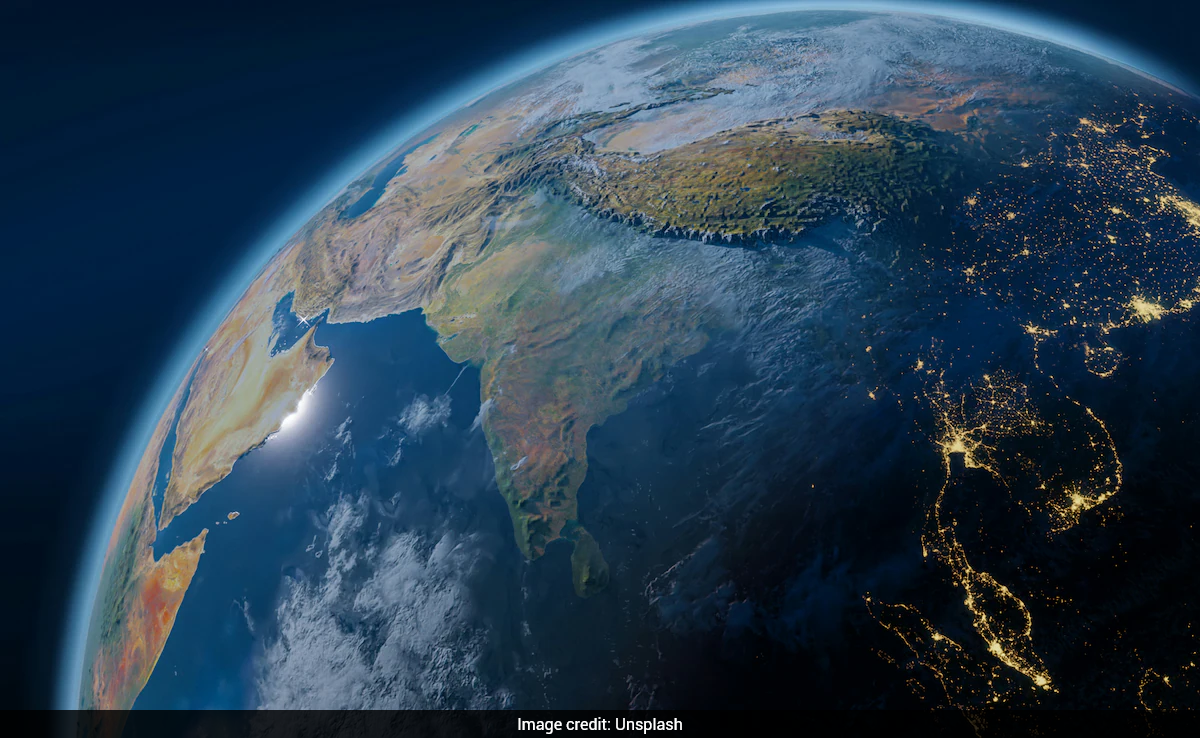
Yes, just a 'blue dot' because if we look at Earth from space, the planet appears blue with scattered white clouds and patches of green. But it may have looked vastly different 2.4 billion years ago.
Also read | All About Vandi Verma, the Indian-Origin Scientist Behind Mars Rover's AI-Powered Drive
What is the Purple Earth Hypothesis?
Scientists believe that Earth was once purple. The Purple Earth Hypothesis proposes that our planet's surface was once dominated by purple microbes, which used a molecule called retinal to harness sunlight for energy. As per an old article by NASA, retinal possibly predates the evolution of chlorophyll and photosynthesis.
Professor Shiladitya DasSarma, who is a molecular biologist from the University of Maryland and Dr Edward Schwieterman, an astrobiologist from the University of California at Riverside, proposed the Purple Earth Hypothesis.
It is a known fact that a majority of photosynthetic lifeforms on Earth are green because of chlorophyll. Apart from green, the pigment absorbs all wavelengths of light in the visible spectrum to make it appear green.
Also read | Sun Unleashes Four Powerful Solar Flares, Including An Intense X8.3: Here's What It Means
The researchers suggest that early life on Earth used retinal instead of chlorophyll for photosynthesis. Retinal absorbs green and yellow light, reflecting red and blue light, giving the planet a purple hue.
The archaeal membrane components found in ancient sediments support the idea that early life was retinal-based. Also, it is a simpler molecule than chlorophyll, making it a more likely candidate for early life.
"Retinal-based phototrophic metabolisms are still prevalent throughout the world, especially in the oceans, and represent one of the most important bioenergetic processes on Earth," DasSarma said in an old article published by Astrobiology Magazine.
Great Oxygenation Event
The NASA report also mentions that during the early years of our planet's history (roughly the first two billion years), the Earth's atmosphere didn't have significant amounts of oxygen, as it was rich in carbon dioxide and methane. However, something changed around 2.4 billion years ago, with the Great Oxygenation Event raising the oxygen levels in the atmosphere.
Here's Why It Matters
The Purple Earth Hypothesis has significant implications for the search for life on other planets. It suggests that life may exist on planets with conditions different from those on Earth, and that retinal-based life forms could be a common occurrence in the universe.
Track Latest News Live on NDTV.com and get news updates from India and around the world

