





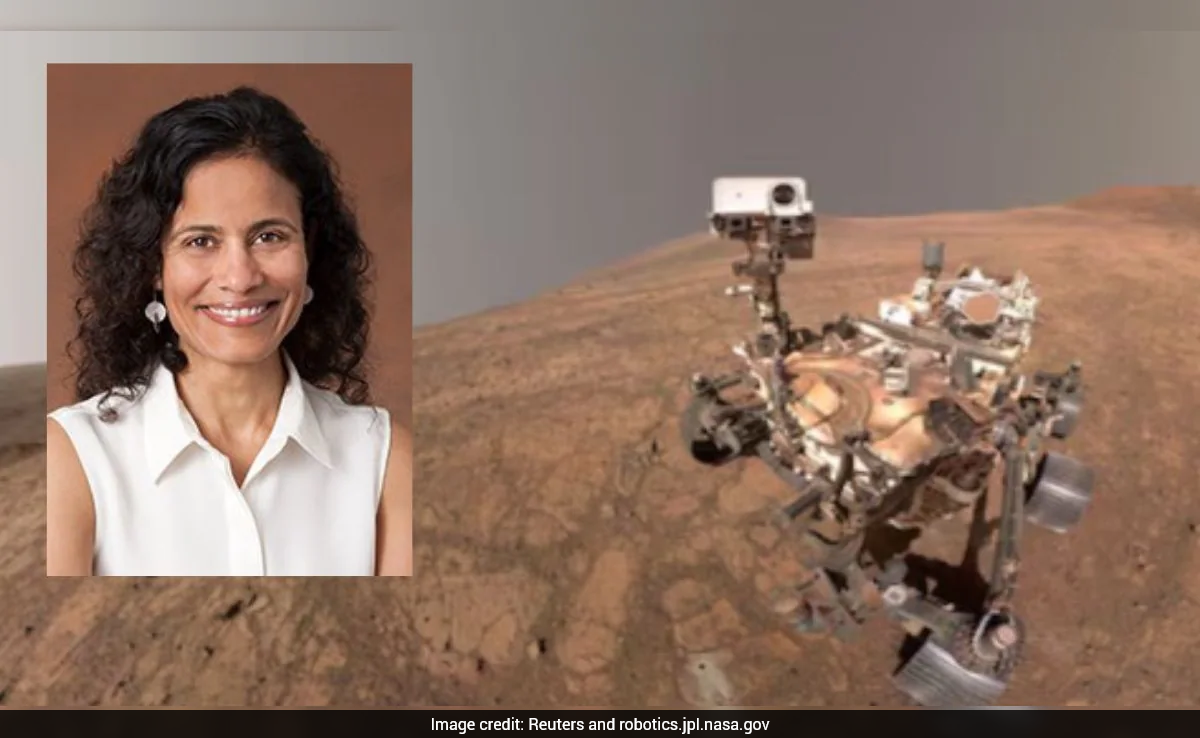
Vandi Verma, a robotics engineer, scripted history as the lead scientist behind NASA's first-ever AI-planned drive on Mars. Born in India and raised in a family connected to aviation, Verma's journey showcases her passion for technology and exploration.
According to the NASA website, Verma works as a JPL Principal Engineer and the Deputy Section Manager for the Mobility & Robotics section at the NASA Jet Propulsion Laboratory, California Institute of Technology. She also serves as the Chief Engineer of Robotic Operations for Mars 2020.
Also read | Angry Sun Puts India At Risk, ISRO Warns Of Strong Radio Blackout
NASA stated that before the American space agency, she led the team that originated the formally verifiable plan execution language PLEXIL and the development of technology that has been deployed on rovers and human spaceflight projects.
According to multiple reports, Verma's father served in the Indian Air Force, and her early exposure to aircraft and engineering environments sparked her interest in technology. Her LinkedIn profile revealed that she completed her electrical engineering degree from Punjab Engineering College, Chandigarh, and later earned her master's and PhD in robotics from Carnegie Mellon University.
Also read | Sun Unleashes Four Powerful Solar Flares, Including An Intense X8.3: Here's What It Means
First AI-planned drive on Mars
NASA confirmed that the Perseverance Mars rover completed the first drives on another world planned by AI on December 8 and 10.
"This demonstration shows how far our capabilities have advanced and broadens how we will explore other worlds," NASA Administrator Jared Isaacman said, as quoted.
"Autonomous technologies like this can help missions to operate more efficiently, respond to challenging terrain, and increase science return as distance from Earth grows. It's a strong example of teams applying new technology carefully and responsibly in real operations."
The AI system analysed orbital images and navigation data to identify rocks, slopes, and sand features, generating a safe driving route. This breakthrough enables future robotic missions to operate more efficiently.
Track Latest News Live on NDTV.com and get news updates from India and around the world

