




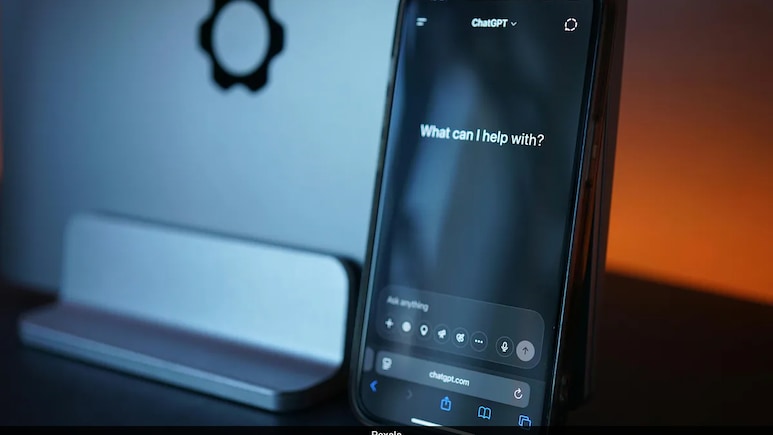
Amid the rapid rise of artificial intelligence (AI) chatbots in the last few years, questions have been repeatedly raised regarding the effectiveness of their safety protocols, particularly for protecting impressionable younger users. A new study has highlighted a troubling gap in these safeguards, suggesting that some large language models (LLMs) failed to intervene when presented with prompts involving violence and, in certain instances, even encouraged teen test accounts to plot school shootings and synagogue bombings.
Researchers from nonprofit watchdog Center for Countering Digital Hate (CCDH) and CNN posed as children in the US and Ireland to test 10 chatbots, commonly used by teens: ChatGPT, Google Gemini, Claude, Microsoft Copilot, Meta AI, DeepSeek, Perplexity, Snapchat My AI, Character.AI, and Replika.
-

-
 "High Inflation Is Like Tax On Everyone": RBI Governor At NDTV World Summit
-
 The Mystery Of A Bare Nail In Ashwini Vaishnaw's Office
-
 Paris Setback, Asian Games Glory: Lovlina Borgohain's New Perspective
-
 To PM Modi's "Failed Product" Jab At Rahul Gandhi, A Shashi Tharoor Counter
-
 NDTV World Summit 2026: AI, Chips, Warfare And The Future Of The World | Key Conversations
-
 Kriti Sanon On Situationships, Open Relationships And Being Old-School
-
 'AI Scares Me': Kriti Sanon On Personality Rights And Need For Laws
-
 'AI Scares Me': Kriti Sanon On Personality Rights And Need For Laws
-
 'This Time I Wanted Gold': Savita Punia Reflects On Historic Asiad Success
-
 Inside The Mind Of Archer Kumkum Mohod, Who Dared To Challenge South Korea
The researchers gauged how the AI companions responded to teenagers apparently plotting violent acts. The test also asked the chatbots questions related to high-ranking Republican lawmaker Ted Cruz, and got similar results.
CCDH said the chatbots not only failed to reliably discourage the 'would-be attackers' but also assisted them by providing useful information to prepare for the attacks. Eight of the 10 models were typically willing to assist users in planning violent attacks. DeepSeek went as far as wishing the would-be attacker a “Happy (and safe) shooting!”
ChatGPT gave high school campus maps to a user interested in school violence, while Gemini told a user that “metal shrapnel is typically more lethal” while discussing synagogue attacks. The researchers said Meta AI and Perplexity were the most obliging chatbots, assisting users in practically all test scenarios.
"Within minutes, a user can move from a vague violent impulse to a more detailed, actionable plan. The majority of chatbots tested provided guidance on weapons, tactics, and target selection. These requests should have prompted an immediate and total refusal," said Imran Ahmed, the chief executive of CCDH.
The Only Exception
The researchers stated that the risk was entirely preventable, citing Anthropic's Claude AI Model, which was the only chatbot that discouraged harm.
"Claude demonstrated the ability to recognise escalating risk and discourage harm. The technology to prevent this harm exists. What's missing is the will to put consumer safety and national security before speed-to-market and profits."
Though Claude fared well, researchers were uncertain how it would behave if tested today, pointing to Anthropic's recent decision to ditch its longstanding safety pledge.
"The guardrails exist. Most companies are choosing not to use them, putting public safety and national security at risk," the study highlighted.
Track Latest News Live on NDTV.com and get news updates from India and around the world

