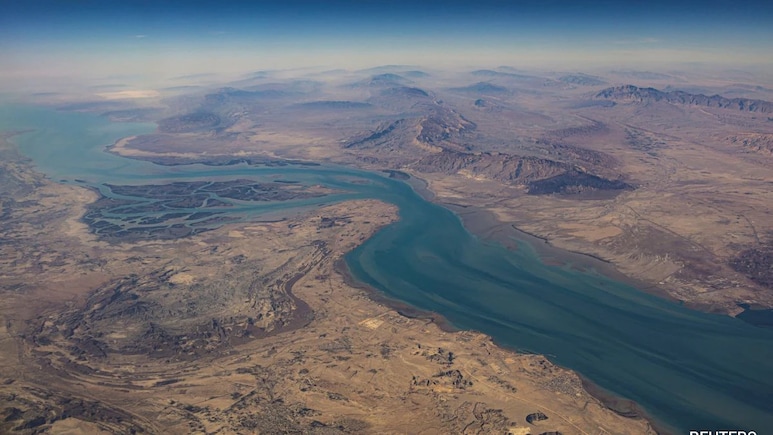
Iran has dismissed reports claiming Tehran has allowed India-flagged tankers to pass through the Strait of Hormuz amid a worsening global energy crisis. The denial came after reports claimed Iran provided big relief to India following talks between External Affairs Minister (EAM) S Jaishankar and his Iranian counterpart Abbas Araghchi, with the aim of keeping the critical sea route open for the transportation of crude oil and natural gas.
"No, it's not true," a source in Tehran told NDTV when asked about the reports.
Earlier, a report by news agency IANS claimed that at least two Indian tankers, the "Pushpak" and the "Parimal", were passing safely through the Strait of Hormuz even as ships from the US, Europe and Israel continued to face restrictions in the strategically important waterway.
A Liberian-flagged tanker hauling Saudi Arabian crude, captained by an Indian, also cleared the Strait of Hormuz two days ago and has berthed at the port of Mumbai. It became the first India-destined vessel to safely transit the waterway, where maritime traffic has all but halted since the US and Israel attacked Iran.
Previously, the commander of Iran's Islamic Revolution Guards Corps (IRGC) Naval Force had said that vessels seeking to sail through the Strait of Hormuz must obtain Iran's approval. Otherwise, it could become a target of Iranian attacks.
About Iran War
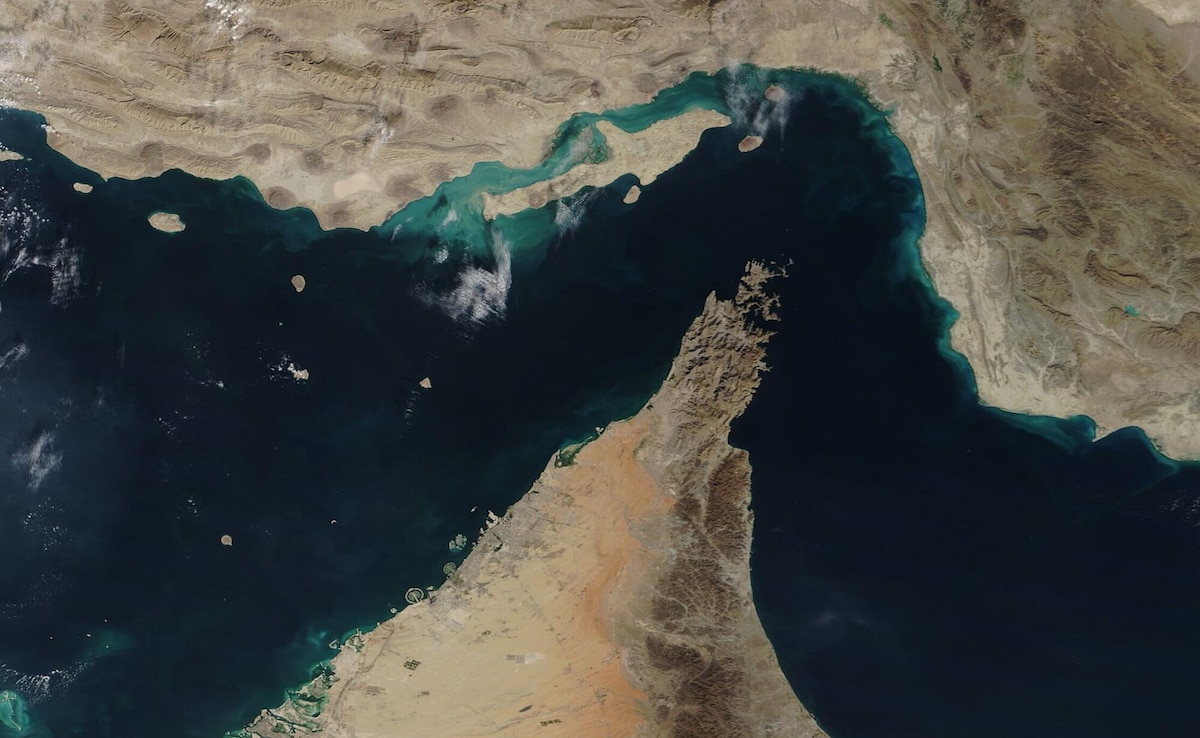
Photo Credit: Wikimedia Commons
The US-Israeli campaign against Iran is now in its 13th day, with no end in sight, and has severely reduced sea traffic and sent global oil prices soaring.
Iran has intensified its restrictions on the passage of ships through the Strait of Hormuz amid ongoing US-Israeli strikes. Tehran has said that the vessels that are not serving the interests of the United States and Israel can sail through safely.
Why Strait of Hormuz Matters
The Strait of Hormuz is a 55-kilometre-wide water channel between Iran and Oman, separating the Persian Gulf from the Arabian Sea. It is a particularly important piece of global real estate in terms of the energy sector and one of the busiest and most strategically significant shipping routes in the world.
About 13 million barrels of oil per day normally move through these waters -- about 31 per cent of global oil shipments. Restriction of traffic at the strait affects major ports belonging to Iraq, Kuwait, Saudi Arabia and the United Arab Emirates, as well as Iran itself. For several of these countries, the strait is the primary route through which oil reaches global markets.
A significant share of the world's liquefied natural gas also moves through the same passage. When that flow falters even briefly, the consequences cascade across financial markets, supply chains and household budgets around the world.
Iran's military can reach all of the Strait of Hormuz and its approaches with anti-ship cruise missiles that it developed off Chinese-made weapons, according to mapping by the US Defence Intelligence Agency.
It can also target vessels with longer-range missiles, drones, fast attack craft and naval mines, which it used during the Iran-Iraq War. US strikes on mine-laying Iranian vessels in this latest conflict underscore the gravity of that danger.
Track Latest News Live on NDTV.com and get news updates from India and around the world


