





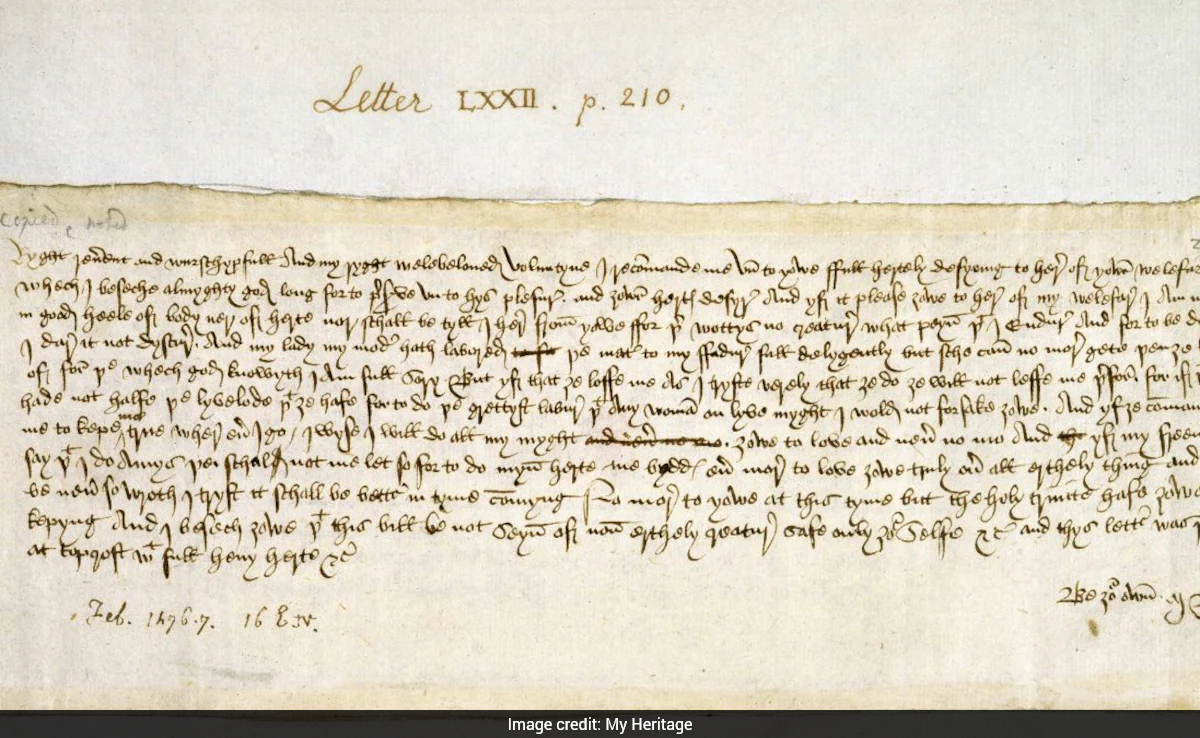
AI-assisted imaging and handwriting analysis helped researchers to decipher a love letter hidden in a British estate archive for more than five centuries, The Jerusalem Post reported. The letter, reportedly written by Margery Brews from Topcroft, England, to her fiance John Paston, shows a young bride torn between a dowry dispute that threatened her family's wealth and her desire to marry for love.
Dated February 1477, the letter was sent while John Paston was in London trying to finalise their marriage. The issue was Margery's dowry. Her father apparently had promised £200 but wanted to pay it in instalments over the years. But John's mother's demands were different.
Also read | Monkeys In Gibraltar Eat Soil To Digest Junk Food Fed By Humans
"My father bids me to tell you he will make sure [the money] within a few years, as I trust you will not let for that, for if you love me, as I trust verily you do, you will not leave me therefore," Margery writes.
She also declared to Paston that she would still marry him even if he had "half the livelihood" he did.
Scholars are calling it the world's oldest documented love letter. This is also the first time that AI has revealed the emotional stakes behind a medieval marriage contract.
"Many historical letters are difficult for modern readers to interpret at first glance,' a spokesperson for MyHeritage explained, as reported by Daily Mail.
"But the essential information summary quickly explains the people, emotions, historical context and significance of the document."
Also read | Woman Lists 5 Reasons For Never Going Back To Corporate Job, Internet Reacts
The report mentioned that the letter was difficult to read because Brews used the Anglo-Saxon letter thorn. She also used some of the old abbreviations, which also included the mark about a letter to show an omitted 'm', and ink that had faded to near-invisibility in sections.
"The language can feel unfamiliar to modern readers because spelling, grammar and pronunciation were very different from the English we use now," the MyHeritage spokesperson added.
"It really reminds you that the people you are studying are very much like ourselves," Rob Edwards, an archaeologist, said as quoted.
"They have the same feelings, and the fact that they are related really does add an extra dimension."
"You can imagine it, trying to get a bit more towards the wedding from your parents. This money is going to set you up."
Track Latest News Live on NDTV.com and get news updates from India and around the world

