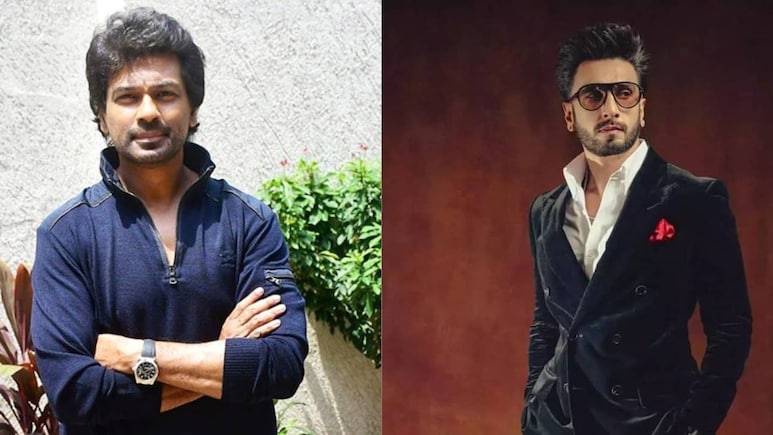
Producer Nikhil Dwivedi supported Ranveer Singh and raised valid questions about mediation, legal routes to resolve disputes, and one's livelihood after the Federation of Western India Cine Employees (FWICE) issued a non-cooperation directive against the actor last week over his last-minute exit from Farhan Akhtar's big‑ticket film Don 3. The dispute escalated further as Singh sent a legal notice to the film body hours before they announced a press meet today.
Nikhil Dwivedi said that representation bodies are needed to resolve contractual disputes and to mediate for an amicable resolution. But if they fail in their attempts, matters should be dealt with legally. In the meantime, stopping someone from earning a livelihood would be considered an “unfair trade practice,” he added.
“There's no straightforward answer to this, and my only request is that my response be carried in its entirety because it's a sensitive issue,” Dwivedi told Entertainment Live.
Explaining his stance, he added, “We work with a lot of people on a film. A unit can have 100, 150, even 200 people. At some point, disagreements can happen between individuals. That's precisely why contracts and agreements exist. A dispute, by itself, is not unusual.”
Dwivedi argued that representation bodies are needed to address disputes and disagreements.
“Their presence is important because they provide representation. But ultimately, their intention should be reconciliation and finding a resolution between the parties involved,” he said.
“If a settlement cannot be reached, then I believe the associations have to step back,” he added.
Legal route is the last option
“Any contractual dispute can ultimately only be resolved in a court of law in India. We have courts for that purpose. You can try to resolve matters emotionally or through mediation, but if that doesn't work, the matter has to be settled legally,” said Dwivedi.
Dwivedi also questioned the legal tenability of such film bodies when they announce a non-cooperation directive against an artiste.
“One more aspect is when an association says that people should not work with a particular individual or that its members will not work with them. I don't know whether that is legally tenable.”
He further argued that such actions could potentially amount to an unfair trade practice. “In fact, legally, I don't think it is, because it can fall under the category of an unfair trade practice. You cannot prevent someone from earning a livelihood or restrict their employment opportunities,” Dwivedi added. “So if something isn't legally tenable, we need to carefully consider whether we should be doing it at all.”
Dwivedi concluded that if the film body can't find a resolution, they should leave the matter to the judiciary.
“If the matter still cannot be resolved, then I think the associations should simply tell both parties, ‘We've done everything we can. Now you should take the matter to court and let the legal process decide.' That, in my view, is where their role should end.”
What happened so far
Last week, FWICE announced a non-cooperation directive against Ranveer Singh, asking all its affiliated members across departments not to work with the actor.
Addressing the media at a press conference, FWICE advisor Ashoke Pandit claimed that the body repeatedly attempted to reach out to Ranveer but allegedly received no response.
“None of our workers or members, across all crafts, will work on any of his projects. We have requested that all producers take a stand, join us in solidarity, speak out against this conduct, and make a firm decision,” Pandit said.
Later, Pandit clarified that the directive should not be described as a “ban,” even though many in the industry and media had called it one.
Ranveer Singh, meanwhile, responded through an official spokesperson shortly after FWICE's announcement.
“Ranveer Singh holds the highest regard for the film fraternity and for everyone associated with the Don franchise. Throughout the recent developments surrounding Don 3, he has consciously chosen to maintain silence, believing that professional discussions and personal equations are best handled with dignity, maturity and mutual respect,” an excerpt from the statement said.
On June 2, Ranveer Singh sued the film body over its non-cooperation directive against him.
Meanwhile, veteran producer and former IMPPA president TP Aggarwal has challenged FWICE's move by filing a petition before the Bombay Civil Court in Dindoshi.
Also Read | Ranveer Singh Sues Film Workers' Body Over Non-Cooperation Action Amid Don 3 Row
