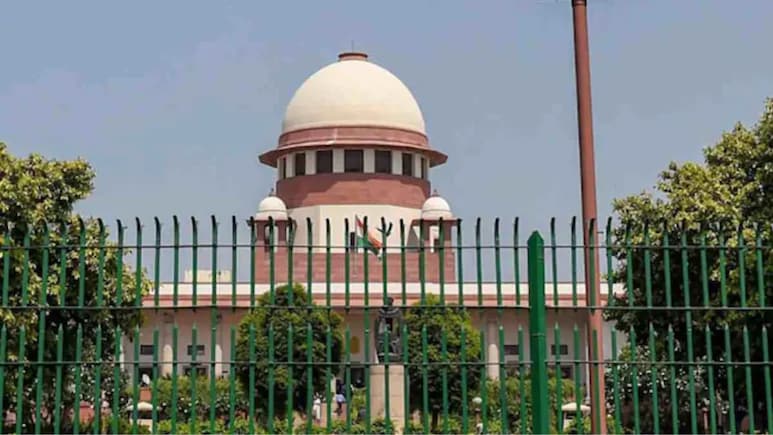

The Supreme Court today issued notices to the Central Government and the University Grants Commission (UGC) on two fresh petitions challenging the recently notified UGC regulations 2026. The bench directed that these new petitions be clubbed with the earlier petitions, and all matters will be heard together.
The fresh petitions contend that the new rules discriminate against the general category and violate their fundamental rights. Earlier, the top court had issued notices to the Centre and UGC and stayed the implementation of the regulations. During the proceedings, the court also suggested the constitution of a committee to reconsider the provisions of the UGC rules. A hearing date for the combined petitions will be scheduled shortly.
-

-
 NDTV World Summit 2026: What Nikhil Kamath Said On Inheritance Tax
-
 Mohini Dey Says She Carries Her Roots Wherever She Goes: 'I Am A Bengali Girl'
-
 Nikhil Kamath Shows 'Delay Gratification' Tattoo, Reveals Mantra Behind It
-
 NDTV World Summit 2026: What Nikhil Kamath Said On Inheritance Tax
-
 Nikhil Kamath Warns 2027 Could Be Tough For Startups Amid AI Bubble Fears
-
 Not Another News Platform: What Nikhil Kamath Wants To Build Next
-
 'Groww Did Well': What Zerodha Co-Founder Nikhil Kamath Said On Rival
-
 Nikhil Kamath Tells NDTV One Thing India Can Learn From China At NDTV World Summit
-
 Groww vs Zerodha: Nikhil Kamath On Groww Overtaking Zerodha In Active Clients | Nikhil Kamath
-
 Nikhil Kamath On Marriage, Kids And Why He Avoids 'Certainty'
The UGC regulations 2026, which mandated all universities and colleges in the country to establish an Equal Opportunity Centre (EOC) and campus-level committees to inquire into discrimination complaints and promote equity and inclusion, have been put on hold amid widespread protests, especially from general category students. The bench flagged "complete vagueness" in the rules that makes them prone to misuse.
During the hearing, Chief Justice of India Surya Kant had highlighted the persistence of caste-based discrimination even 75 years after independence.
"In a country after 75 years, all that we have achieved, to become a classless society; are we becoming a regressive society? The worst thing happening in ragging is that children coming from south or north-east... they carry their culture, and somebody alien to this starts commenting on them. Then you have separate hostels. For God's sake. There are inter-caste marriages, and we have also been in hostels where all stayed together," the Chief Justice had remarked.
The bench stressed that the language of the regulations must be reviewed by experts. Justice Joymalya Bagchi, part of the two-judge bench, noted that while Article 15(4) empowers making laws for Scheduled Castes and Scheduled Tribes, progressive legislation should not regress.
"I hope we don't go to segregated schools like the US, where blacks and whites went to different schools," he said, with the CJI adding, "This kind of situation can be exploited."
Appearing for the petitioners, advocate Vishnu Shankar Jain argued that Section 3(c) of the regulations defines caste-based discrimination only against SCs, STs, and OBCs, excluding the general category, and violates Article 14.
"Caste-based discrimination is defined as discrimination against SC, ST, and OBC. This completely excludes the members of the general category. This definition under Section 3(c) is hit by Article 14, as discrimination cannot be assumed to target only one segment," Jain said.
With the UGC 2026 regulations stayed, colleges and universities must continue following the 2012 rules. The next hearing has been scheduled for March 19.
