





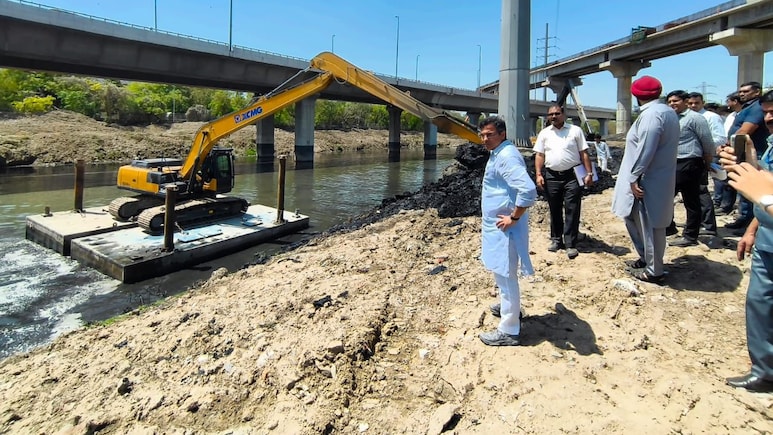
Authorities in Delhi have opened up a 40-year-old covered stretch of the Delhi Gate drain, a move seen as crucial to tackling chronic waterlogging at ITO and nearby central areas ahead of the monsoon.
The stretch has long acted as a bottleneck, with decades of accumulated silt slowing the movement of stormwater and contributing to repeated flooding across parts of central Delhi, including Daryaganj and Kashmiri Gate.
A 40-Year Bottleneck
The Delhi Gate drain, a key outfall channel, begins near Daryaganj and runs for about 2.5 kilometres before discharging into the Yamuna River.
For nearly four decades, a roughly 400-metre section passing through Samta Sthal remained covered with concrete slabs supported by beams and columns. Officials said this made meaningful desilting extremely difficult.
As a result, large volumes of silt built up over the years, choking the drain and sharply reducing its carrying capacity.
Authorities have now started removing these slabs to gain full access to the blocked stretch. Heavy machinery is being used to clear out silt that had accumulated over time.
"We are addressing long-pending bottlenecks to ensure areas like ITO do not face the same flooding this year," Irrigation and Flood Control Minister Parvesh Verma said.
"For the first time in four decades, the slabs are being removed to enable thorough cleaning and restore the drain's capacity," he added.
What Changed After 2023 Floods
The focus on drainage comes after the July 2023 floods, when the Yamuna River touched a record 208.66 metres, inundating large parts of the city.
Areas such as ITO, Kashmiri Gate, Civil Lines and Mayur Vihar were among the worst hit, with over 23,000 people evacuated as floodwaters entered homes and commercial establishments.
Officials said that while the surge in the river triggered the flooding, blocked drainage channels aggravated the situation.
"When major outfall drains are clogged, rainwater has no exit, leading to severe waterlogging even during moderate rainfall," an official said.
Desilting Work Underway
Data from the Irrigation and Flood Control Department shows that desilting of the Delhi Gate drain has crossed 70%, with more than 21,000 metric tonnes of silt removed so far.
Work is still underway in remaining sections, including areas near Gandhi Darshan and portions running beneath flyovers.
Officials said improving the drain's capacity is essential to prevent water accumulation in areas such as ITO, Feroz Shah Road, Jama Masjid and around the Supreme Court, which often face traffic disruption during heavy rain.
Parallel work is also being carried out on other major drains. The Barapulla drain, for instance, has seen close to 78% desilting, with over 31,000 metric tonnes of silt cleared.
Across the city, nearly half of the 77 identified drains have been desilted so far, with over 14 lakh metric tonnes removed against a target of 28 lakh metric tonnes.
Officials said timelines have been tightened this year, with closer monitoring and accountability as the city prepares for the monsoon, when even short spells of rain have previously brought central Delhi to a standstill.
Track Latest News Live on NDTV.com and get news updates from India and around the world

