





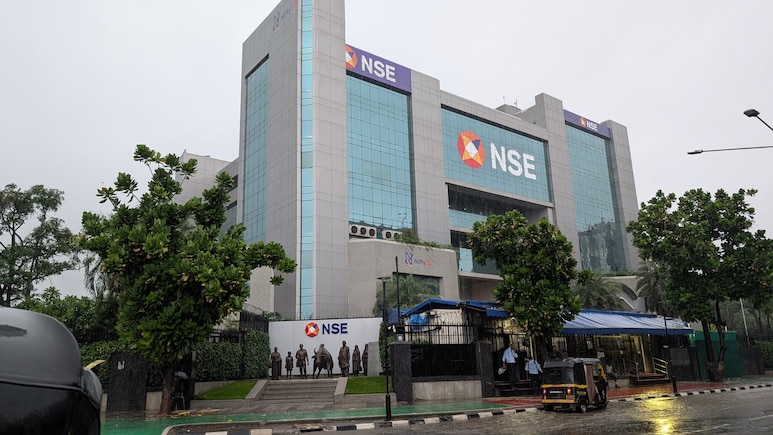
NSE IPO Listing Price: The National Stock Exchange of India finally entered the listed market today (September 24), listing at Rs 1,800 per share. This reflected a modest premium of 0.84 per cent over its IPO price of Rs 1,785.
Based on the listing price of Rs 1,800, investors who were allotted shares saw an immediate gain of Rs 120 per lot. Interestingly, India's largest stock exchange did not list on its own platform. Instead, NSE shares debuted on the Bombay Stock Exchange (BSE).
Vikram Subburaj, CEO, Giottus.com, told NDTV, "NSE's listing is an unusual moment for Indian markets. The institution through which millions of investors buy and sell shares will now have shareholders of its own to answer to. That brings a useful question into sharper focus: how does an exchange balance commercial growth with its responsibility to keep markets fair and dependable?"
Also Read | Layoffs Are Rising In Tech, But These Skills Are Helping People Unlock Better Pay
The Rs 22,561.57 crore IPO was subscribed 5.71 times during the three-day bidding period that ended on September 21.
NSE IPO Listing: Time And Date
The NSE IPO listing date is September 24, 2026. Trading began on the BSE at 10 am. The stock gained further momentum after listing, rising 4.11 per cent to Rs 1,874.05 during trade.
Earlier, the allotment was finalised on September 22, with successful investors receiving the shares in their demat accounts ahead of the debut. One IPO lot comprised 8 shares, requiring an investment of Rs 14,280 at the issue price.
The shares will also be listed on the Metropolitan Stock Exchange of India.
NSE IPO Issue Price And Size
The price band for the IPO was fixed at Rs 1,700 to Rs 1,785 per share. The final issue price was set at the upper end of the band. NSE received bids for 50,58,11,384 shares against 8,86,42,911 shares on offer, as per data available on the BSE website.
The IPO raised Rs 22,561.57 crore through an offer for sale. This means NSE itself is not receiving fresh capital from the issue. Existing shareholders are selling their shares to the public.
At the upper end of the price band, NSE's implied market capitalisation is around Rs 4.42 lakh crore.
NSE IPO GMP Today: What Did The Grey Market Signal
The grey market had been closely watched ahead of the listing. On September 23, reports put the GMP at around Rs 43-Rs 45. At a Rs 1,785 issue price, that pointed to an indicative listing price of roughly Rs 1,828-Rs 1,830. Earlier, the GMP had been considerably higher.
This is why investors should always be careful with GMP numbers. They can move quickly and do not guarantee the actual listing price. The final price is determined by demand and supply once trading starts on the BSE.
How Strong Was The NSE IPO Subscription
The IPO received strong overall demand. It was subscribed 5.71 times, with bids worth more than Rs 90,000 crore.
Institutional investors led the demand. The qualified institutional buyers' portion was subscribed 12.68 times, while the non-institutional investor category was subscribed 6.55 times.
The retail portion was subscribed 1.39 times. This difference in participation is worth noting. The institutional response was much stronger than the retail response.
Why Is NSE Listing On BSE
NSE will not trade its own shares on the NSE. Instead, investors will buy and sell NSE shares on the BSE. This is because regulations governing recognised stock exchanges do not permit an exchange to list its own shares on its own trading platform.
So, on the listing day, India's largest exchange became a listed company on its rival exchange.
What Does NSE Actually Do
NSE is much more than the platform investors use to trade shares. Its operations span equities, equity derivatives, currency derivatives, commodities, debt securities and other market-related services. Its wider ecosystem includes clearing and settlement, indices and market-data businesses.
The scale of the exchange is also significant. As of June 30, 2026, NSE had 26.14 crore registered investor accounts and 3,005 listed entities. It accounted for 92.99 per cent of India's cash-market activity in FY26.
NSE Financial Performance
NSE reported a mixed performance in FY26. Revenue from operations stood at Rs 16,601.31 crore. Net profit was Rs 10,302.06 crore.
Both profit and operating performance declined from the previous year, with regulatory changes and higher securities transaction tax affecting activity in the derivatives market.
There was, however, some recovery in the first quarter of FY27. NSE reported a 13.10 per cent year-on-year rise in operating revenue during the quarter. Operating EBITDA increased 14.84 per cent, while profit after tax rose 6.71 per cent to Rs 3,120.08 crore.
What Should Investors Watch After Listing
According to Subburaj, "Investors should look at how NSE sustains confidence in its systems, handles conflicts of interest, and remains accountable as a listed company. Those are the measures that will matter long after the excitement around the IPO has passed."
Meanwhile, Ashishkumar Chauhan, MD and CEO of NSE, said, "There is nothing else that represents the aspirations of India's future than NSE. What is good for India is good for NSE."
Notably, the National Stock Exchange of India is India's largest stock exchange and one of the leading multi-asset exchange platforms in the world.
Track Latest News Live on NDTV.com and get news updates from India and around the world

