






Nearly 20 years after becoming India's biggest rural jobs programme, the Mahatma Gandhi National Rural Employment Guarantee Act (MGNREGA) has officially made way for a new law.
From July 1, the Viksit Bharat-Guarantee for Rozgar and Ajeevika Mission (Gramin), or VB-G RAM G Act, comes into force across the country. The Centre says the new framework is designed to create more durable assets, improve planning and offer more days of guaranteed work. The Opposition, however, argues that the new framework could weaken the rights-based character of MGNREGA and shift a bigger financial burden to states.
The transition marks one of the biggest policy overhauls in rural employment since MGNREGA was launched in 2006.
Also Read | Layoffs Are Rising In Tech, But These Skills Are Helping People Unlock Better Pay
Why Did The Government Replace MGNREGA?
The Centre argues that rural India has changed significantly over the past two decades.
Instead of focusing primarily on providing wage employment whenever workers demand it, the new law aims to combine employment generation with long-term rural infrastructure creation. Officials say the emphasis will be on building productive assets, converging multiple government schemes and using technology for better planning and monitoring.
Union Rural Development Minister Shivraj Singh Chouhan has assured states that the transition will be seamless and said the new law will strengthen village economies rather than dilute employment guarantees.
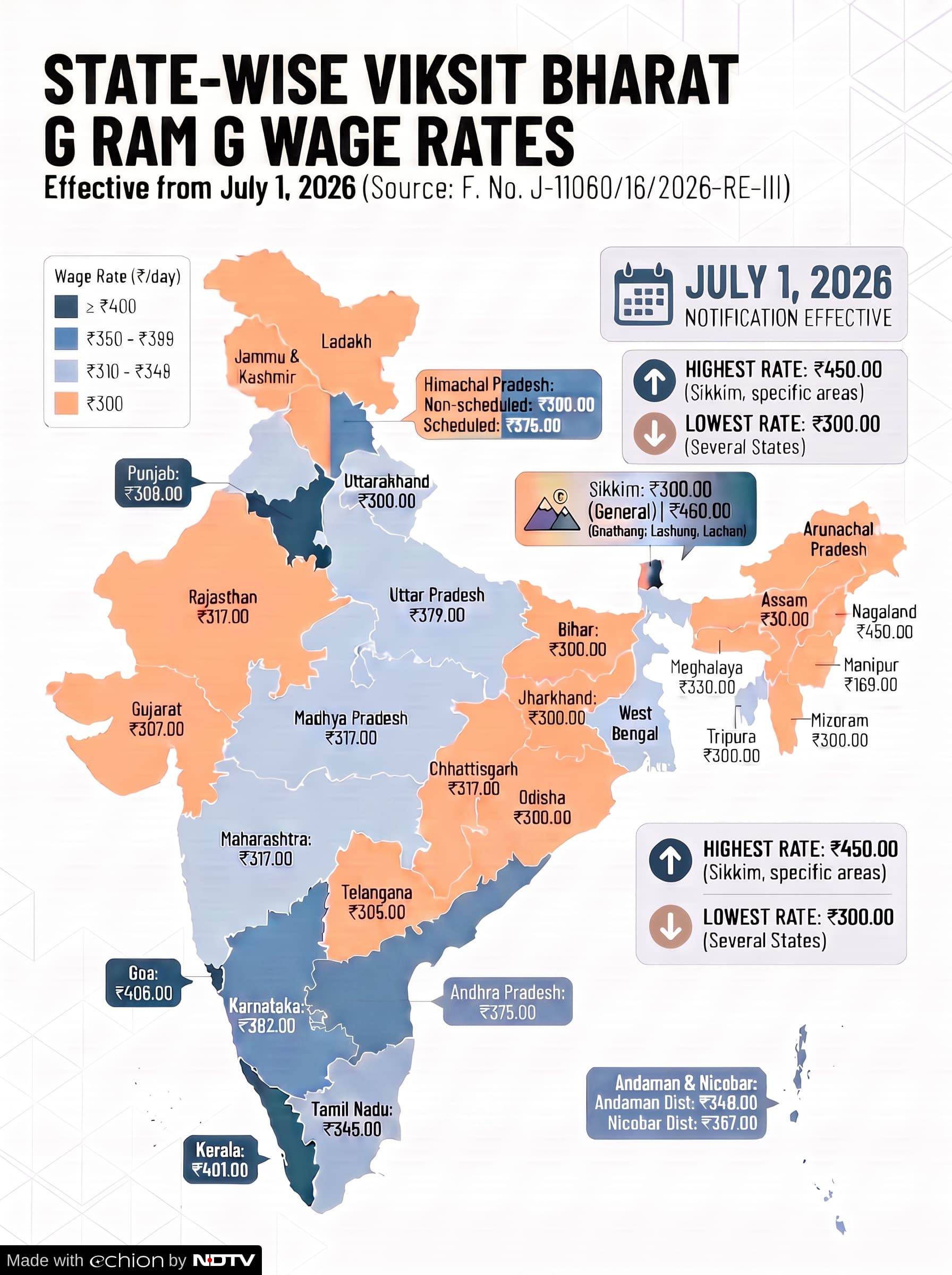
The Biggest Changes Under VB-G RAM G
The new law introduces several structural changes compared with MGNREGA.
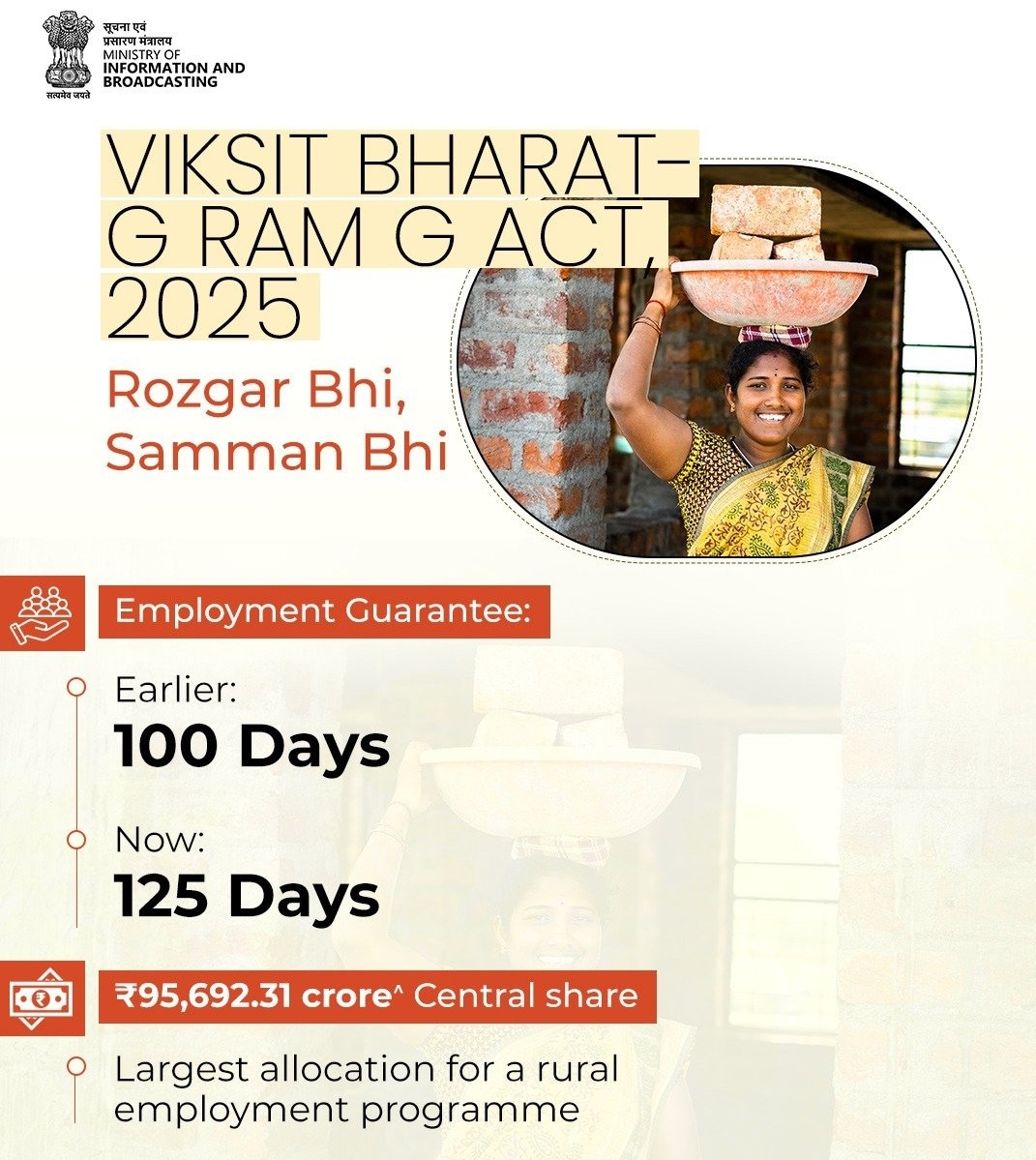
Employment guarantee increases: The annual guarantee rises from 100 days to 125 days of wage employment for every eligible rural household.
Village plans become central: Unlike MGNREGA's demand-driven model, work under the new framework will largely flow from pre-approved village development plans prepared using geospatial mapping and infrastructure needs.
Technology-led planning: Satellite imagery, GIS mapping and digital planning tools will be used to identify, prioritise and monitor projects.
Greater focus on durable assets: The government wants the scheme to create roads, irrigation systems, water conservation projects and other long-lasting community infrastructure instead of scattered works.
Convergence of schemes: Projects can now be aligned with multiple rural development programmes to avoid duplication and improve efficiency.
Why Geospatial Planning Matters
One of the most significant departures from MGNREGA is the shift to geospatial planning.
Instead of sanctioning works mainly after local demand is generated, villages will prepare scientifically mapped development plans using satellite data, land records and infrastructure gaps. These plans will guide where public money is spent.
Supporters believe this could improve the quality of rural assets and reduce duplication. Critics argue it could reduce flexibility for local communities that often rely on demand-based employment during periods of distress.
The Funding Debate Isn't Over
Perhaps the biggest political flashpoint remains financing.
Under the new law, states are expected to shoulder a larger share of programme costs than they did under MGNREGA. Several opposition-ruled states have argued that this could strain already stretched finances.
The Congress has also alleged that the framework centralises decision-making while placing more financial responsibility on states.
Monsoon Could Become The First Big Test
The timing of the rollout is significant.
The law comes into force just as the southwest monsoon gathers pace, when rural employment demand typically changes with agricultural activity.
Analysts say the first few months will determine whether the new planning system can respond quickly enough to local employment needs while simultaneously delivering quality infrastructure. Delays in approvals or fund flows could become a major challenge during the transition period.
Opposition Questions Transition
The rollout has continued to attract political criticism.
Congress president Mallikarjun Kharge has questioned pending dues under MGNREGA and raised concerns over replacing a rights-based law with an entirely new framework. Other opposition leaders have argued that implementation should have been phased rather than introduced nationwide at one go.
The Centre, however, maintains that adequate preparations have been made, including inter-ministerial coordination and consultations with states before the July 1 rollout.
What Rural Workers Should Know
For beneficiaries, the headline change is simple: the legal guarantee increases to 125 days of work a year.
But how employment is generated will change substantially. Village development plans, digital monitoring, geospatial mapping and convergence with other schemes will now play a much bigger role in deciding what work gets sanctioned and when.
Whether the new model delivers better infrastructure without compromising timely employment is a question that will only be answered over the coming months.
After two decades of MGNREGA, India's rural jobs programme has entered an entirely new chapter. The success of VB-G RAM G will now be judged not by the law on paper, but by how effectively it delivers both livelihoods and lasting rural assets.
Track Latest News Live on NDTV.com and get news updates from India and around the world

