





India's battery industry is growing at a rapid pace. Electric vehicles, renewable energy projects, telecom infrastructure and data centres are all pushing demand higher.
But as the country races to build its battery ecosystem, another challenge is quietly emerging. It is no longer just about manufacturing more batteries. It is about securing the raw materials hidden inside used ones.
Industry experts say battery scrap is fast becoming a strategic resource. As millions of batteries reach the end of their life over the coming years, companies that can collect and recycle them efficiently may gain an edge over competitors that simply add more recycling capacity.
Also Read | Layoffs Are Rising In Tech, But These Skills Are Helping People Unlock Better Pay
Battery Scrap Is No Longer Just Waste
For decades, discarded batteries were largely seen as industrial waste. Today, they are increasingly viewed as an important domestic source of valuable metals.
Recycling old batteries reduces India's dependence on imported raw materials. It also supports the country's push towards a circular economy by bringing metals back into production instead of sending them to landfills.
However, accessing these batteries is far from simple.
Unlike traditional raw materials, used batteries are scattered across households, garages, workshops, automobile dealers, fleet operators and industries. Collecting them requires an extensive sourcing network, efficient logistics and proper compliance with environmental regulations.
Historically, much of this collection happened through informal channels. But that is gradually changing as stricter environmental norms and Extended Producer Responsibility (EPR) regulations encourage more organised recycling.
India Already Relies Heavily On Recycled Lead
Lead recycling has become one of the strongest examples of India's circular economy.
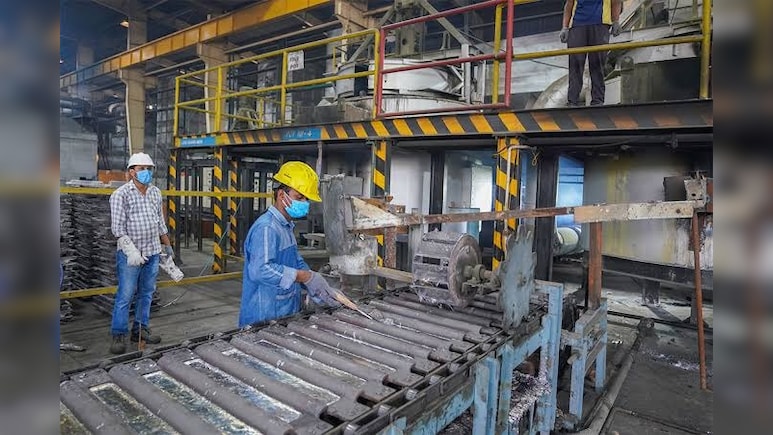
The recycling process includes battery collection, dismantling, smelting, acid treatment, plastic recycling, refining and alloying. The final product is high-purity lead ingots with purity levels exceeding 99.97 per cent.
Around 85-90 per cent of India's domestic lead production now comes from recycled sources. More than 80 per cent of the country's lead consumption is used in battery manufacturing.
The industry currently has around 672 registered recycling units spread across four major regional clusters, with an installed recycling capacity of nearly 3.53 million tonnes annually.
Meanwhile, India's lead-acid battery market was valued at about Rs 42,150 crore in FY25. It is projected to grow to nearly Rs 59,671 crore by FY30, expanding at a compound annual growth rate (CAGR) of 7.2 per cent. Demand is being driven by automobiles, telecom, renewable energy, inverters, UPS systems and data centres.
Supply Gap Remains A Major Challenge
Despite the industry's scale, recyclers continue to face a shortage of quality battery scrap.
The unorganised sector still contributes an estimated 24.4 per cent of recycled lead ingot supply, while another 14.4 per cent comes through imports.
In FY24, India imported nearly 1,53,500 tonnes of lead scrap worth around Rs 2,486 crore, mainly from the United States, the United Kingdom and Australia. The value of these imports has grown at an annual rate of 11.6 per cent since FY19.
The figures highlight a widening gap between India's recycling capacity and its ability to collect enough domestic scrap.
As battery usage rises further, industry observers believe competitive advantage will increasingly depend on building reliable scrap collection and sourcing networks rather than simply expanding recycling plants.
Companies Expanding Collection Networks
Organised recyclers are now investing heavily in collection systems, sourcing partnerships and recovery technologies.
Among them is IPO-bound Ardee Industries, which says it has built a sourcing network spanning more than 50 countries, reflecting the growing importance of securing recyclable material.
The company manufactures pure lead and lead alloys using recyclable inputs such as battery scrap, remelted lead ingots, lead blocks, lead scrap and lead master metal.
Its battery and metal business contributed 87.23 per cent of revenue in FY25, compared with 88.64 per cent in FY24 and 90.97 per cent in FY23.
The broader industry also views recycling as a way to strengthen resource security. Recovering metals already available within the domestic economy helps reduce exposure to volatile global commodity prices and geopolitical disruptions.
Investors Are Taking Notice
The recycling sector has also attracted growing investor interest.
CMR Green Technologies' Rs 630.88 crore IPO, comprising an offer for sale of 3.29 crore shares, debuted at Rs 275 against a price band of Rs 182-192, delivering a listing premium of over 43 per cent.
Jain Resource Recycling also made a strong stock market debut in October 2025. Its Rs 1,250 crore IPO was priced at Rs 232 and listed at around Rs 265, offering investors a premium of nearly 14 per cent.
Among listed companies, Gravita India continues to be viewed as one of the sector's key players.
Meanwhile, Ardee Industries has received SEBI's approval for its proposed public issue. The IPO comprises a fresh issue of Rs 320 crore and an offer for sale of up to 37,650,000 equity shares with a face value of Rs 2 each.
With an estimated 1.5 per cent market share in recycled lead ingots in FY25, the company is positioning itself as a player in India's circular economy by converting end-of-life batteries and non-ferrous scrap into materials used across energy storage, electric mobility, automotive and chemical industries.
The Next Battle May Not Be Inside Factories
India's battery story is entering a new phase. Manufacturing capacity will remain important. But the bigger race could be over who controls the supply of battery scrap.
As millions of batteries reach the end of their lifecycle, companies that can efficiently collect, recover and recycle valuable materials may shape the next chapter of India's clean energy transition.
Track Latest News Live on NDTV.com and get news updates from India and around the world

