





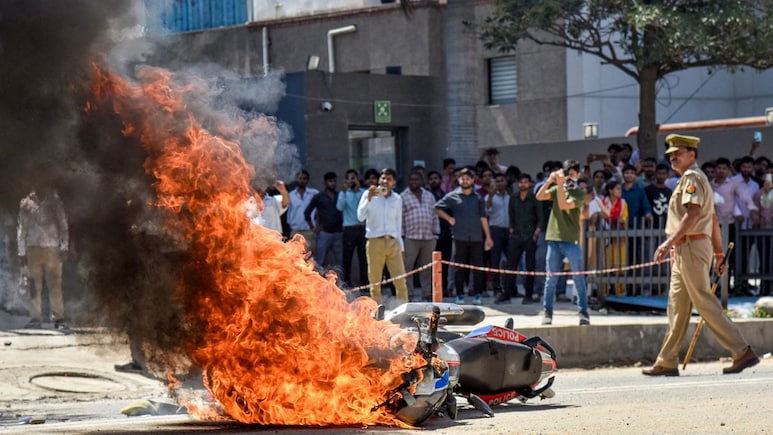
India's new wage code, effective April 1, 2026, makes minimum wages mandatory across sectors. The move is meant to protect workers. But a new report argues it may be hurting the very people it seeks to help.
A study released by the Foundation for Economic Development (FED) says India's current minimum wage structure is so high that it has made legal hiring unviable for millions of low-skill workers.
The report finds that nearly 64 per cent of Indian workers earn below the notified minimum wage. Even more striking, for almost half the workforce, hiring them would be illegal even after a 30 per cent pay raise.
Also Read | Layoffs Are Rising In Tech, But These Skills Are Helping People Unlock Better Pay
FED argues that India's minimum wage, adjusted for income levels, is about 50 per cent higher than comparable exporting nations such as China, Vietnam, and Bangladesh. On average, India's minimum wage is 1.7 times the median casual wage. In advanced economies, this multiple is between 0.26 and 0.60.
The result, the report says, is fewer formal jobs.
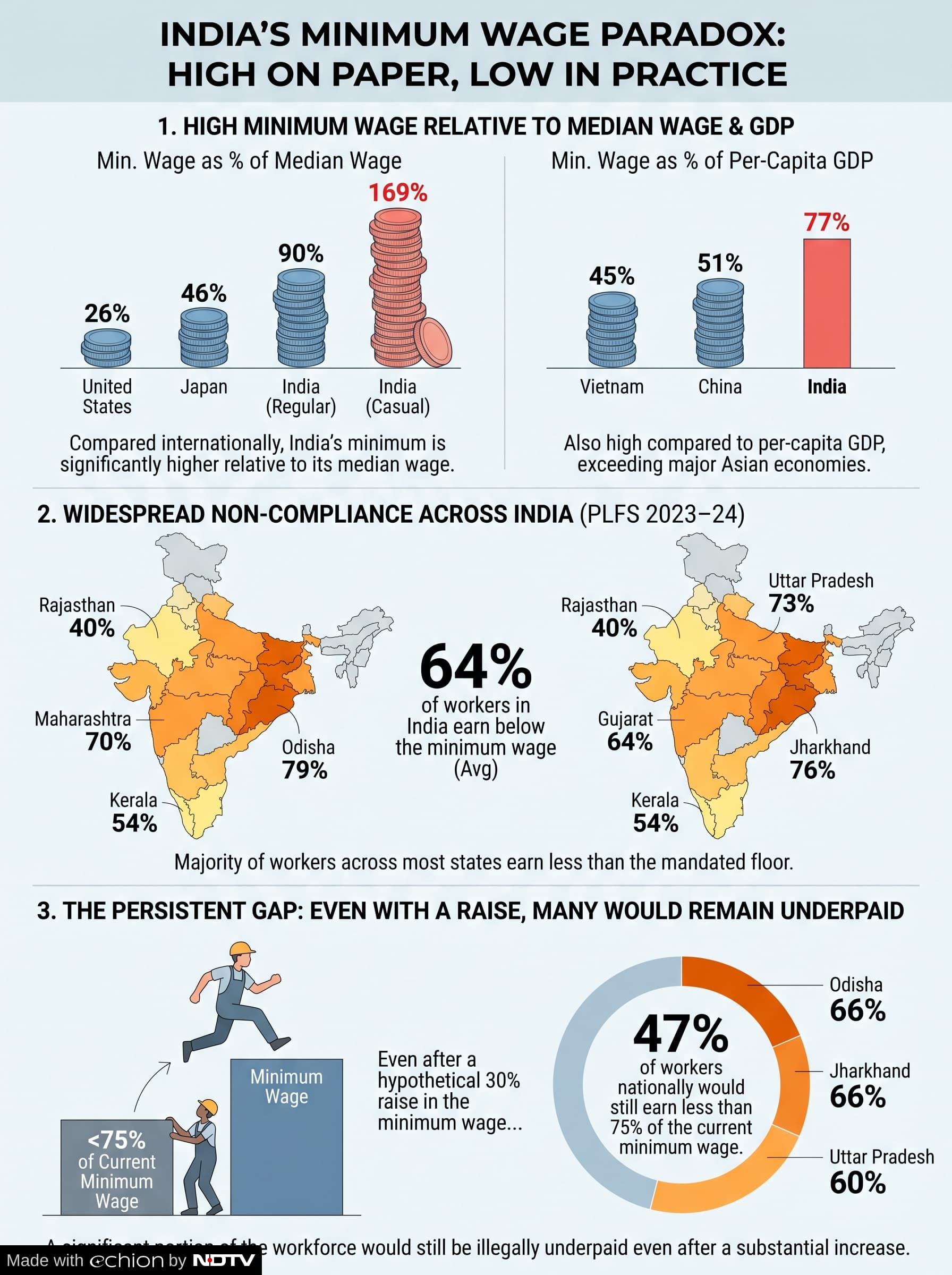
Data Source: Foundation for Economic Development
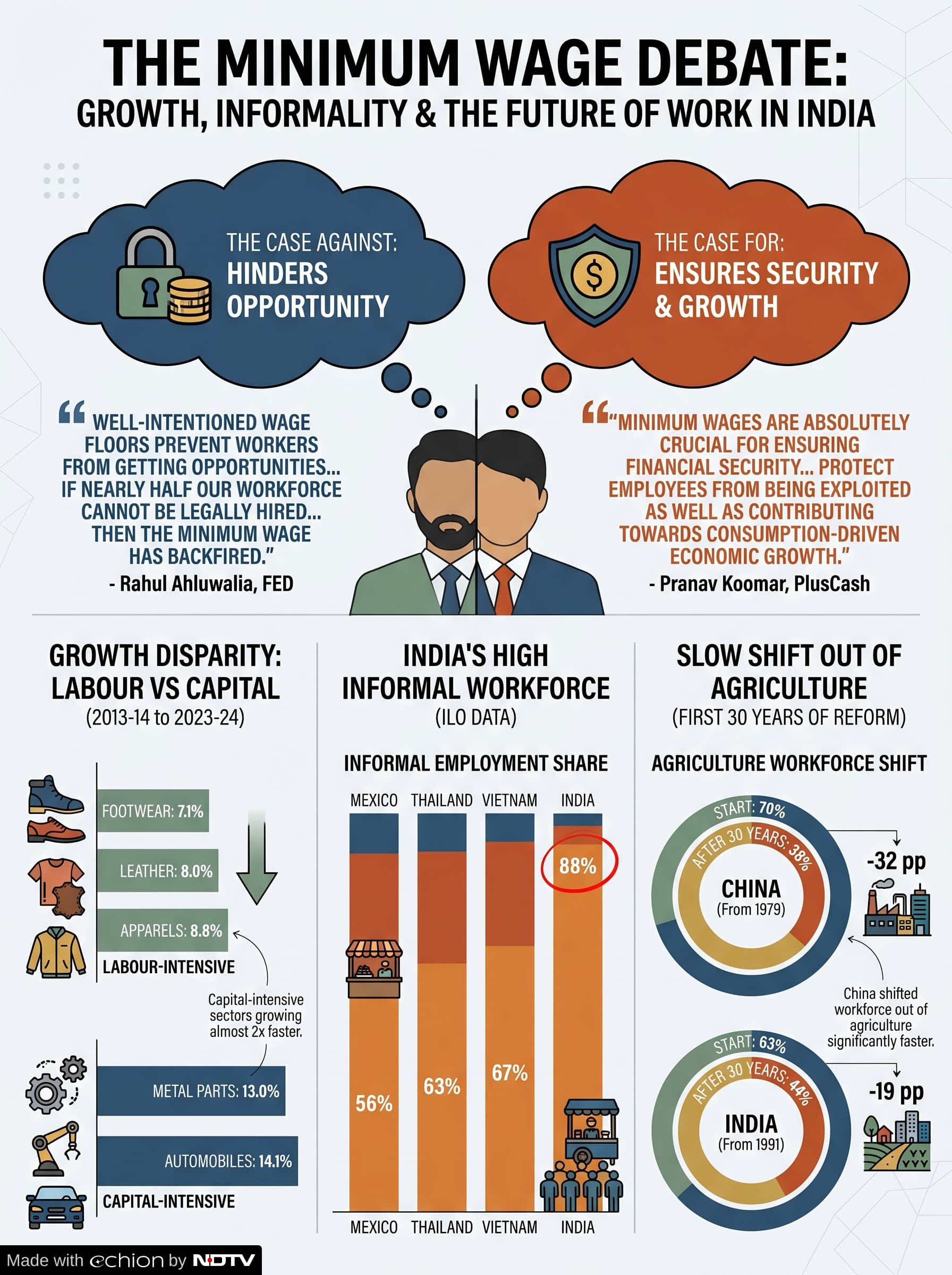
Labour-intensive sectors struggle to stay competitive. Double pay-for-overtime mandate adds to costs. India loses an estimated $60 billion in annual export potential, along with lakhs of jobs that shift to competitor nations. Nearly 90 per cent of India's workforce remains informal, without contracts or social security.
Rahul Ahluwalia, Founding Director at FED, says the data is hard to ignore. "If nearly half of our workforce cannot be legally hired even after giving them a 30 per cent raise, then the minimum wage has backfired."
FED suggests a politically difficult but economically simple fix: allow wage negotiation. In the interim, it recommends wage subsidies instead of higher wage floors. It also calls for flexibility in the national floor wage to reflect regional realities.
But not everyone agrees the answer is to dilute wage protections.
Pranav Koomar, Founder and CEO of PlusCash, says the debate needs balance.
He points out that under the new wage code, an unskilled worker in metro cities under central rules will earn Rs 21,000 per month, linked to inflation and Variable Dearness Allowance. A sudden rise in wage costs can indeed restrict hiring in labour-intensive sectors like manufacturing, retail, and services.
Yet, he cautions, minimum wages play a crucial role in preventing worker exploitation and supporting consumption.
"The bottom line is not whether minimum wages need to be enforced but in what manner it should be done. Wages should rise gradually alongside skill development, formalisation, and productivity."
The protests seen recently in Noida and Greater Noida show the issue is far from settled. Workers want higher pay. Employers worry about costs. Policymakers face a hard trade-off.
As India roll outs the new wage regime, the question is no longer whether minimum wages are necessary. It is whether the way they are set is pushing millions out of formal work.
Track Latest News Live on NDTV.com and get news updates from India and around the world

