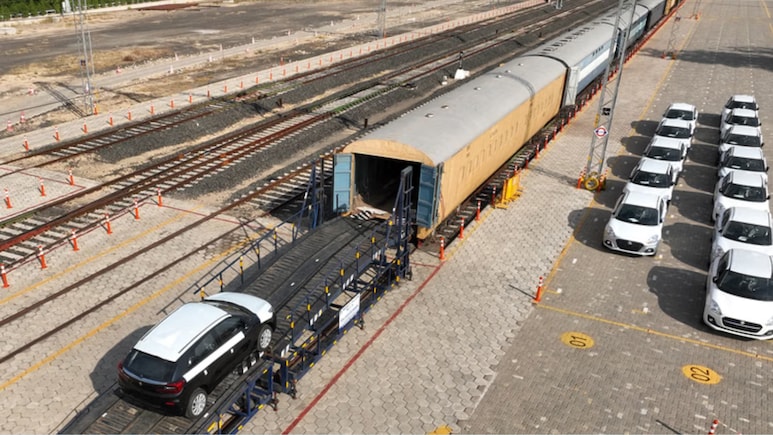
Maruti Suzuki India has crossed a significant logistics milestone, with cumulative dispatches through its in-plant railway sidings surpassing 10 lakh vehicles. The achievement covers dispatches from the Hansalpur facility in Gujarat and the Manesar plant in Haryana.
Milestone And Current Share Of Rail Dispatches
Of the 10 lakh vehicles moved through in-plant sidings, around 790,000 were dispatched via the Gujarat siding and approximately 210,000 through Manesar. The milestone was reached three years and five months after the Gujarat siding began operations in March 2023 and the Manesar siding in June 2025. In the current financial year, up to August 31, 2026, these two facilities accounted for about 70% of Maruti Suzuki's total rail-based vehicle dispatches, with rail shipments crossing 300,000 units during this period.
Also Read: Indian Army's Mahindra Armado Collides With Hyundai Exter In Viral Video
Since FY2014-15, Maruti Suzuki has cumulatively dispatched more than 3.3 million vehicles by rail. Of this, 1 million have moved through the in-plant sidings, while the remainder used external loading terminals. The company's rail-based dispatch share has risen from 5% in FY2014-15 to 26.5% in FY2025-26.
Also Read: Union Minister S Jaishankar Hands Over Mahindra XEV 9e EVs To Bhutan Government
Future Targets And Infrastructure Plans
Maruti Suzuki has set a mid-term target of raising rail-based dispatches to 35% by FY2030-31. To support this, the company plans further investment in rail infrastructure, including an in-plant siding at its upcoming Kharkhoda facility. The Gujarat and Manesar sidings were developed under the PM GatiShakti National Master Plan, aimed at improving multimodal connectivity and logistics efficiency.
Also Read: Tata Safari EV To Join Sierra With Triple-Screen Dashboard
According to the automaker, moving vehicles by rail through dedicated in-plant terminals reduces truck usage, fuel consumption and road congestion, while avoiding associated greenhouse gas emissions. An in-plant railway siding functions as a dedicated rail terminal within the factory, allowing newly produced vehicles to be loaded directly onto trains instead of being trucked to an external railway station.
Track Latest News Live on NDTV.com and get news updates from India and around the world
