India's electric vehicle transition is increasingly moving from a phase of market creation to one of market scale, with electric two-wheelers emerging as the biggest volume driver under the government's PM E-DRIVE scheme.
Data presented by TVS Motor Company at the "PM E-DRIVE: Dialogue with the Industry" hosted by the International Centre for Automotive Technology (ICAT) in Manesar on Friday showed that 26.39 lakh electric two-wheelers had been registered under the scheme as of September 17, 2026. That represents roughly 91 per cent of the 28.86 lakh Vahan-linked EVs across the PM E-DRIVE-supported segments shown in the presentation. The latest government dashboard separately reports 28.86 lakh total Vahan-linked registrations as of September 19, with 26.39 lakh e-2Ws.
Also Read: Force Motors Steps Up E-Ambulance Push Under PM E-DRIVE With 235-Km EV Traveller
The presentation was made by M S Anandakumar, AVP & Head - Regulatory Affairs, Certification & Materials - R&D, TVS Motor Company Ltd., during the industry dialogue held as part of ICAT's 20-year celebrations. ICAT said the event brought together policymakers, industry leaders, technology experts and other stakeholders to discuss the future of sustainable mobility and faster EV adoption in India.
PM E-DRIVE creates the conditions for scale
The PM E-DRIVE scheme has a current outlay of Rs 11,900 crore and has been extended to March 31, 2028. The scheme combines consumer demand incentives with support for electric buses, public charging infrastructure and testing facilities. The government has allocated Rs 4,391 crore for 14,028 e-buses and Rs 2,000 crore for EV public charging infrastructure.
Also Read: PM E-DRIVE: e-2W Penetration Nears 10%, e-3W L5 Crosses 46% As EV Adoption Gathers Pace
The TVS presentation described the policy impact through three interconnected levers: reducing the upfront cost of an EV, creating predictable demand for manufacturers and building the infrastructure needed to support adoption.
For electric two-wheelers, the first of these has been particularly important. The buyer-linked e-voucher mechanism reduces the effective acquisition cost for consumers, while the demand generated through the scheme gives manufacturers greater visibility on volumes.
The government itself had reported that, by January 27, 2026, more than 22 lakh EVs had been sold under PM E-DRIVE, including 19.19 lakh electric two-wheelers.
Also Read: Jetour T2-Based JSW Combat Spied Next To Mahindra Thar Roxx: Presence Check
TVS used the demand opportunity to expand its EV portfolio
TVS Motor's presentation provides a case study of how an established two-wheeler manufacturer has responded to this policy-led demand.
The company says it has launched 10 electric products across the electric two- and three-wheeler segments, spanning commuter, premium and commercial mobility.
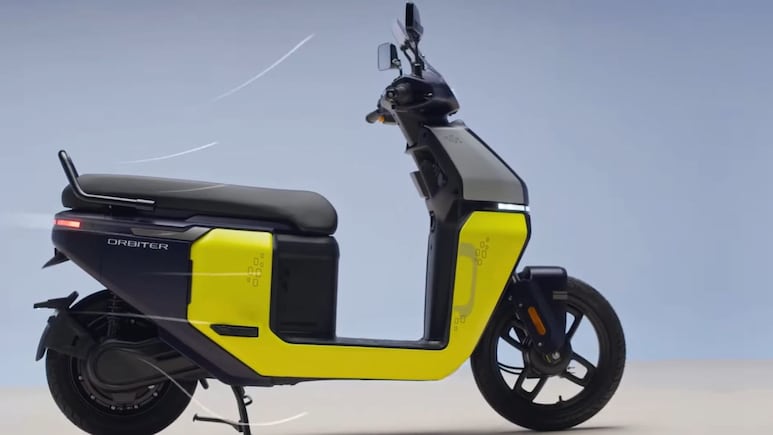
The electric two-wheeler portfolio includes products under the iQube and Orbiter families, while the company's commercial EV portfolio includes products such as the TVS King EV Max and King Kargo HD EV.
TVS said it delivered 3.71 lakh electric two-wheelers during FY2025-26, with its EV business supported by more than 1,000 EV dealers and approximately 5,000 public charging points.
This expansion has also translated into manufacturing scale. In June 2026, TVS said it rolled out its one-millionth iQube, manufactured at its Hosur facility in Tamil Nadu.
The numbers illustrate an important aspect of PM E-DRIVE: the policy's impact is not restricted to the subsidy received by an individual buyer. For manufacturers, a larger addressable market can support investments in products, distribution, manufacturing and technology.
From incentives to localisation
TVS also highlighted the role of domestic technology development in its EV strategy.
The company says it has built in-house capabilities for traction battery packs, traction motors, battery management systems, vehicle control units and motor control units, alongside software and other vehicle components.
TVS reported Rs 1,024.95 crore of R&D investment in FY2024-25, while highlighting technology localisation and supply-chain development as important elements of its EV strategy.
This aligns with the broader architecture of PM E-DRIVE, which uses the Phased Manufacturing Programme to encourage domestic manufacturing and strengthen the EV supply chain.
The next challenge: making EV adoption self-sustaining
The TVS presentation also offered a clear indication of where the industry believes the next phase of India's EV transition needs to focus.
Its recommendations included improving charging reliability and utilisation, deepening domestic value addition in areas such as cells, motors, power electronics, BMS and recycling, and measuring outcomes through registrations, charging utilisation, total cost of ownership, localisation and lifecycle emissions.
It also identified export competitiveness and integration into global EV value chains as longer-term priorities.
The presentation's central conclusion was that PM E-DRIVE has helped move India from EV market creation towards EV market scaling, with the next challenge being to make adoption increasingly self-sustaining.
For India's electric two-wheeler industry, the numbers suggest that transition is already underway. With more than 26 lakh e-2Ws recorded under the scheme and manufacturers such as TVS expanding products, production and retail infrastructure, PM E-DRIVE has become more than a purchase incentive. Its effect is increasingly visible across the broader two-wheeler EV ecosystem - from the consumer's purchase price to OEM volumes, localisation and manufacturing capacity.
The next phase, however, will be measured by how much of that demand can continue after the incentive-led push becomes less central to the buying decision.
Track Latest News Live on NDTV.com and get news updates from India and around the world
