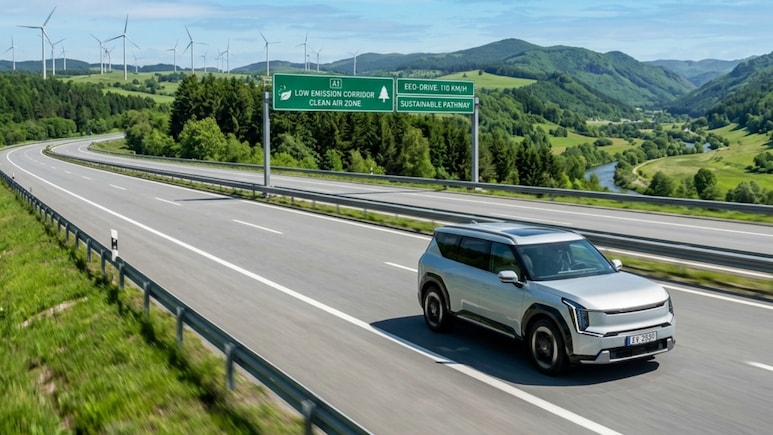
New Delhi: India is preparing for its next big change in vehicle emission rules, with the Centre planning to introduce Bharat Stage-VII (BS-VII) norms from April 2029. The rollout will begin with newly manufactured cars and SUVs before covering goods vehicles, buses and trucks.
The proposed standards will monitor pollutants more closely, including fine particles released by engines and dust generated by brakes and tyres. For people already driving BS-VI or older vehicles, the new norms will not, by themselves, require a replacement or shorten a vehicle's permitted life.
The Road Transport Ministry has cleared the proposed timeline, with draft notifications expected in the coming days. The phased rollout is scheduled to extend until April 2035, giving manufacturers and testing agencies time to prepare.
Also Read: BS-VII Emission Norms To Target Cars, Heavy-Duty Vehicles; Rollout In Phases
Which Vehicles Will Come Under BS-VII First?
Under the proposed schedule, the new standards will apply to different categories of vehicles in stages:
April 2029: Newly manufactured cars and SUVs.
2030: Small goods delivery vehicles and pick-up vans.
April 2031: Buses, trucks and other heavy-duty vehicles.
A separate date will be announced for two-wheelers. The detailed requirements and final deadlines will be clearer once the draft notifications are issued.
Also Read: Canadian Rapper Drake Shows Off One-Off 1999 Mercedes-Benz G-Wagen
What Changes Under The New Rules?
BS-VII will tighten checks on nitrogen oxides, hydrocarbons and particulate matter, pollutants linked to poor air quality and health risks.
For cars and SUVs, limits on several exhaust pollutants are expected to remain at existing BS-VI levels. The bigger change concerns particle-number testing. The smallest particles counted will measure 10 nanometres across, down from the current 23-nanometre threshold.
That means much smaller particles will be captured in emission monitoring. Fine particles can travel deep into the lungs, and long-term exposure to particulate pollution is associated with respiratory and cardiovascular disease.
Also Read: MG Windsor EV Indulge Edition Launched In India At Rs 18 Lakh
Trucks and heavy-duty vehicles are expected to face steeper reductions, with proposed emission limits targeting cuts of 20 to 50 per cent for different pollutants.
The standards will also go beyond tailpipe emissions. Particles produced when tyres wear down and brakes are applied will come under scrutiny. Vehicles will face tighter checks in real-world driving conditions, and independent testing agencies will be able to assess whether vehicles continue to comply after they are sold.
Will Existing Cars Be Banned?
No. BS-VII is not a nationwide order to scrap older vehicles. The proposed standards will apply to vehicles covered by the new manufacturing deadlines, rather than automatically invalidating cars and SUVs already registered.
The existing rules on vehicle age, fitness and pollution certificates will continue separately. That distinction matters in Delhi-NCR, where age- and emission-related restrictions on older vehicles have been dealt with through separate regulations and court orders.
Why India Is Moving Beyond BS-VI
India skipped BS-V and moved directly from BS-IV to BS-VI in April 2020, requiring changes to vehicle engines as well as the quality of petrol and diesel. Sulphur content in fuel fell from 50 parts per million to a maximum of 10, enabling the use of advanced emission-control equipment.
Stricter real-driving emissions compliance also took effect under BS-VI in April 2023. BS-VII is designed to build on that framework, not introduce on-road emission testing for the first time.
Unlike the earlier switch, the latest transition is not expected to require refinery upgrades to produce compatible petrol and diesel. Carmakers will, however, need to adapt engines, filters and other pollution-control systems.
The proposed framework follows Europe's Euro 7 rules, adopted in 2024. Those begin applying to new types of cars and vans in November 2026 and new types of heavy-duty vehicles in May 2028.
The transition could raise manufacturing costs, though the impact on showroom prices has not been established. Industry body SIAM has been considering a request to delay implementation, with a two-stage rollout from 2032, Mint reported on October 9.
For now, the key development is a proposed timetable, not a final set of notified standards. What manufacturers must do, and by when, will depend on the regulations that follow.
