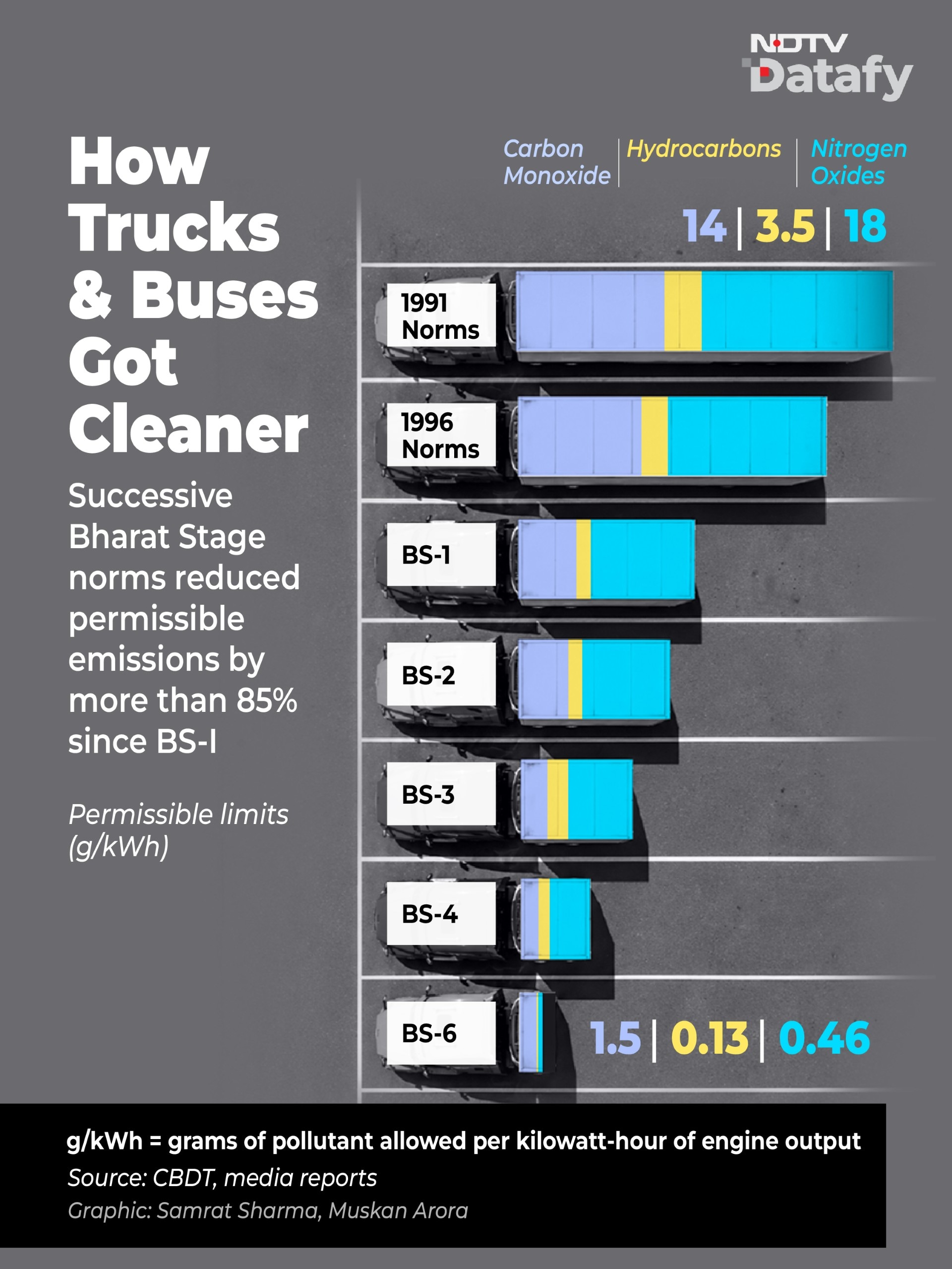
The Ministry of Road Transport and Highways has issued a draft gazette notification proposing the phased rollout of BS-VII emission norms from April 2029. The new standards significantly widen the scope of vehicle-emission regulations in India. Unlike previous Bharat Stage norms, which focused primarily on tailpipe emissions, BS-VII will also regulate pollution from non-exhaust sources such as brakes and tyres. Even electric vehicles, which do not produce exhaust emissions, will come under the new framework through provisions covering brake-particle emissions, tyre wear, and battery durability. The proposed standards are broadly aligned with Europe's Euro 7 framework.
India's proposed BS-VII norms mark the biggest expansion of vehicle pollution regulation since emission standards were first introduced in the country. The draft introduces minimum battery-durability requirements for electric vehicles and plug-in hybrids, mandating that batteries retain at least 75 per cent of their original capacity for five years or 1 lakh km, and 67 per cent for eight years or 1.6 lakh km.
The new regime also strengthens real-world driving emissions (RDE) testing, expands the use of onboard monitoring systems, and introduces an Environmental Vehicle Passport. In addition, the draft includes anti-tampering and cybersecurity provisions aimed at ensuring that emission-control systems continue to perform throughout a vehicle's life. Together, these measures shift the focus from merely controlling exhaust emissions to reducing a vehicle's overall environmental footprint.
Notably, while India is preparing to regulate tyre-wear emissions under BS-VII, countries such as Canada, the US, Australia, and New Zealand already operate tyre-levy systems. These levies, charged on new tyre sales, help finance the recycling and environmentally safe disposal of used tyres.
How Pollution Limits Have Tightened Since 1991
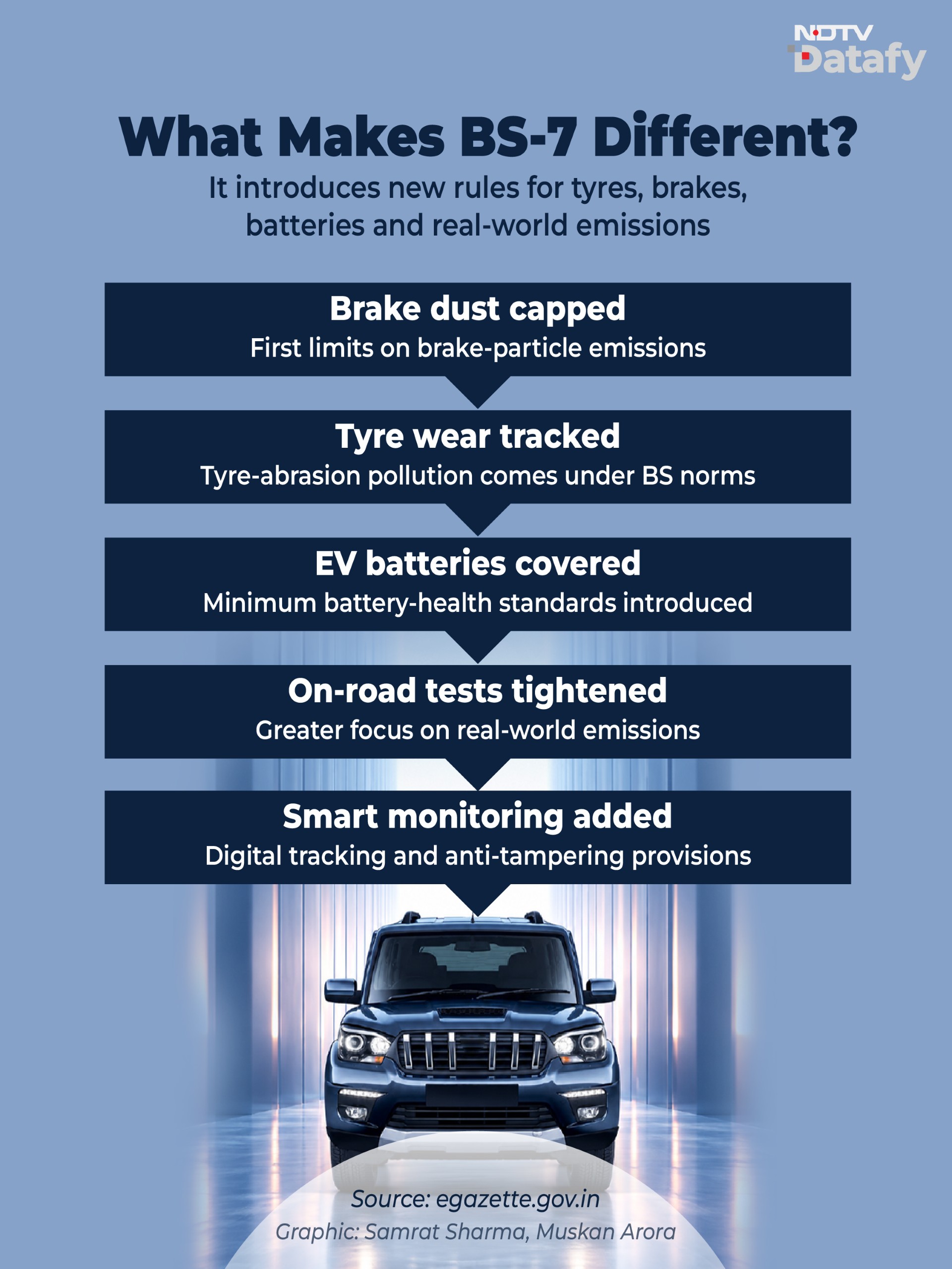
India has progressively tightened vehicle-emission standards over the past three decades to curb air pollution and align with global best practices. In diesel passenger cars, the permissible particulate matter (PM) limit has fallen from about 0.36 g/km under the 1991 norms to 0.005 g/km under BS-VI, a reduction of nearly 99%. In petrol cars, the carbon monoxide (CO) limit has been cut from more than 27 g/km under the 1991 norms to 1 g/km under BS-VI. The steep reductions reflect the adoption of cleaner fuels, better engine technology, and increasingly stringent emission standards.
How Limits Fell for Trucks and Buses
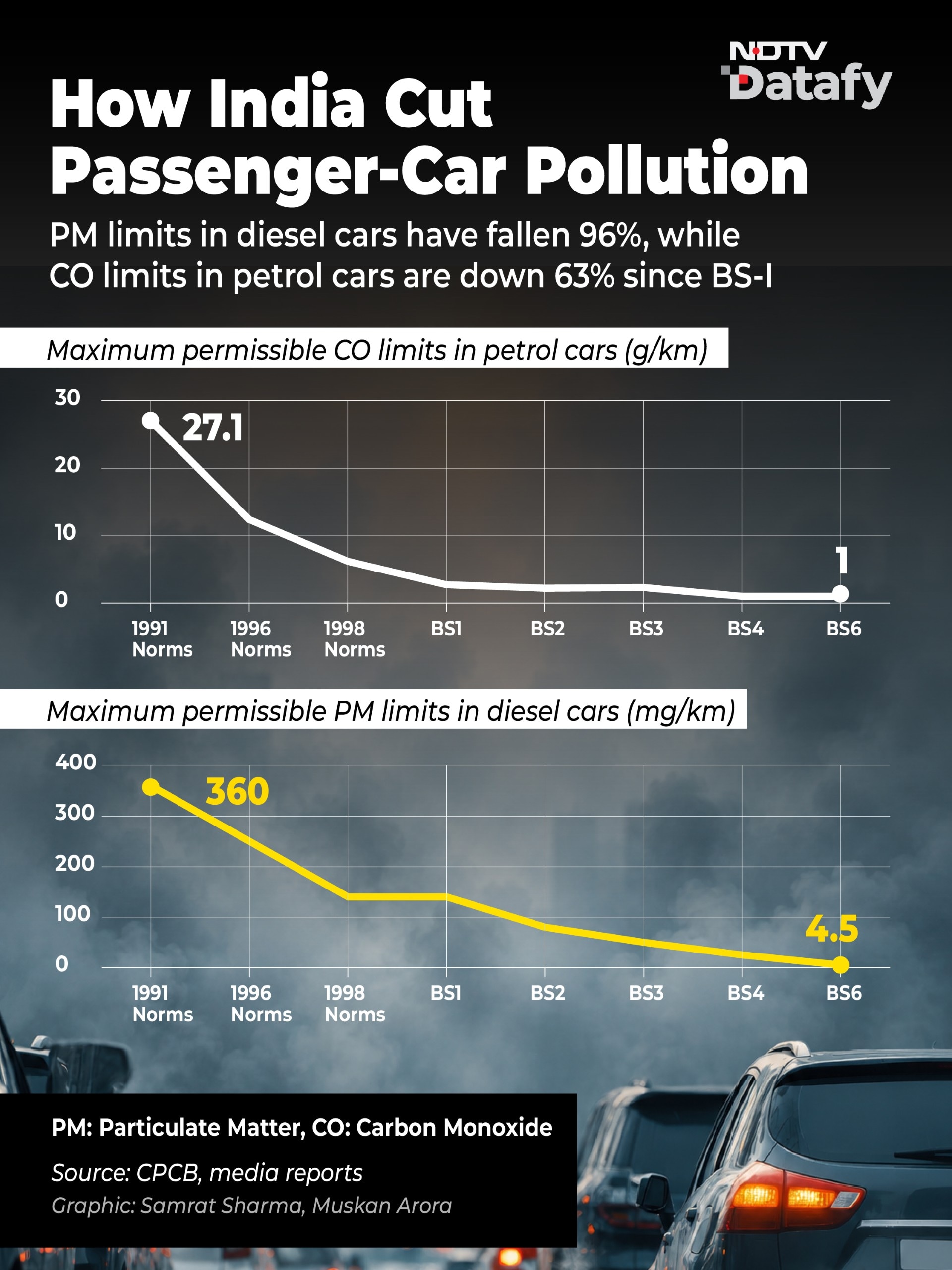
Emission standards for heavy diesel vehicles have also become significantly stricter over time. Carbon monoxide limits fell from 4.5 g/kWh under BS-I to 1.5 g/kWh under BS-VI, while hydrocarbon limits dropped from 1.1 g/kWh to 0.13 g/kWh. Over the same period, permissible nitrogen oxides (NOx) emissions were reduced from 8 g/kWh to 0.46 g/kWh, helping curb one of the key contributors to urban air pollution.
Cleaner Cars, Higher Costs
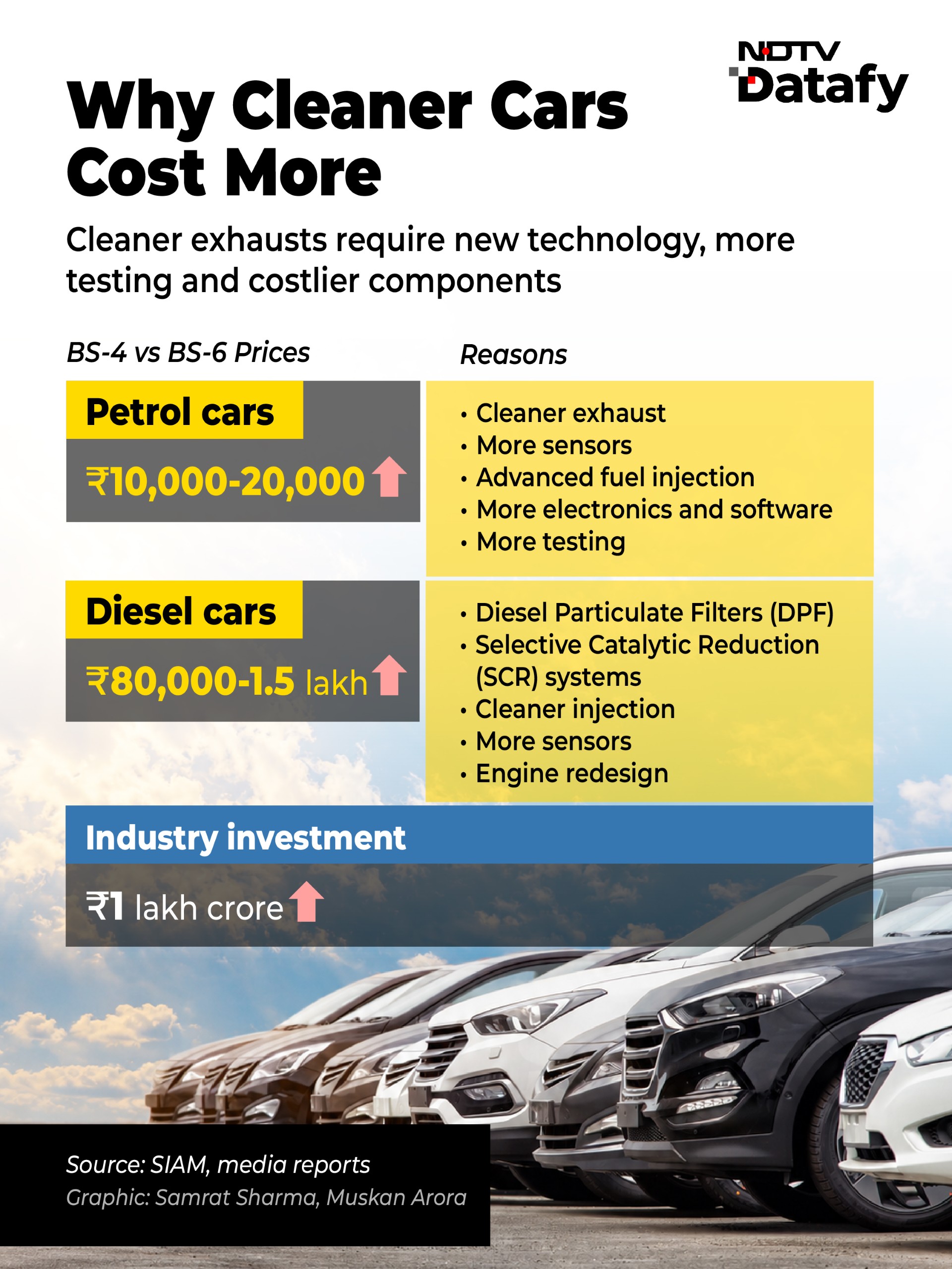
Cleaner vehicles come at a cost. Every tightening of emission norms requires automakers to invest in new technologies, and part of that cost is ultimately passed on to consumers. The impact is particularly significant in India, where a large share of vehicle purchases are financed through loans.
READ | Aprilia SXR GT 175 Review: Maxi-Scooter Design With Everyday Practicality
The transition from BS-IV to BS-VI increased the cost of petrol cars by an estimated Rs 10,000-20,000 per vehicle. Automakers had to adopt cleaner exhaust-treatment systems, advanced fuel-injection technologies, additional sensors, more sophisticated electronics and software, and undertake extensive testing and validation.
READ | Renault Duster Strong Hybrid Launched At Rs 16.99 Lakh: Delivers 29 Kmpl Mileage
Diesel vehicles witnessed a much sharper increase in costs. Prices typically rose by Rs 80,000 to Rs 1.5 lakh owing to the addition of technologies such as Diesel Particulate Filters (DPF), Selective Catalytic Reduction (SCR) systems, advanced fuel-injection equipment, extra sensors, and extensive engine redesigns required to comply with tighter emission limits.
In 2017, ahead of the rollout of BS-VI norms, industry body SIAM estimated that the Indian automobile sector would have to invest nearly Rs 1 lakh crore to upgrade vehicles and comply with upcoming emission, safety, and fuel-efficiency regulations.
With BS-VII, India is preparing for the next chapter of vehicle-emission regulation. The proposed norms recognise that pollution does not come only from tailpipes and that even electric vehicles have an environmental footprint. By bringing brakes, tyres, batteries, and real-world emissions under scrutiny, the country is moving towards a more comprehensive clean-mobility framework, one that could shape vehicle design and ownership costs for years to come.
Track Latest News Live on NDTV.com and get news updates from India and around the world
