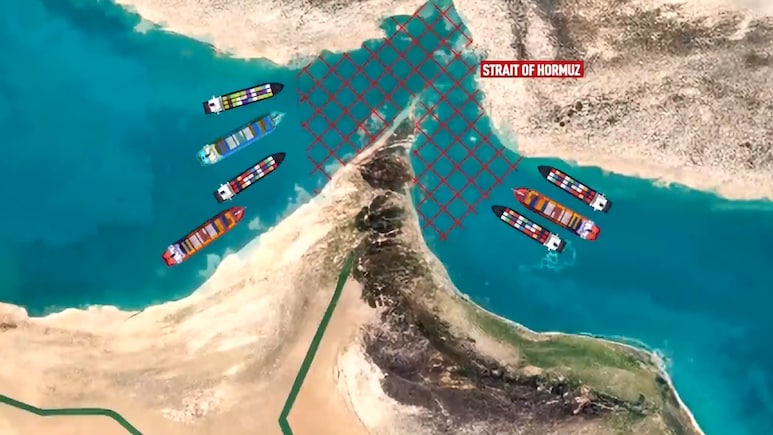
The war erupted on February 28 when the US and Israel began bombing Iran, prompting it to retaliate with strikes across the region and restrict access to the strait.
Around a fifth of global crude oil and liquefied natural gas passes through the waterway in peacetime.
Here are key facts and figures about the blockage of the Strait of Hormuz, a crucial shipping route virtually paralysed by the Middle East war.
21 Security Incidents
Here are key facts and figures about the blockage of theStrait of Hormuz, a crucial shipping route virtually paralysed by the Middle East war. Across all types of vessels, an additional four attacks claimed by the Iranian Revolutionary Guards have not been confirmed by international authorities.
8 Sea Workers Killed
Since the conflict began, at least eight seafarers or dock workers have died in incidents in the region, according to the International Maritime Organisation (IMO).
A further four remain missing, and 10 were injured.
97 Per Cent Shipping Drop
Traffic through the strait has dropped by 97 per cent from before the war, according to analysis published on Tuesday by marine intelligence group Windward.
The channel typically sees around 120 daily transits, but there were just 77 in the two weeks following the outbreak of the war, according to shipping industry intelligence site Lloyd's List.
20,000 Seafarers Stuck
Around 20,000 seafarers, along with cruise ship passengers, port workers and offshore crews, are affected in the region, according to the UN's International Maritime Organisation (IMO).
The IMO estimates at least 3,200 vessels are currently there, up to two-thirds of them "large commercial vessels engaged in international commerce".
Ship Fuel Up 87 Per Cent
Researchers at HSBC bank said in a report on March 14 that ship fuel prices had risen 87 per cent since the start of the conflict to levels last seen after Russia launched its full-scale invasion of Ukraine in 2022.
(Except for the headline, this story has not been edited by NDTV staff and is published from a syndicated feed.)
Track Latest News Live on NDTV.com and get news updates from India and around the world


