
- The Forbidden City in Beijing has nearly 9,000 rooms and covers 72 hectares
- It served as the Chinese emperors' residence and political center from 1420 to 1924
- Ordinary people were banned from entry for centuries, hence the name "Forbidden City"
In China, there is a palace so huge that it has nearly 9,000 rooms, covers an area bigger than 100 football fields, and was completely off-limits to ordinary people for almost 500 years. Sounds like something out of a movie, doesn't it? But this place is very real. It's called the Forbidden City, and it's one of the world's most incredible historical landmarks.
Located in Beijing, China, the Forbidden City is a city within a city. It was once home to China's emperors, the centre of the country's political power, and a place filled with luxury, mystery and royal traditions. Today, it's one of China's biggest tourist attractions and a UNESCO World Heritage Site that welcomes millions of visitors every year.
Why Is It Called The Forbidden City?
The name itself sounds mysterious, and for good reason. For centuries, almost nobody was allowed to enter this palace. Only the emperor, his family, royal officials and trusted palace servants could step inside. Ordinary people were strictly forbidden from entering, and doing so without permission could lead to severe punishment, even death.
Also Read: The Odyssey To Cocktail 2, Why Sicily Is The World's Hottest Filming Destination Right Now?
There's another interesting meaning behind the name too. In Chinese, the palace is called Zijincheng, or the "Purple Forbidden City." The colour purple wasn't chosen because of the buildings. Ancient Chinese believed the North Star was the home of the heavenly emperor. Since the Chinese emperor was considered the "Son of Heaven", his palace on Earth was designed as the heavenly palace's mirror image. That's why the name carries such deep meaning.
A Palace Built For Emperors
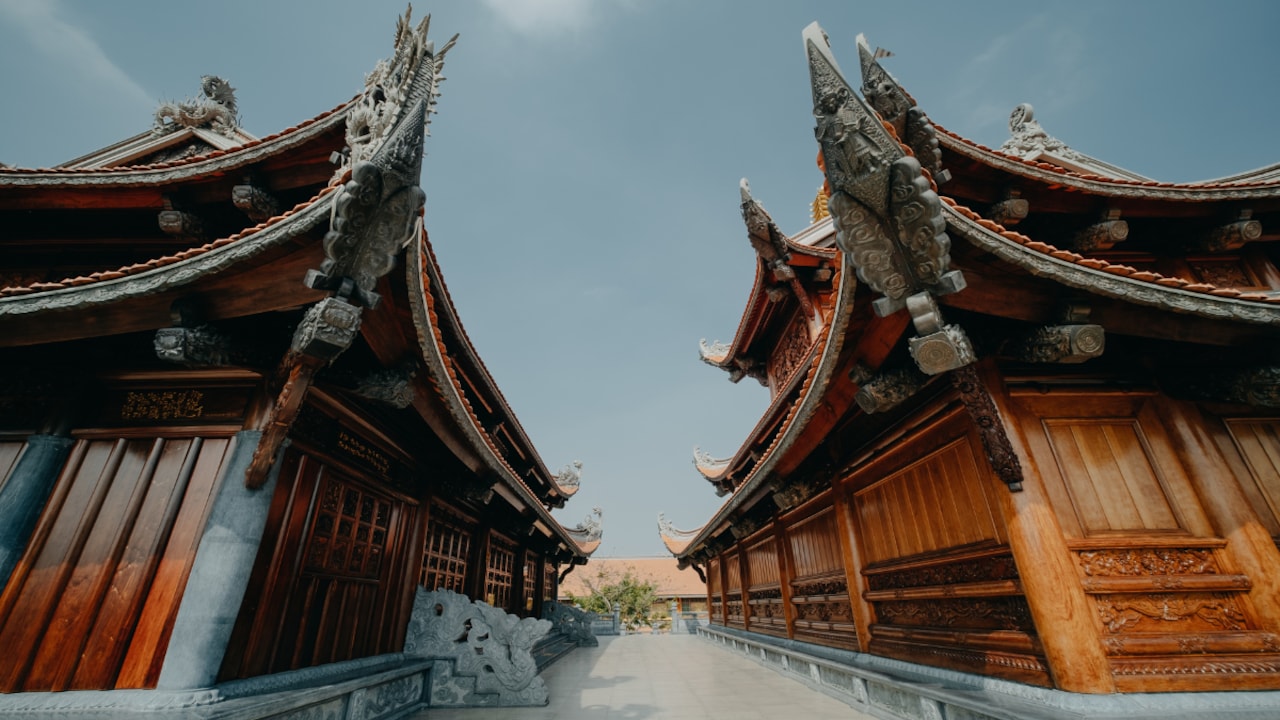
Photo: Canva
The Forbidden City was built between 1406 and 1420 after the Yongle Emperor decided to move China's capital from Nanjing to Beijing. More than one million workers, craftsmen and artists worked for 14 years to complete it.
From 1420 to 1924, the Forbidden City was where China was ruled. A total of 24 emperors from the Ming and Qing dynasties lived here. Some celebrated grand victories, while others witnessed the fall of their empires. In 1912, China's last emperor, Puyi, lost his throne. He continued living inside the palace for a few years before finally leaving in 1924. Soon after, the Forbidden City became the Palace Museum, allowing the public to explore a place that had remained closed to ordinary people for centuries.
The Forbidden City isn't just large, it's enormous. It covers around 72 hectares and has 980 beautifully preserved buildings with 8,886 rooms. For years, people believed it had exactly 9,999 rooms, but modern surveys proved that number to be a myth.
Also Read: 7 Places In India Where Jagannath Rath Yatra Is Celebrated In Spectacular Style
Inside, it is divided into two main sections. The Outer Court was the emperor's public world where he held royal ceremonies, welcomed officials, celebrated victories and hosted grand events. Behind all the grand halls lies the emperor's private world, in the Inner Court. This is where the emperor, empress, royal family and imperial consorts lived.
Why Is The Forbidden City So Special?
This massive palace is like a giant time capsule. Inside are priceless treasures collected over hundreds of years, including royal furniture, ancient paintings, beautiful ceramics, jade carvings, jewellery, clocks, costumes and handwritten imperial records. The palace is also the largest collection of ancient wooden buildings still standing anywhere on Earth.
Visiting the Forbidden City feels like travelling back in time. Whether you love history, architecture, photography or simply discovering extraordinary places, the Forbidden City promises an unforgettable experience. It's one of those rare destinations that truly lives up to its legendary reputation.
Track Latest News Live on NDTV.com and get news updates from India and around the world


