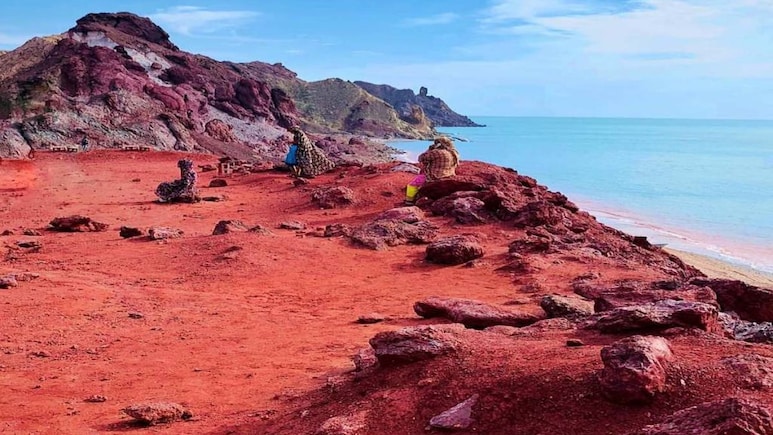
The Iran-Israel war has effectively shut the Strait of Hormuz, the narrow shipping lane between Iran and Oman through which around a fifth of the world's daily oil and liquefied natural gas (LNG) supply passes. While the world is currently fixating on the Strait of Hormuz as one of the most strategic chokepoints on Earth, and on what is being described as one of the most serious disruptions to global energy supply ever experienced, it is also home to a unique red beach that has long intrigued travellers, geologists and photographers from around the world.
The Unique Red Beach Of Hormuz Island
The Red Beach (Sorkh Beach) on Hormuz Island is one of Iran's most extraordinary coastal sights, famous for its vibrant crimson sands and shimmering waters.
The sand here takes on a deep red shade due to its high iron oxide content. Scientifically fascinating and visually dramatic, this mineral-rich soil gives the coastline its blood-red appearance, creating a scene that feels like a painted landscape.
Iron-Rich Sand That Is Actually Edible
Locals refer to this red soil as gelak. Its pigmentation is so intense that it can stain the skin for days, and some grains even react to magnets due to their iron concentration.
Gelak is a critical ingredient in the island's local cuisine. Hormuz locals never eat gelak in its powdery form, but rather use it as a spice, most commonly to prepare sooragh - a traditional, deep-crimson fermented fish sauce. Women have historically consumed small quantities during their menstrual cycles as a natural source of iron.
Gelak is also traditionally used for dyeing fabrics and colouring pottery. Limited quantities of gelak continue to be exported for use in cosmetics, pigments and traditional crafts.
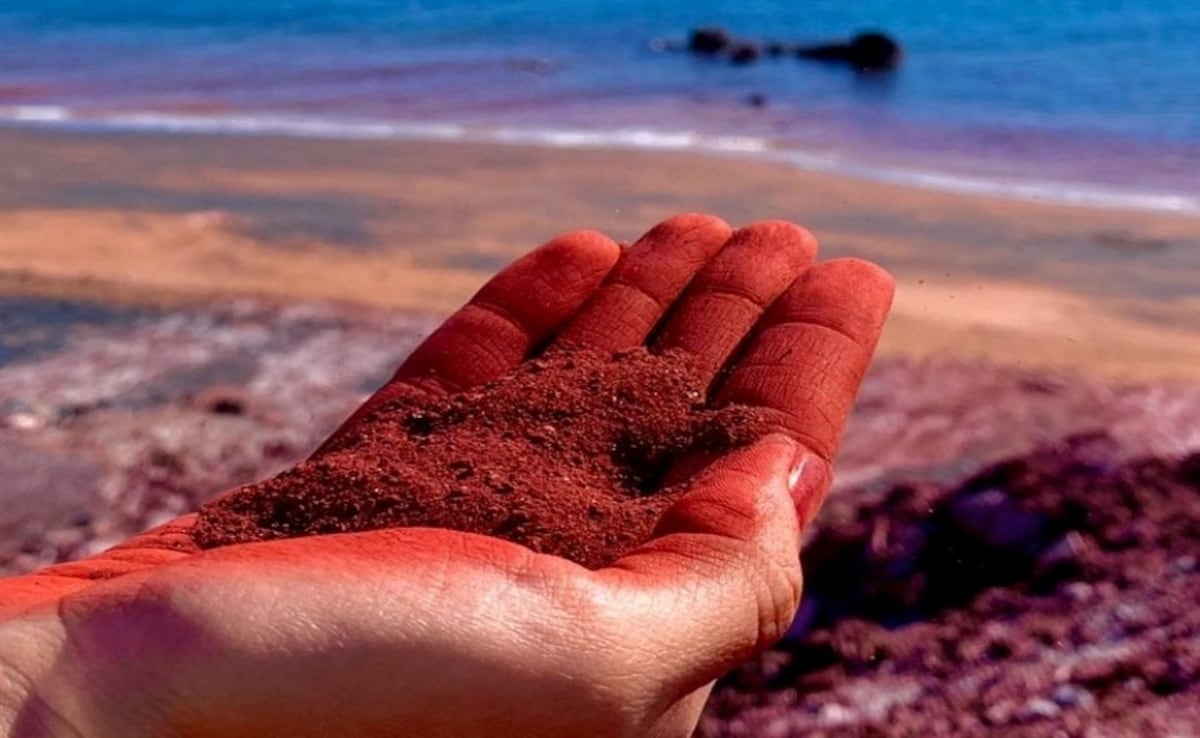
Photo Credit: Irandiscovery
A Natural Marvel That Makes The Beach Glow Red
The effect of the red soil isn't limited to the coastline. When the waves wash over the crimson sands, the water itself takes on reddish and pink hues. The contrast between these colours and the Persian Gulf's tranquil turquoise creates a hypnotic palette that intensifies at sunrise and sunset.
Because the beach's red glow could be spotted from far out at sea, sailors once used it as a natural navigation marker in the Strait of Hormuz.
The coastline is also home to diverse marine life, offering a quiet, scenic retreat for nature enthusiasts.
Cultural Significance And Ancient Legends
Beyond science, Red Beach has long been steeped in folklore. Some local myths suggest the crimson colour traces back to cosmic events or mythical creatures, lending layers of storytelling to an already dramatic setting.
Track Latest News Live on NDTV.com and get news updates from India and around the world


