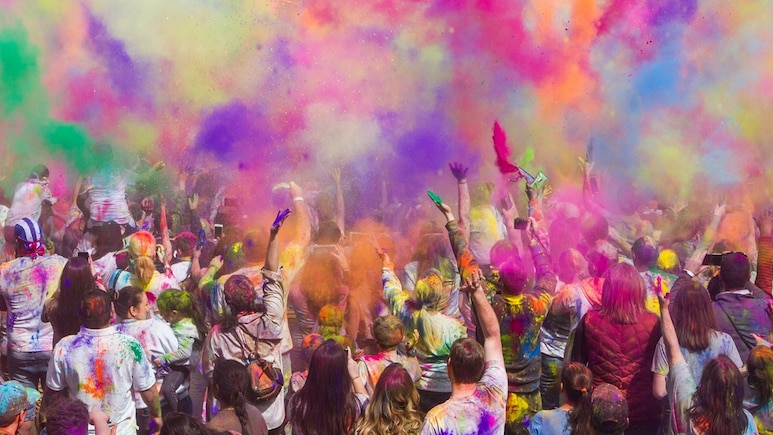
Of all the festivals India celebrates, Holi is perhaps the most democratically joyful. No elaborate rituals you need to get right, no dress code to stress about, no formal prayer you must know by heart. Just colour, music, sweets, and the particular pleasure of a whole city deciding simultaneously to let loose. But here is what most people do not realise: Holi is not one festival. It is dozens of them, each shaped by the landscape, history and character of the place celebrating it. The Holi of Barsana looks nothing like the Holi of Shantiniketan, which looks nothing like the Holi of Pondicherry. And that variety is precisely what makes it worth travelling for. Here are five celebrations that deserve to be on your list.
Also Read: International Tourists Boost Holi Travel, Udaipur Sees 459% Surge Among Other Indian Cities
1. Barsana and Vrindavan, Uttar Pradesh: The Birthplace of Holi Itself
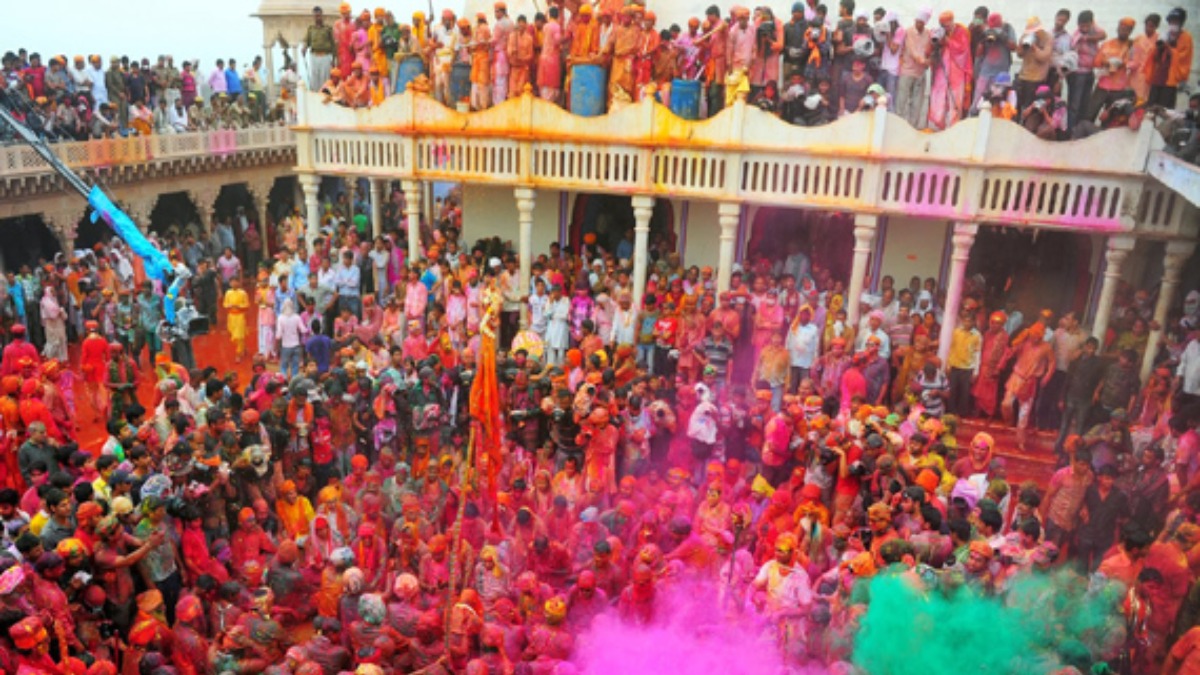
If you want to understand where Holi comes from, you go to Braj. This stretch of land in Uttar Pradesh, centred around Mathura and spreading to the small towns of Barsana, Nandgaon and Vrindavan, is the original home of the festival. This is the land of Radha and Krishna, and every single tradition here traces back to those legends. Which means Holi here is not just a party. It is a devotional act that has been performed, with variations, for centuries.
Barsana's Lathmar Holi is the celebration that gets the most attention and deserves every bit of it. The premise is this: men from the neighbouring town of Nandgaon come to Barsana as Krishna would visit Radha's village. The women of Barsana, channelling Radha's companions, drive them away with lathis. The men carry shields. Everyone is drenched in gulal. The main action happens at the Radha Rani Temple, and the hours between 10:30 am and 2 pm are the liveliest, with folk songs, traditional music, clouds of abir powder and enough general jubilation to make you lose track of time entirely. The following day, the roles reverse at Nandgaon.
Then there is Vrindavan's Phoolon Wali Holi, which is a completely different register: quieter, more meditative, utterly beautiful. At the Banke Bihari Temple, instead of colour powders, priests shower devotees with thousands of fresh flower petals: roses, marigolds, lotus. The fragrance mixes with the sound of devotional singing, and the whole courtyard feels suspended in something tender. If you are going to Braj for Holi, try to do both. Start with the flowers, then brace yourself for the lathis.
When to go: Lathmar Holi falls about a week before the main Holi date. Book accommodation in Mathura early; it fills months in advance.
Getting there: Mathura is well connected by train from Delhi (about two hours). From Mathura, Barsana is 42 km, and Vrindavan is 12 km.
2. Shantiniketan, West Bengal: Holi As An Art Form
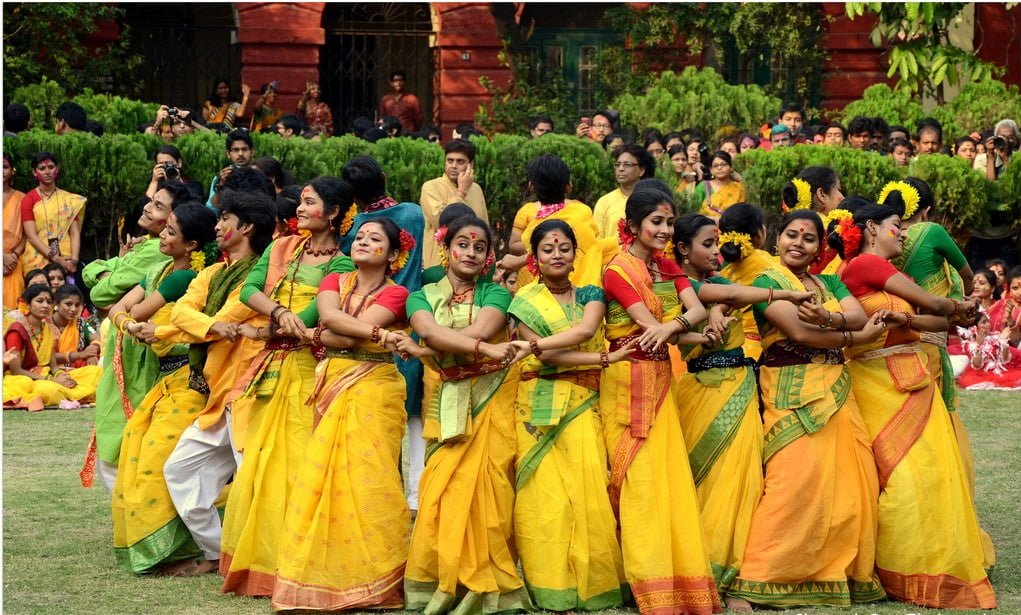
Shantiniketan does everything differently from the rest of India, and Holi is no exception. Rabindranath Tagore looked at the festival of colours and saw in it not an excuse for raucous street celebrations but a celebration of spring, of creativity, of what it means to be alive in March. The result is Basanta Utsav, one of the most distinctive and quietly beautiful festival experiences in the country.
Students and residents of this UNESCO World Heritage university town dress in traditional yellow: yellow saris, yellow kurtas, yellow flowers tucked into hair. They gather in the open grounds of Visva-Bharati University and sing Rabindra Sangeet, the songs Tagore wrote specifically to celebrate spring. They dance, not the frantic dancing of a Bollywood number, but something more graceful and deliberate. Organic abir in soft pinks and reds is applied with care rather than thrown in fistfuls. The whole event feels like watching a living painting.
Shantiniketan's Holi attracts visitors from across Bengal and beyond precisely because of this contrast to every other Holi happening simultaneously across the country. There is no DJ, no foam party, no water cannon. There is music, colour, art and the particular atmosphere of a place that has always taken beauty seriously. If you want Holi that feeds something other than your Instagram feed, Shantiniketan is where you go.
When to go: Basanta Utsav happens on the day of Holi itself. Come a day early to soak in the town, which is lovely regardless of the season.
Getting there: Shantiniketan is about 160 km from Kolkata. The most comfortable option is the Shantiniketan Express, which runs directly. Alternatively, take a train to Bolpur station, which is 2 km from the university.
3. Anandpur Sahib, Punjab: Holi With Martial Arts and Spears
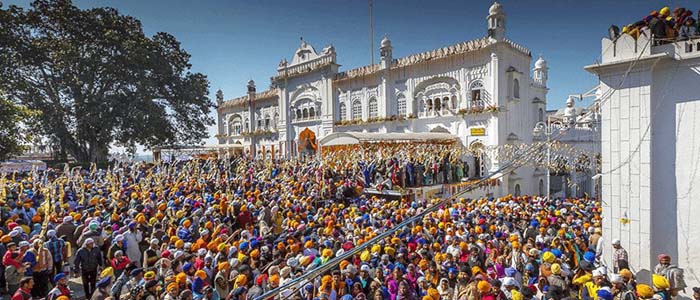
The celebration at Anandpur Sahib is called Hola Mohalla, and it is unlike anything else that happens during the Holi season anywhere in the country. What you witness over three days is extraordinary. Nihang Sikhs, in their spectacular blue robes and elaborate turbans, parade through the town in formations that make you instinctively stand straighter. Gatka demonstrations, the ancient Sikh martial art, fill the air with the sound of spinning weapons and controlled power. Horsemen perform at full gallop. Drummers beat rhythms that carry across the whole town. And through all of this, the streets are alive with colour: the deep blues of the Nihang robes, the saffron of the Nishan Sahib flags flying above every entrance, the brilliant reds and greens of the procession.
What makes Hola Mohalla particularly moving is that, alongside all the spectacle, it is also a community event in the truest sense. Langar, the free community kitchen that is a cornerstone of Sikh practice, runs continuously throughout the three days. Anyone who shows up is fed: locals, visitors, pilgrims, tourists. The festival is as much about this shared table as it is about the gatka and the galloping horses.
When to go: Hola Mohalla begins the day after Holi and runs for three days. The middle day is typically the most spectacular for processions.
Getting there: Anandpur Sahib is about 85 km from Chandigarh. Take a train or bus to Ropar and then a local cab. The nearest railway station with direct connections from major cities is Nangal Dam.
Also Read: Why Visit Dehradun: A Calm Hill City For Travellers Who Want Breathing Space
4. Pushkar, Rajasthan: Where Tradition Meets a Three-Day Street Party
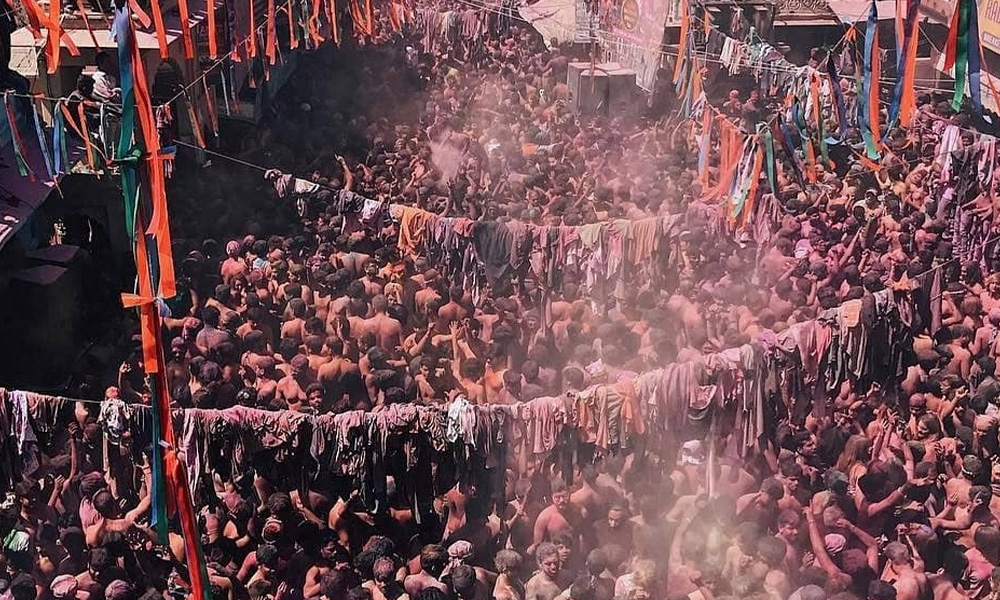
Pushkar is one of those places that manages to be simultaneously ancient and completely in the present tense.
The celebration runs for three days and is centred around the Brahma Temple and the main market streets. The star event is Kapdaa Faad Holi, literally "tear the clothes Holi," a massive street gathering that runs from morning to late afternoon on the main day. The name tells you something about the intensity: this is Holi at its most exuberant. Gulal fills the air with clouds of pink and red and green. Live DJs set up along the street. Rain dance stages appear. The crowd, a mix of locals, Indian visitors from across the country and international tourists, creates an energy that is remarkably inclusive and genuinely festive.
But Pushkar's Holi is not all modern party energy. The morning puja at the Brahma Temple, performed before the colour celebrations begin, grounds the whole thing in ritual and reminds you where you are. The ghats at sunrise on Holi morning, before the crowds gather, have a particular stillness. And the evenings, when the colour has been washed off and everyone has changed into fresh clothes, belong to the town again: chai stalls, laughter, the smell of wood smoke.
When to go: Arrive a day before Holi to get oriented. The three-day festival fills every guesthouse in town, so book accommodation two to three months in advance without exception.
Getting there: Pushkar is 11 km from Ajmer, which is well connected by train from Delhi, Jaipur and Mumbai. From Ajmer, cabs and autos connect to Pushkar in 20 minutes.
5. Pondicherry: Holi Meets French Colonial Architecture
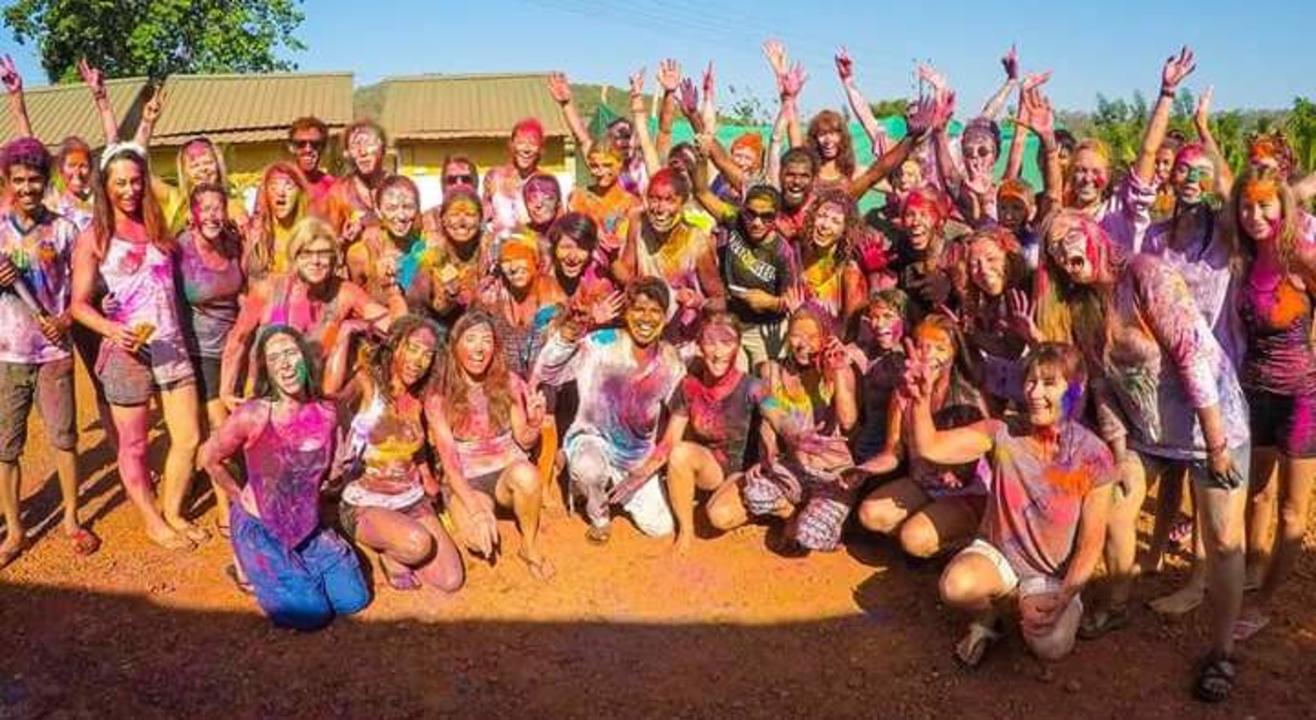
For anyone who thinks Holi is strictly a North Indian affair, Pondicherry offers a cheerful rebuttal. Holi has been celebrated here for generations, but what makes Pondicherry's version genuinely special is the setting in which it unfolds. Boutique hotels and beach clubs along the Promenade and in White Town host curated Holi events that blend the traditional with the contemporary: organic colour play, Holi brunches, and rooftop sunset parties overlooking the sea. The combination of vivid gulal against those pale colonial walls produces photographs that look almost too good to be real, but more importantly, it produces an atmosphere that feels genuinely festive without feeling manufactured.
The celebration has a particular intimacy here compared to the massive gatherings of Barsana or Pushkar. It is more neighbourhood than spectacle, with local communities celebrating in streets and courtyards alongside visiting revellers. The seafront at dusk on Holi day, with the smell of colour powder mingling with sea air and everyone in various states of vividly stained clothing watching the sun go down, is one of the quieter pleasures the festival offers anywhere in India.
When to go: Holi day itself and the day before, when the energy in town begins to build. The weather in Pondicherry in March is warm but manageable, especially near the coast.
Getting there: Pondicherry is about 160 km from Chennai, with regular buses, trains (the Puducherry Express from Chennai is the most convenient), and cabs. The town is compact and very walkable once you arrive.
Things To Keep in Mind
Wherever you celebrate, book your accommodation early. Holi is one of the most heavily travelled weekends in the Indian calendar, and hotels, guesthouses and homestays in all five of these destinations sell out weeks, sometimes months, in advance. Wear old clothes you do not mind losing colour permanently. Use oil or a heavy moisturiser on your skin and hair before heading out, which makes the colour much easier to wash off later. Stick to natural, organic colours where possible, for your own skin's sake as much as anything else. And carry nothing you cannot afford to lose: expensive cameras, leather bags and good shoes have no place at a Holi celebration.
Also Read: Ramadan 2026 In Delhi: Best Places To Visit For Iftar, Street Food, Shopping And Spirituality
The Festival Of Colours
Holi is the one festival where the whole country seems to agree that fun is the point. But the form that fun takes, the sound of the music, the weight of the tradition behind it, the colour of the streets it plays out in, changes completely depending on where you are standing. Barsana gives you legend and devotion. Shantiniketan gives you art and grace. Anandpur Sahib gives you courage and community. Pushkar gives you three days of pure, joyful chaos. And Pondicherry gives you colour splashed across walls that have been standing for 300 years. Five very different answers to the same festival. All of them are absolutely worth the trip.
Track Latest News Live on NDTV.com and get news updates from India and around the world


